A man called Paneb was accused of stealing stone from a royal tomb, of threatening to kill his foreman, and of a list of other offences that runs to a full papyrus. We know this because somebody wrote it down and the paper survived.
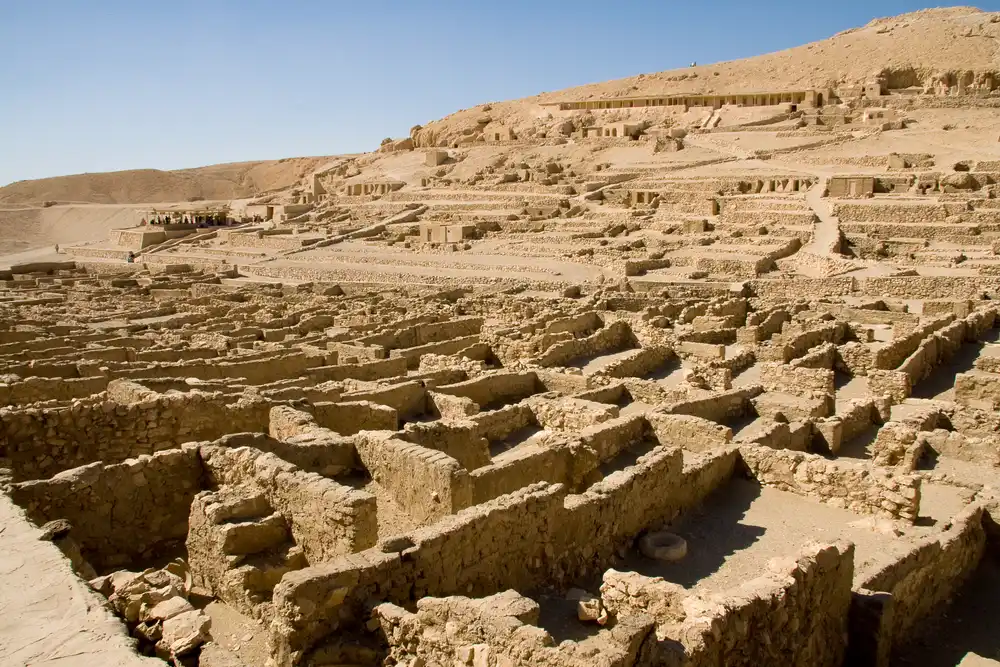
Deir el medina is the village where he lived. It sits in a small valley on the Luxor west bank, between the royal cemeteries, and the men who lived here were the craftsmen who cut and painted the tombs of the kings. They were literate, they were well paid, they argued constantly, and they left behind the most detailed record of ordinary life anywhere in the ancient world.
The ruins themselves are low walls. Come for what was found in them.
What Deir el Medina Actually Was
A state built company town, walled, with a single street running down the middle and about seventy houses opening off it. At its peak there were perhaps a hundred and twenty. The ancient name was Set Maat, the place of truth.
It was occupied for roughly four hundred and fifty years, from the early Eighteenth Dynasty to the end of the Twentieth, which covers almost the entire period the kings were buried across the hill.
The workforce was organised as two gangs, called the left side and the right side, each with a foreman, and a scribe over both who kept the records. They worked a ten day week: eight days on, two off. During the working days they did not come home, they slept in stone huts on the col above the royal valley, which is a forty minute walk over the top.
Rations were the wage. Grain mostly, plus fish, vegetables, oil and beer, delivered by the state.
Literacy is the detail that changes everything. Most of Egypt could not read, and a workforce that could is the reason this village talks and every other settlement is silent. They wrote to each other, they wrote for each other, and they wrote things down that nobody was ever meant to file.
Women appear in the record in their own right. They owned property, brought lawsuits, lent grain at interest and appear as witnesses. One woman, Naunakhte, left a will disinheriting the children who had not looked after her in old age, naming them.
Why This Site Matters More Than It Looks
Because of the rubbish.
The villagers wrote on ostraca, flakes of limestone and broken pottery, which were free and lying everywhere. Tens of thousands of them have been recovered, and they are not official documents. They are notes.
Work rosters, and absence registers giving the reason each man missed a day: brewing beer, building his own house, a scorpion bite, his mother is ill, his wife is menstruating.
Laundry lists, sketches of animals, love poetry, a schoolboy's exercises, complaints about a neighbour's donkey.
Nothing else from ancient Egypt is remotely like this. The temples tell you what kings wanted recorded and the tombs tell you what people hoped for. These flakes tell you who did not turn up on the fourteenth and why.
A great many of them came out of the Great Pit, a deep shaft the villagers dug at the north end of the site hoping to find water. They never reached it. The hole was used as a dump instead, which is the luckiest failure in Egyptology.
The First Recorded Strike in History
In the twenty ninth year of Ramesses III, around 1157 BC, the rations stopped arriving on time.
The men downed tools, walked out of the village and sat down at the mortuary temples, refusing to move until they were paid. It happened more than once that year. The scribe Amennakht recorded it, and the account survives on a papyrus now in Turin.
Read what they actually said and it is startlingly familiar: we are hungry, eighteen days of this month have gone, we have come here because of hunger and thirst, there is no clothing, no fish, no vegetables. Send to the pharaoh and tell him.
This is the oldest documented labour action anywhere. It was staged by skilled workers with leverage, which is to say by the only men in Egypt who knew where the royal tombs were and how to open them.
The Tombs Above the Village
They built their own tombs into the slope behind their houses, and they built them well, because it was the one thing they were qualified to do for themselves.
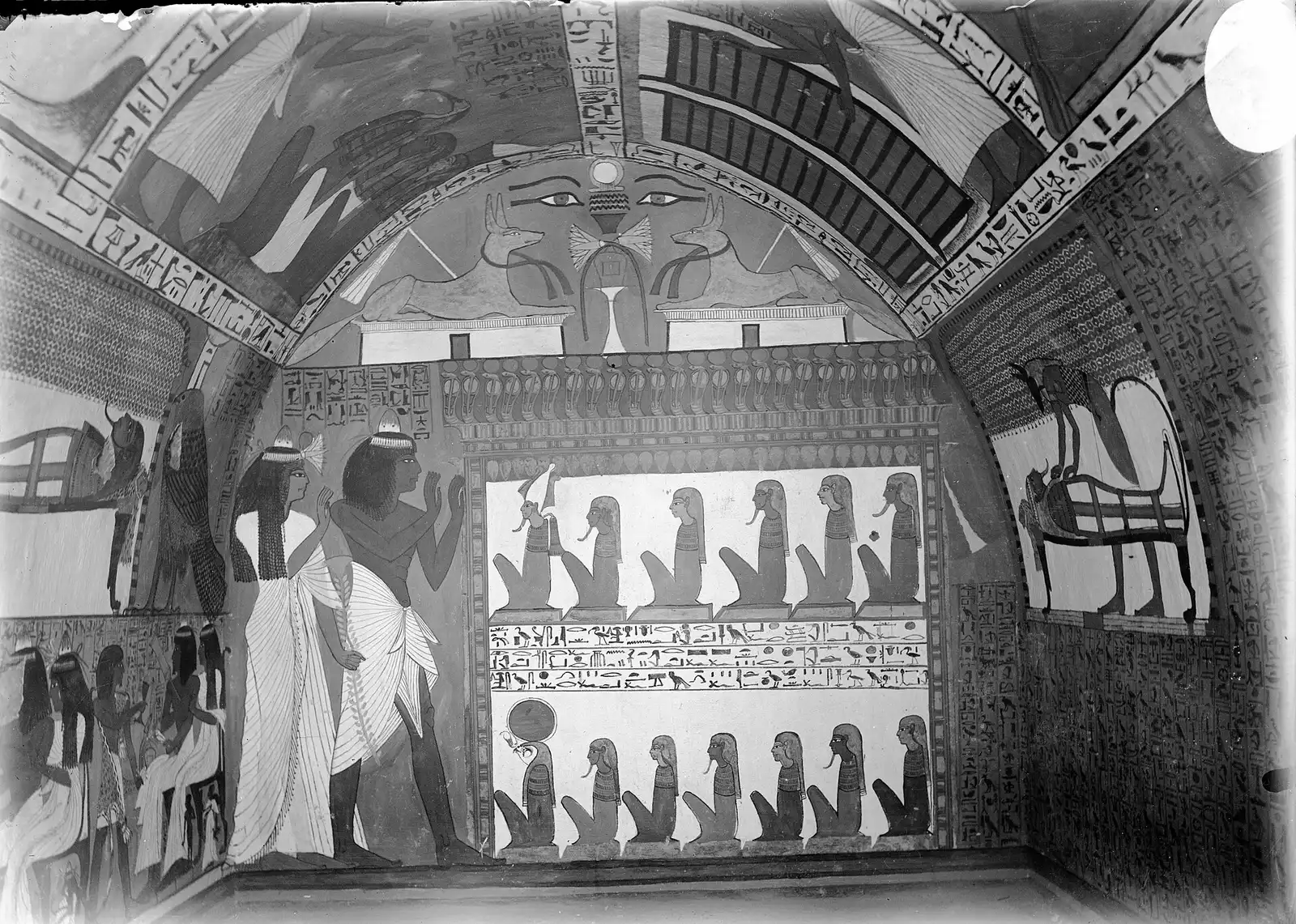
Small chapels with mud brick pyramids on top, and painted chambers below. The decoration is not a cut price version of royal work. It is the same hands, working without a committee.
Sennedjem, TT1, is the one to ask for. A vaulted chamber painted on every surface, with the owner and his wife ploughing and harvesting in the Field of Reeds, the colour as strong as anything on the west bank.
Pashedu, TT3, has the famous image of the owner kneeling to drink from a pool under a heavily laden date palm.
Inherkhau, TT359, has the great cat of Heliopolis killing the serpent Apophis with a knife under a sacred tree, which is the single most reproduced image from deir el medina luxor keeps on this hillside.
Tickets cover them in pairs and which pair is open rotates. Ask at the gate.
The chambers are small and reached by steep, narrow stairs, in a couple of cases barely more than a chute with footholds. Anyone uncomfortable in tight spaces should look at the entrance before committing to the descent, because turning round halfway is awkward with people behind you.
Photography rules vary by tomb and change. There is usually a separate photo ticket where it is permitted at all.
The Temple That Gave the Place Its Name
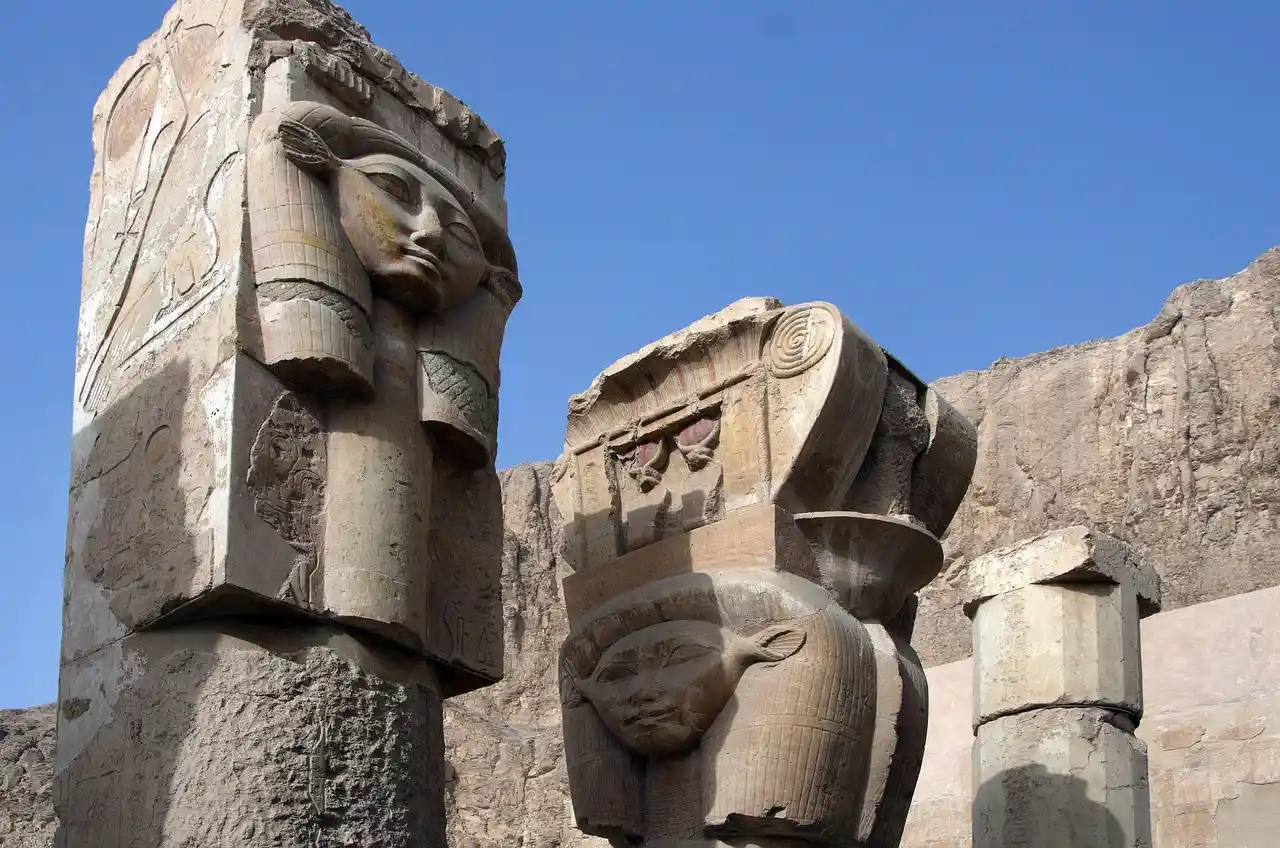
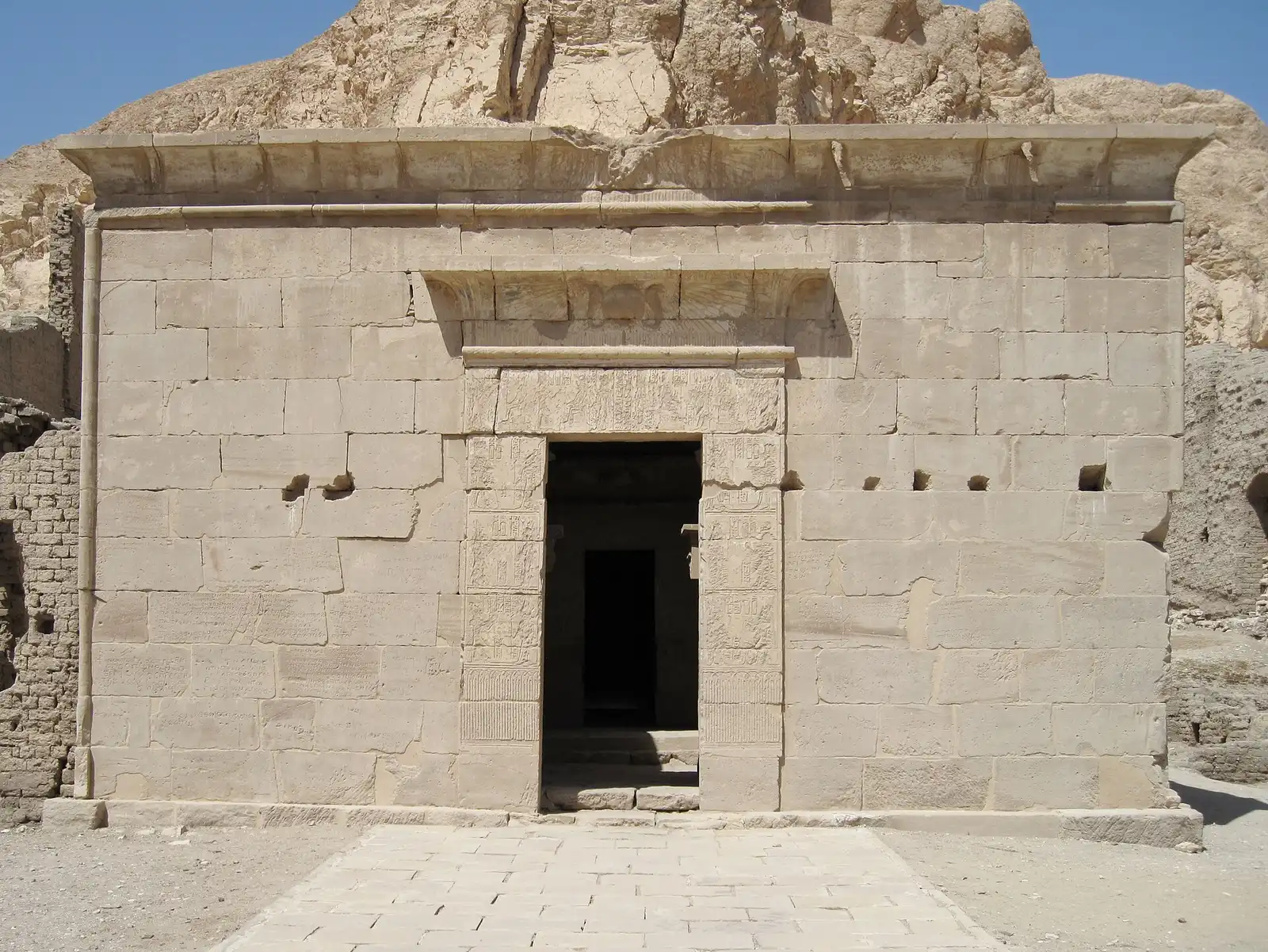
At the north end, inside its own mud brick enclosure, is a small, well preserved stone temple to Hathor, begun under Ptolemy IV and finished by his successors.
It is a thousand years younger than the village. By the time it was built the workmen were long gone.
Centuries later Coptic monks took it over and turned it into a monastery, and that is where the modern name comes from: deir means monastery in Arabic. Deir el-Medina, written with the hyphen in most excavation reports, is the monastery of the town.
So the site is named after the least important thing on it, which happens more often than you would expect.
How Long, and Where It Fits
An hour, or ninety minutes with two tombs and the temple.
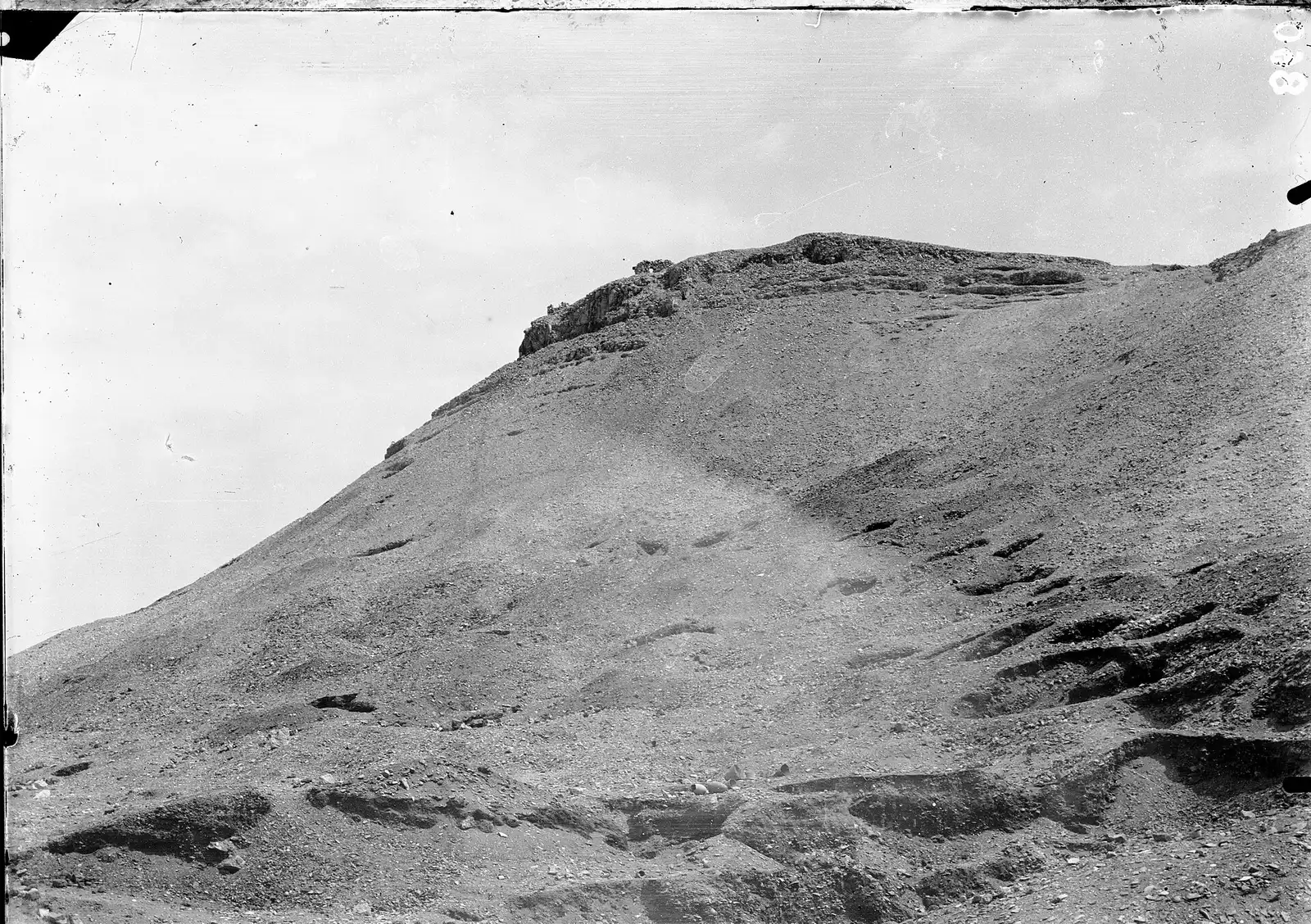
It is a second morning site. The royal valley and Hatshepsut have to be done early because of heat, and this valley is small, enclosed and even hotter by mid morning, with no shade at all over the village ruins.
The natural pairing is with the Valley of the Queens, which is ten minutes further south, or with Medinet Habu. The guide to the royal tombs covers the work these men actually did, and the guide to Hatshepsut's temple covers the other building they walked past every week.
Anyone planning deir el medina egypt has excavated more thoroughly than almost any other settlement should give it a proper hour rather than the fifteen minutes it usually gets. The Luxor area guide sets out how the west bank divides across a stay, and our longer Egypt itineraries build in the second morning that makes this stop possible.
What to Look At, and in What Order
Start at the top of the path where you can see the whole village at once. One street, houses either side, the enclosure wall, the cemetery rising behind. It takes thirty seconds and it is the only moment the plan is legible.
Then walk down the street. Look at the doorways, the stairs to roof level, the cellars under the floors, and the first room of each house, which usually held a domestic shrine and, in several cases, a bed built into the wall.
Then go up to whichever tomb is open.
Then the Great Pit, which is fenced and unmarked and looks like nothing. Stand at the edge anyway. Everything we know about Paneb, about the strike, about the man who stayed home because of a scorpion, came out of that hole in the ground as rubbish.
One instruction before you leave: in Sennedjem's chamber, find the two figures ploughing, and note that the man who painted his own wife into eternity beside him had spent his working life painting other people's afterlives for a king he had probably never met.