A man is counting geese. Beside him a scribe writes the number down, and behind them both a farmer is arguing about it.
That scene is on a wall in the tombs of the nobles at Luxor, and there is nothing like it in a royal tomb. Kings were painted meeting gods. Their officials were painted doing their jobs, and the jobs turn out to be far more interesting: ploughing, brewing, weighing gold, catching fish, hosting a party with musicians and a great deal of wine.
These are the rooms to go to if you want to know what Egypt actually looked like rather than what it believed.
Where the Tombs of the Nobles Are
On the Theban west bank, in the low hill of Sheikh Abd el Qurna, between the Ramesseum and the approach to Hatshepsut's temple. You drive past the entrance on every standard west bank itinerary.
Several hundred tombs are cut into this hillside and the numbered ones run past four hundred. A handful are open on any given day, sold in small groups on combined tickets rather than individually.
Until recently a village sat directly on top of them. Qurna had been there for generations, built over and sometimes into the tombs, and its residents were relocated to a new settlement between roughly 2006 and 2010. The cleared hillside you see now is very recent.
The Four Worth Your Morning
Nakht, TT52, is the one everybody photographs. He was an astronomer of Amun and his chamber is tiny, but it holds the blind harper and the three female musicians, and a marsh hunting scene with a cat in the papyrus. Ten minutes and you have seen it.
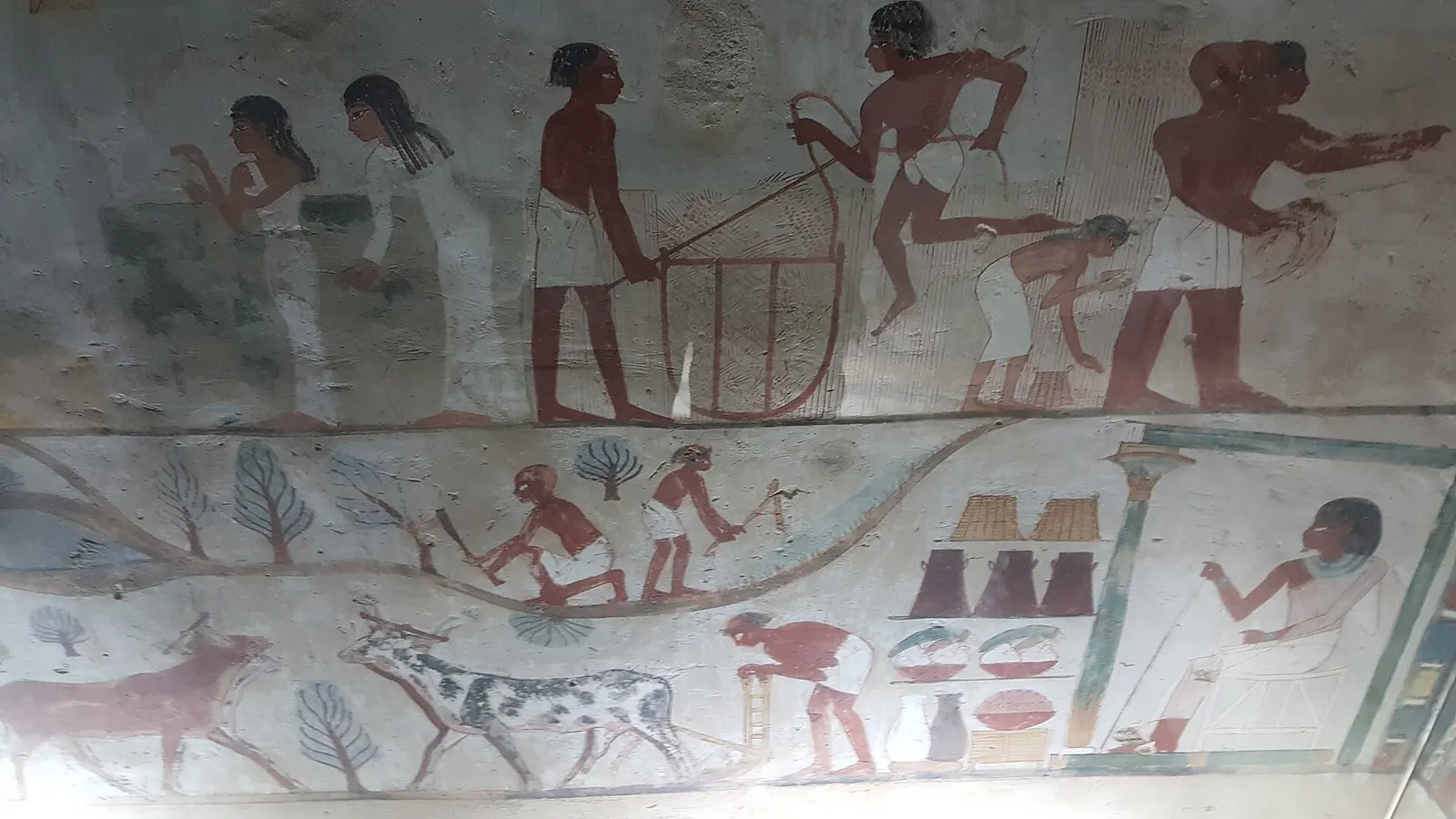
Menna, TT69, is the agricultural sequence: surveying a field with a knotted rope, harvesting, winnowing, a girl pulling a thorn out of another girl's foot at the edge of the crop. The colour is exceptional.
Ramose, TT55, is different in kind. He was vizier under Amenhotep III and then under his son, and the tomb was abandoned half finished when the court moved to Amarna.
One wall is polished raised relief of extraordinary delicacy. The next wall is unfinished Amarna style, elongated and strange. You are looking at the exact moment Egyptian art changed, frozen because the workmen walked away.
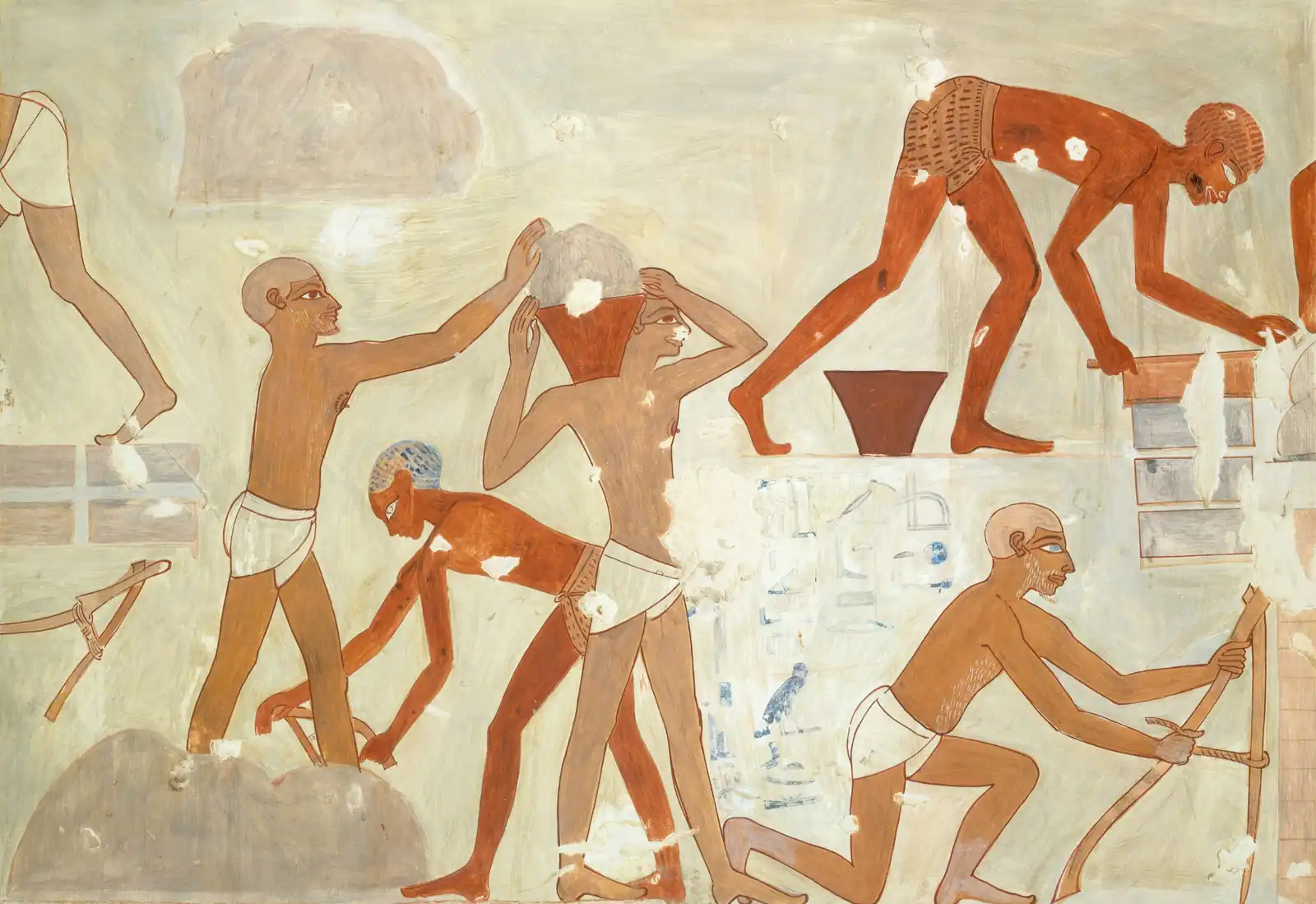
Rekhmire, TT100, is a long tall corridor belonging to another vizier, this time under Thutmose III. The walls carry foreign tribute arriving from Nubia, Crete and Syria, and a famous sequence of craftsmen making things: metal, leather, rope, bricks.
Sennefer, TT96, is the fifth if your ticket allows it. He was mayor of Thebes and he had the ceiling of his burial chamber painted as a grape arbour, vines and bunches hanging over your head across the whole room. It is usually called the Tomb of the Vines and the steps down to it are steep and uneven.
What Makes a Tomb of the Nobles Different
Scale, method and subject, in that order.
These are small. Most are a courtyard, a transverse hall and a passage, and you will be stooping in several of them. After the royal valley the change of register is abrupt.
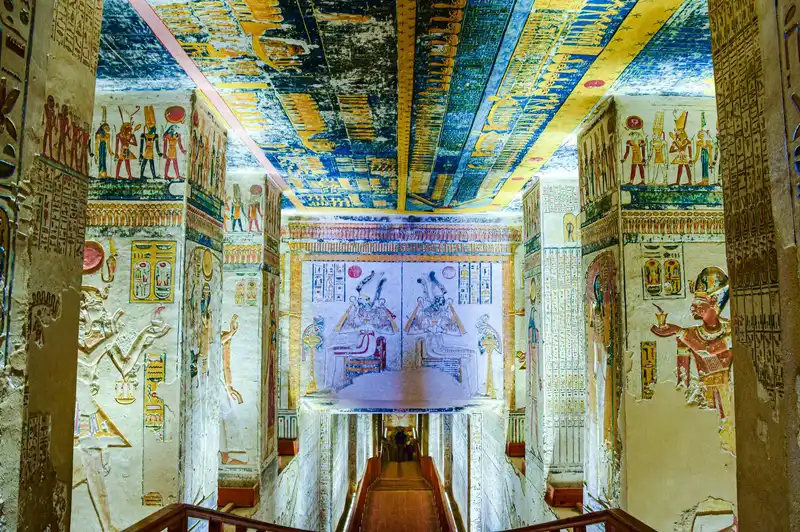
The limestone in this hill is poor, so instead of carving into it the decorators plastered the walls and painted onto the plaster. That is why the colour is so immediate: it is paint on a flat ground, not shadow in cut stone, and the palette has barely faded in the sealed chambers.
The subject is the real difference. A king needed the afterlife written on his walls. An official needed to show the office he held and the estate he ran, because that was the claim his eternity rested on. So we get the cattle count, the grain store, the tribute line and the banquet, painted in obsessive detail by people who had seen them.
Practical Notes for Tombs of the Nobles Luxor Visits
Tickets are sold in combinations, typically two or three tombs to a ticket, and which combinations exist changes. Buy at the west bank ticket office on the road in or at the site, and expect to pay by card rather than cash.
Allow ninety minutes for three tombs at a proper pace, including the walk between entrances, which is up and down a dusty slope.
Photography rules vary tomb by tomb and year by year. Some allow it with a separate photo ticket, some do not allow it at all, and guardians enforce the current rule rather than last year's.
Take a torch. Lighting inside is minimal and the best details are on the upper registers.
The ground is the other thing to plan for. Entrances sit at different heights on a slope of loose rubble and dust, there are no handrails, and several tombs are entered down steps cut for people carrying a coffin rather than for visitors in trainers. Anyone with a knee that objects to steep descents should say so at the ticket desk, because the guardians know which of the open tombs are the flat ones.
Nobody sells water on the hill. Buy it before you leave the ticket office.
The Cliff Tombs Above Aswan
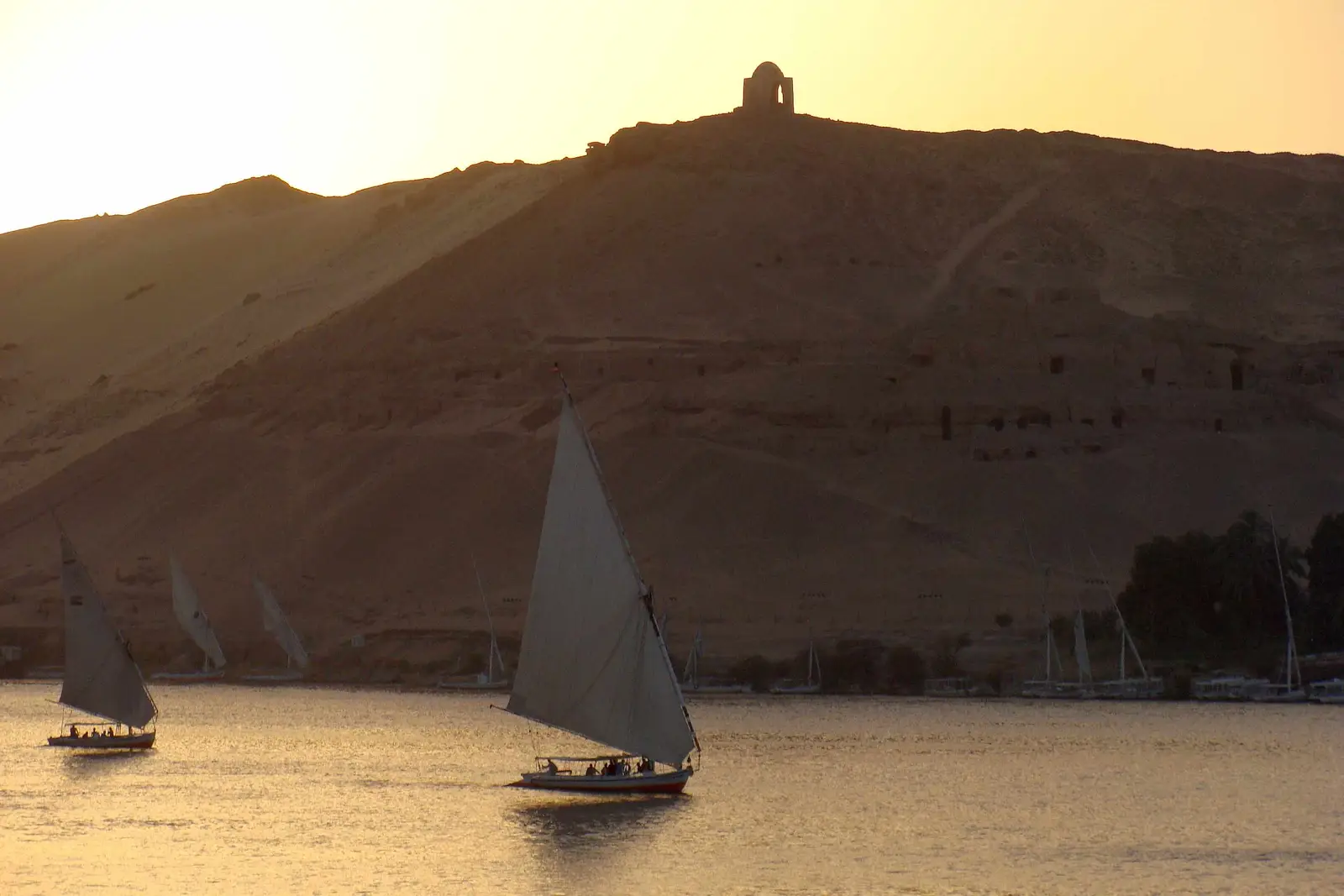
Six hundred kilometres upriver there is a second site with the same name and a completely different character. Qubbet el Hawa sits in the cliff on the west bank opposite Aswan, and the tombs cut into it belong to the Old and Middle Kingdom governors who ran the southern frontier from Elephantine Island.
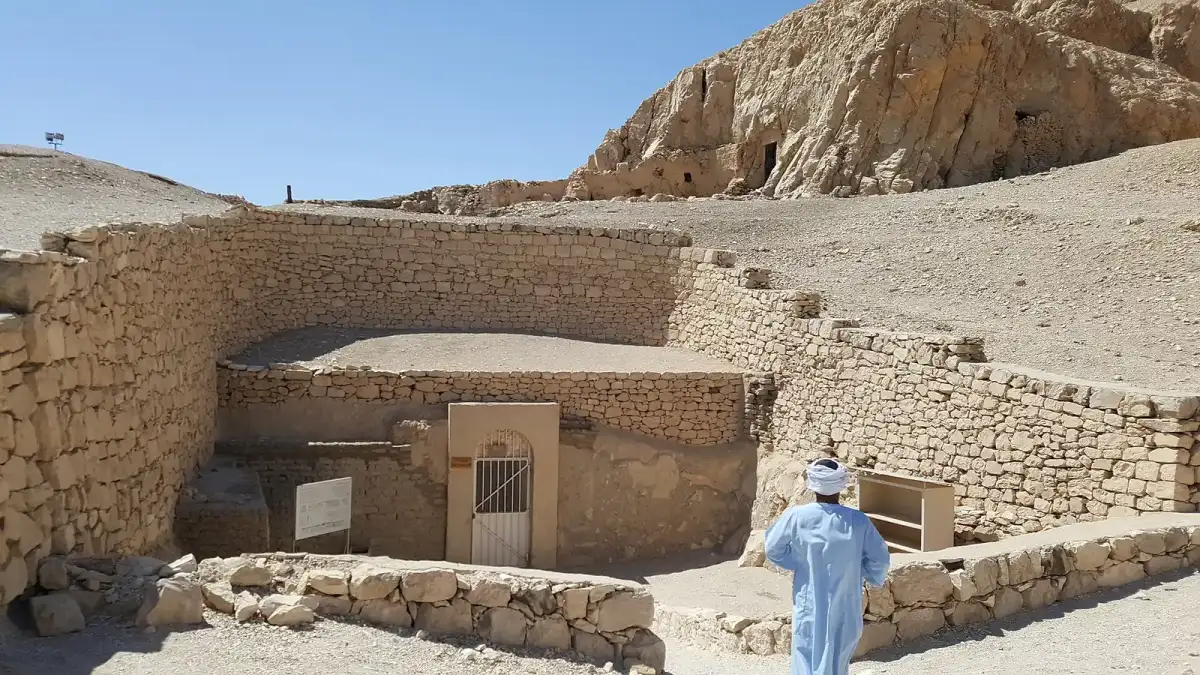
These men were not courtiers. They were expedition leaders who went into Nubia and came back, and their autobiographies are carved beside their doors.
Harkhuf's is the one to read. He led four trading expeditions south under Pepi II and brought back a dancing pygmy, and the letter the boy king wrote him about it, all excitement and instructions not to let the man fall in the river, is reproduced on the tomb facade. It is the oldest piece of personal correspondence most visitors will ever stand in front of.
Sarenput II is the best preserved chamber, with painted pillars and a niche at the back. Mekhu and Sabni share a double tomb reached by the same stair.
Getting there means a boat across the river and then a climb, either up the old causeway steps or by a road that goes round. The view back over Elephantine and the cataract from the terrace is worth the effort on its own, and late afternoon is when to be up there. The Aswan guide covers how this fits with the island sites and the ferries.
How to Fit Them Into a West Bank Day
Second, not first. The royal valley has to be done at opening because the heat is unmanageable later, and the nobles' hill is more forgiving: the chambers are shaded and the walking is short.
The sequence that works is tombs at opening, Hatshepsut next, then this hillside, then out. Most groups replace this stop with the Colossi of Memnon, which takes four minutes and shows you two statues from a car park.
Anyone planning tombs of the nobles egypt keeps on this hill into a longer stay should read the Luxor area guide for how the two banks split up. Our longer Egypt itineraries give the west bank two mornings, which is what makes this stop possible at all.
What to Look for Once You Are Inside
Faces. The painters of these chambers were not working to the royal template and individual faces appear, especially among servants and musicians.
Then look for mistakes. Guide lines under the paint, a figure redrawn, a scene squeezed to fit a corner. The royal tombs were finished by the best workshops in the country and these were not always, which means you can see the working.
Then look at the food. Every banquet wall is an inventory of what people actually ate, down to the shape of the loaves and the cut of the meat.
Then look at the women. The banquet scenes put them in sheer pleated linen with cones of scented fat on their wigs, holding lotus flowers, being served by girls half their size because size means rank rather than age. Nothing in the royal valley is remotely this social.
One instruction before you go in: ask the guardian which wall has the harvest scene, then start there and work left. The entrance wall is usually the most damaged, and starting with it sets the wrong expectation for the room.