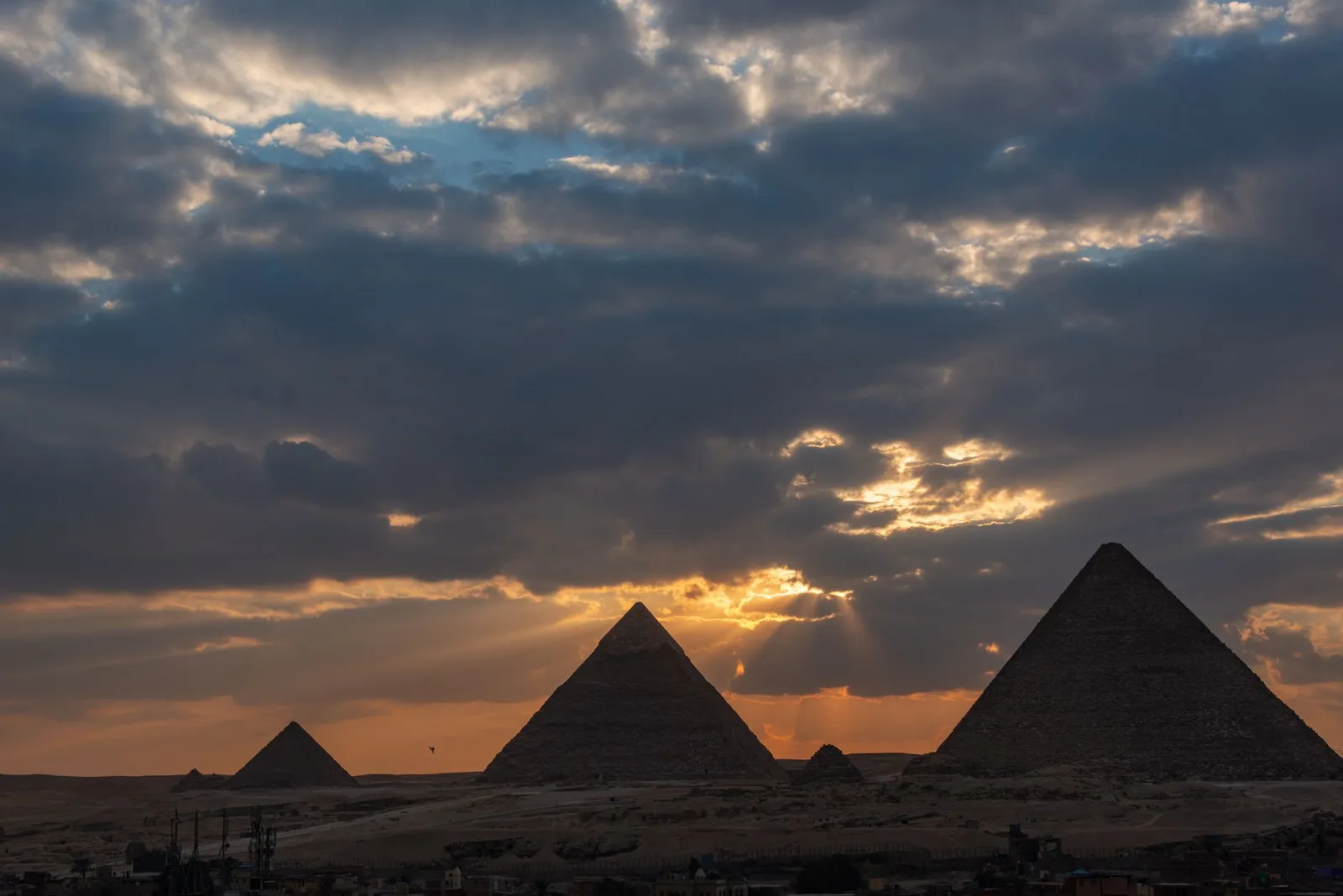
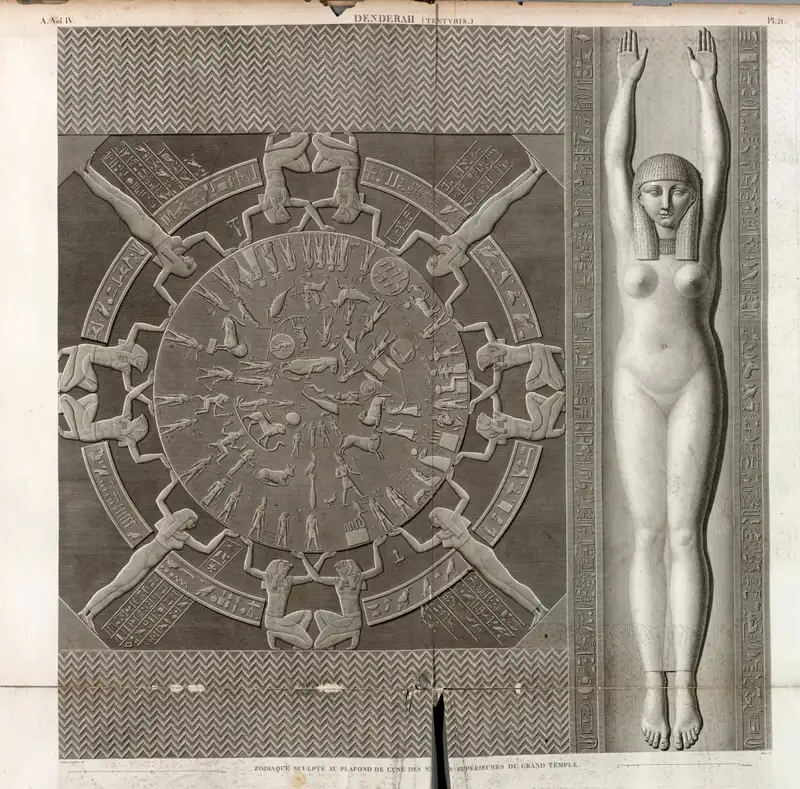
The flower of life egypt pattern is a set of overlapping circles cut into a granite column at the Osireion in Abydos, and almost everything said about it online goes further than the evidence does.
This is a short article because it is a small subject.
What can be said with confidence fits in a few paragraphs, and the rest is attribution rather than fact.
What the Flower of Life Egypt Marks Are
The pattern is a grid of circles of equal size, each one passing through the centres of its neighbours, producing a lattice of pointed petal shapes.
The same geometric figure appears in many places and many periods, from Assyrian palace floors to medieval European manuscripts to Leonardo's notebooks, because it is what you get when you walk a compass around a circle at a fixed radius.
At Abydos the figure appears more than once on the granite, in at least two places on the columns of the Osireion.
The marks are shallow and look drawn rather than carved.
They sit on the surface of the stone rather than being integrated into any decorative scheme, and they do not align with the architecture around them.
They are also, in places, faint enough that a photograph taken in flat light shows very little.
Where They Are on the Structure
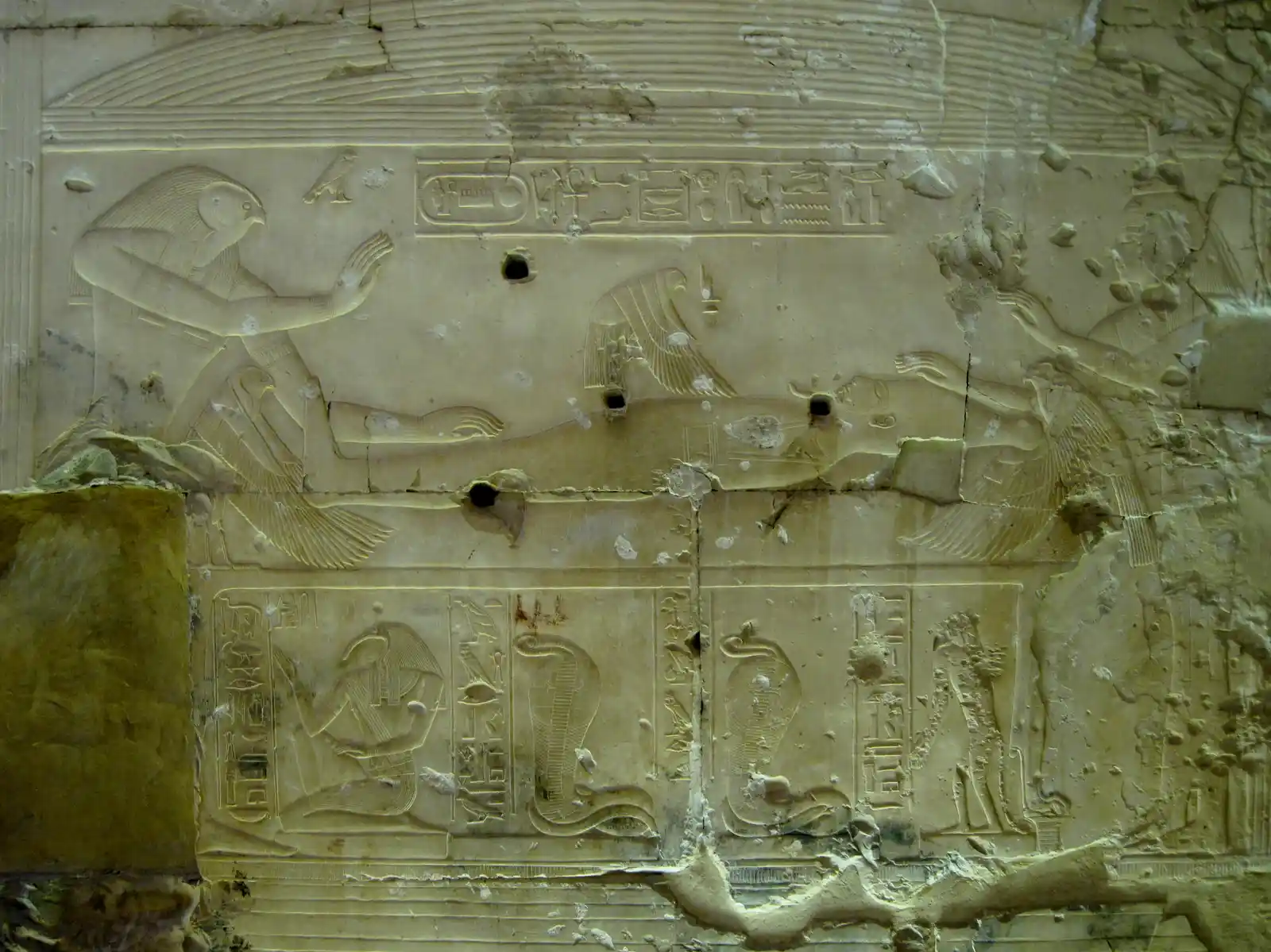
The Osireion is the sunken structure behind the temple of Seti I, with a central hall of enormous unmortared granite pillars standing in groundwater.
The marks are on those pillars rather than on the decorated chambers at the ends of the building.
That placement is part of what makes them puzzling, because the pillars themselves carry no other decoration at all.
Whatever the marks are, they are on a surface that was otherwise left plain.
Reaching them is a question of water level, since the central hall is normally flooded and visitors view it from the edge of the cutting rather than walking among the columns.
Why the Date Is Genuinely Unresolved
There is no scientific dating for surface marks of this kind.
A pattern cut shallowly into granite cannot be dated by the methods used on organic material, and the stone itself only tells you when the rock formed, not when somebody drew on it.
Nor is there any inscription associating the marks with a name or a reign.
That leaves stylistic comparison and context, both of which are weak tools here, because the figure is too simple and too widespread to be diagnostic of a period.
Anyone who tells you the date confidently, in either direction, is going beyond what the evidence supports.
This is the honest core of the subject and the reason this article is short.
The Explanations People Give
The most commonly offered explanation among Egyptologists and site specialists is that the marks are graffiti of the Greek or Roman period, when Abydos was still receiving visitors and when this geometric figure was in circulation in the Mediterranean world.
A second explanation places them later still, in the Coptic period, when the structure was used by Christian occupants and when marking surfaces was common.
A third view, held by some readers rather than by specialists, treats the marks as contemporary with the structure and as evidence of geometric knowledge in dynastic Egypt.
The difficulty with the third is that no comparable figure appears in dated Egyptian material from the period, which is a significant absence given how much dynastic material survives.
The difficulty with the first two is that neither has direct evidence either, and both rest on plausibility rather than proof.
Some writers argue for the earlier date and Egyptologists generally do not, and that sentence is as far as the evidence currently allows anybody to go.
How the Flower of Life Egypt Story Spread
The marks were known to people working at the site long before they were known to anyone else, and they appear in site photography without comment for decades.
What changed was popular publishing in the late twentieth century, which gave the figure a name and attached a body of meaning to it, and then the internet, which reproduced photographs of the Abydos columns far more widely than any book had.
The name itself comes from that popular literature rather than from Egyptology or from any Egyptian source, and no ancient text calls the figure anything.
That matters for a reader trying to check a claim, because searching the modern name returns the modern literature rather than the archaeological record.
The pattern at Abydos is now among the most photographed details of the site, which says something about how attention works and very little about the date of the marks.
What This Article Does Not Claim
A great deal written about this pattern describes what it supposedly does: what it means spiritually, what it represents about the structure of matter, what effect it has on a person standing near it.
None of that is described here, and the omission is deliberate rather than an oversight.
Those are claims about experience and belief rather than about the stone, and this article is about the stone.
What can be said fairly is that a number of people find the pattern significant and travel to Abydos partly to see it, that it has a substantial literature outside academic Egyptology, and that the interest in it is real whatever its date turns out to be.
Describing what people believe, attributed to them, is different from asserting it.
Seeing It, and Keeping It in Proportion
Visitors sometimes arrive at Abydos for the marks and leave disappointed, which is usually a problem of expectation rather than of the site.
They are faint, they are on columns standing in water, and the viewing position is from the edge of the cutting above.
The building they are on is far more remarkable than the marks themselves: unmortared granite blocks weighing many tonnes, set with tight joints, in a plain style unlike the temple in front of it.
The full article on the Osireion at Abydos covers that structure, its disputed dating, the temple of Seti I and the king list, which is what a visitor actually spends the day looking at.
Abydos is roughly three hours by road north of Luxor, so nobody makes the trip for a pattern on a column alone.
How to Weigh What You Read About It
Two questions separate the careful writing on this subject from the rest.
The first is whether the writer distinguishes the age of a mark from the age of the surface it is on, because a Roman visitor drawing on a thirteenth century structure tells you nothing about when that structure was built.
The second is whether the writer says how the date was established, and accepts that the answer is currently that it has not been.
Writing that treats the marks as proven ancient, and writing that treats them as proven modern, both fail those tests.