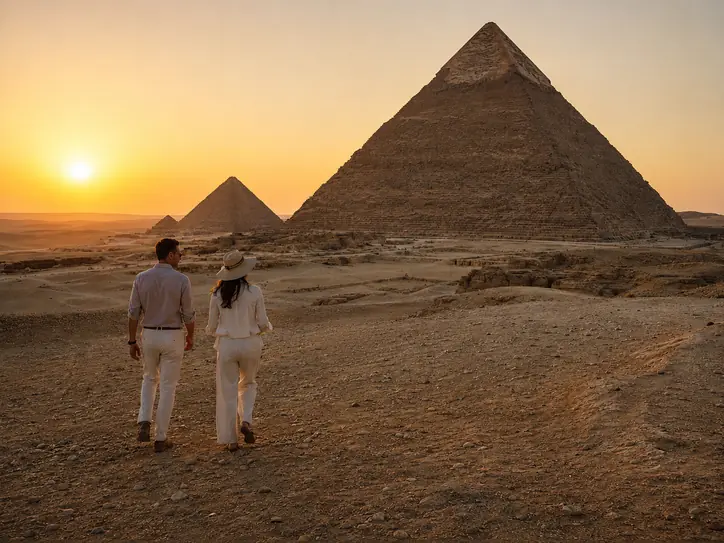
The word private covers four different things at Giza: the vehicle, the guide, the group you are in, and the hour you arrive. A tour can be private in one of those and shared in the other three. The hour is the one that changes the day, and it is the one least often written down.
That is the short version of what private pyramid tours egypt actually sells. The rest of this is how to tell them apart before you pay.
What Private Means, and What It Does Not
Start with the vehicle, because that is the definition most operators are using.
A private vehicle means you and your party travel alone with a driver. That is genuinely worth having in Cairo, where the distance between the hotel and the plateau is measured in traffic rather than kilometres, and where a coach that waits for forty people is a different kind of morning.
A private guide means the guide is yours for the day and speaks to nobody else. That is a separate charge and a separate arrangement, and plenty of tours sold as private put a private car with a guide who is handling three parties in rotation.
A private group means the only people on the tour are the people you arrived with. Most tours described as private do mean this. Some, particularly the cheaper ones, mean a small group of strangers.
And then there is the hour, which nobody sells because it is harder to deliver.
The Hour Is the Whole Thing
Giza opens early and the coaches arrive mid morning. Between those two facts sits the difference between a memory and a queue.
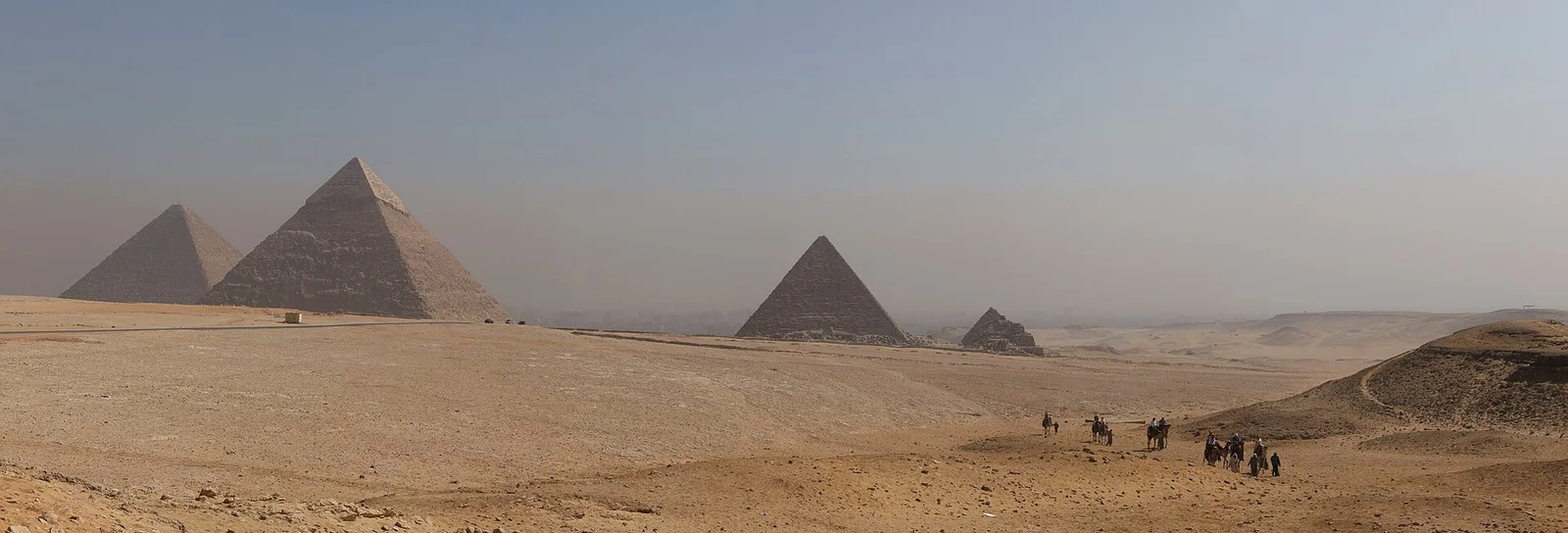
At opening, the plateau is quiet, the light is low and gold, and the photograph from the panorama point has nobody in it. Two hours later the same view has a car park in it.
We can arrange access to certain sites before they open to the public, and to others after they close. That is not available everywhere and it is not available every day, and any operator who promises it casually is worth a follow up question.
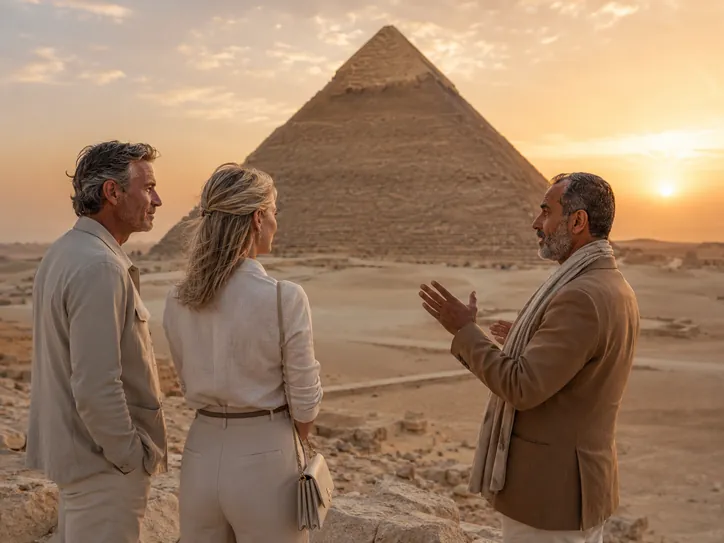
Sunset is the other quiet window. The plateau closes earlier than people expect, so it is a narrower opportunity than the morning, but the light on the south face of the Great Pyramid in the last hour is the best of the day and the coaches have gone.
If early access is not possible on your dates, the next best thing is simply being first through the gate, which is a matter of leaving the hotel earlier than feels reasonable.
A Private Giza Pyramids Tour, Hour by Hour
The shape most people end up with, and why each part sits where it does.
Arrive at opening at the main gate. Great Pyramid first, from the outside, while the light is still worth something. Then Khafre and Menkaure, then the panorama point where all three line up, then down to the Sphinx and the valley temple last, because the Sphinx faces east and looks better later in the morning than at dawn.
Three hours covers it comfortably. Four if you go inside a pyramid and stop for a camel.
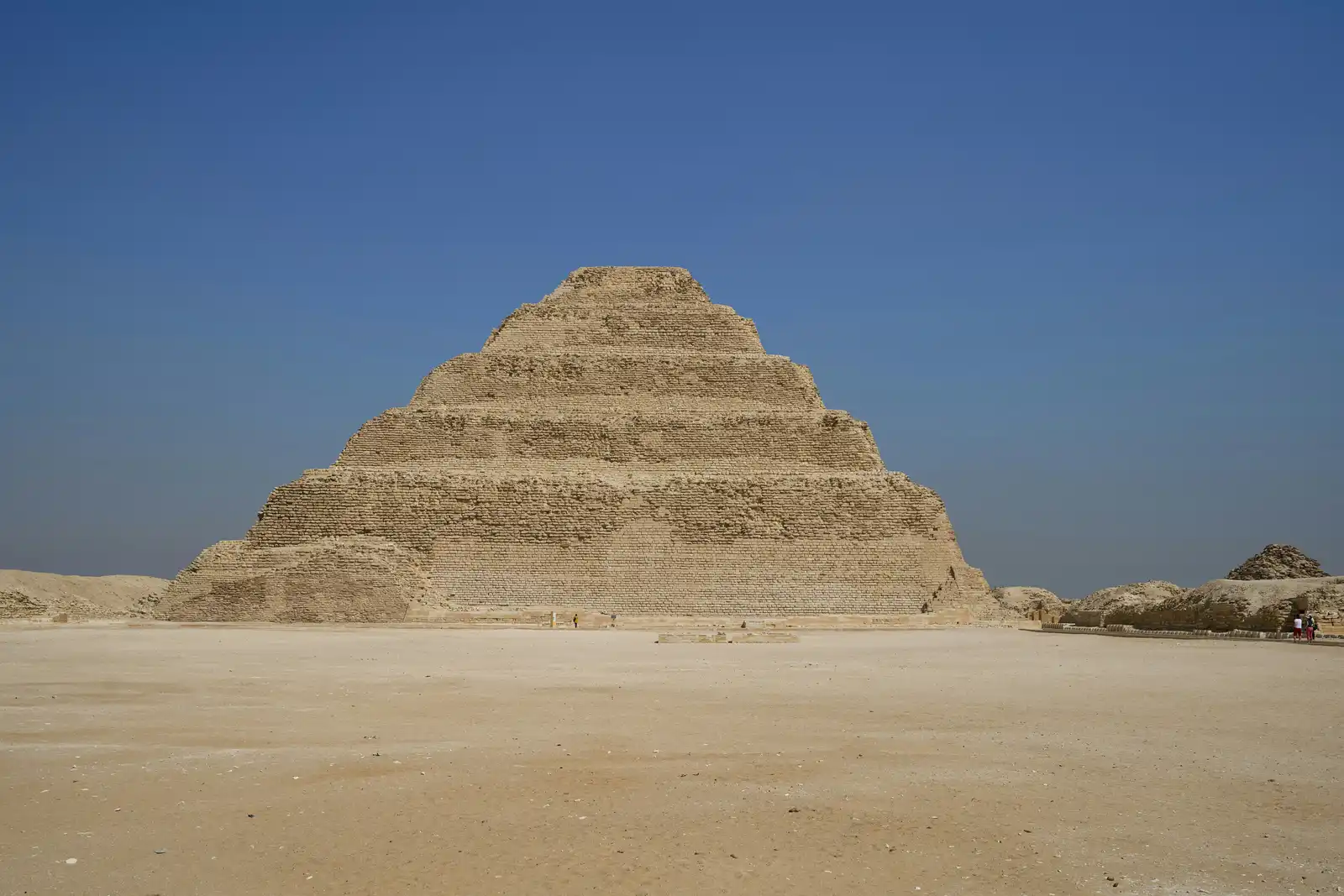
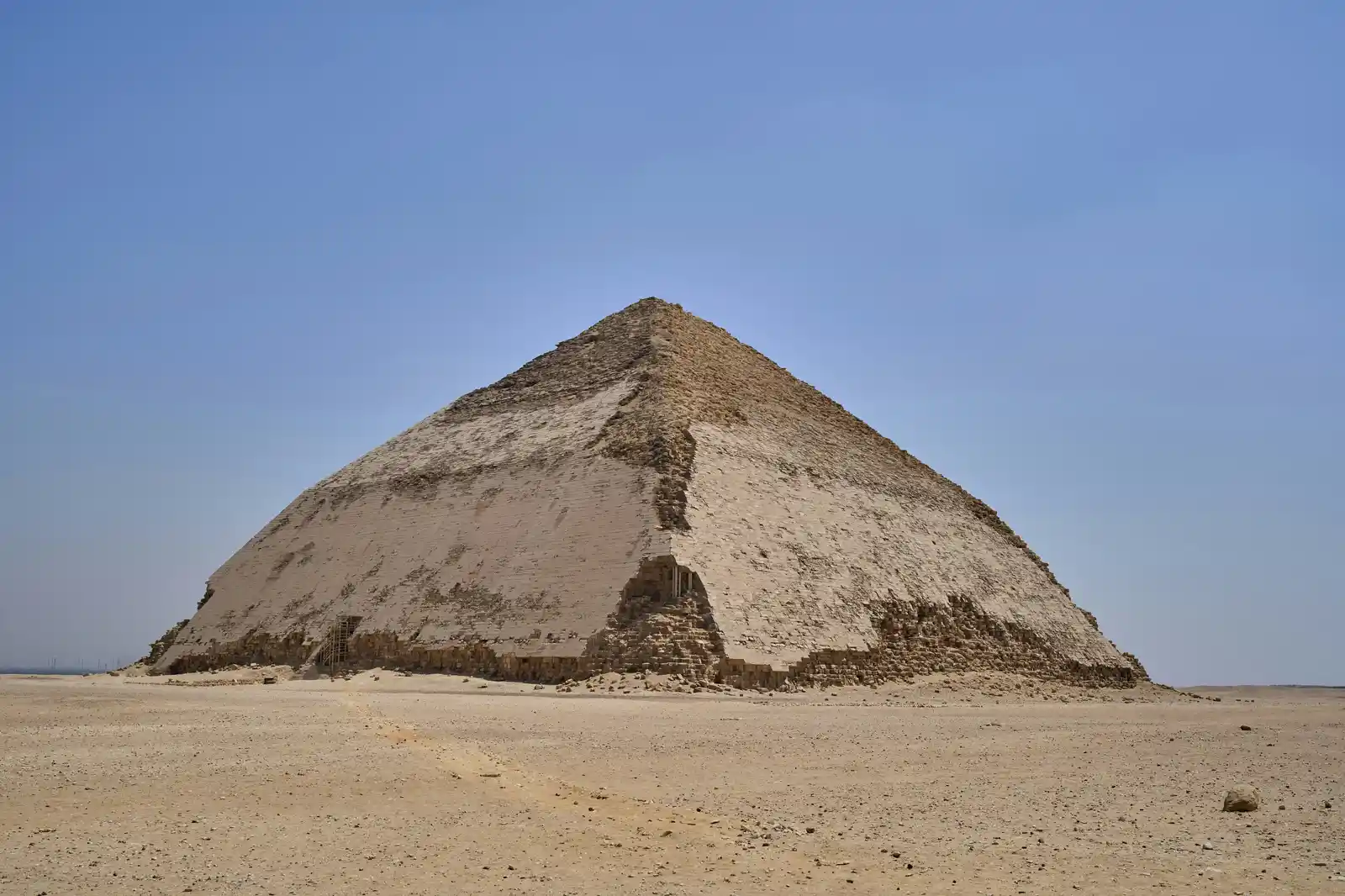
Most itineraries then continue to Saqqara and Dahshur in the afternoon, which is the right call. Giza is famous and Dahshur is empty, and seeing them on the same day is what makes the point about scale land.
Going Inside: Which Pyramid, and Whether to Bother
You can enter the Great Pyramid, and it is a separate ticket bought on the day.
Be honest with yourself about what it involves. A low bent walk up a narrow ascending passage, warm air, no ventilation to speak of, and a bare granite chamber at the top with nothing in it. People with claustrophobia, bad knees or a bad back should skip it without embarrassment.
The chamber is empty. That is not a disappointment if you know it in advance and a real one if you do not.
Khafre's pyramid is usually a better experience for the same effort, with fewer people in the passage. Ask your guide which is open on the day, because the authorities rotate them.
What Private Pyramid Tours Egypt Should Include
Entrance to the plateau, a licensed Egyptologist guide, the car and driver, and bottled water. Those four are the baseline and anything missing one of them is not the thing it says it is.
Usually extra: entry to the inside of a pyramid, the Solar Boat museum, camel or horse rides, and lunch. None of those is a problem as an extra. It is a problem when it is not mentioned until you are standing there.
Never included anywhere: tips. Budget for them and carry small notes.
The Guide Is the Purchase
Everything else on this page is logistics. The guide is the reason the day is either interesting or a walk around some large stones.
A licensed Egyptologist has a degree in the subject and a licence from the Ministry of Tourism and Antiquities. That is a real qualification and it is checkable. Ask.
On our trips one guide travels with you for the whole journey rather than a different person in each city. The practical effect is that by day four they know what you actually find interesting, and the commentary stops being a script.
Dealing With the Plateau Itself
Giza is an open site in a working city, and the approach can feel like a market.
The area outside the gate is not the site. Whatever is said to you on the approach road about the plateau being closed today, about a better entrance further along, or about a stable holding the only permitted horses, is a sales line. The gate you booked for is open.
People will offer camel rides, headscarves, small statues and to take your photograph. A polite no thank you, said once and then not discussed, works. Do not accept anything described as a gift.
Agree the price before a camel or a horse moves, and agree it for the return journey too, because the classic version of this involves a negotiation conducted while you are some distance from where you started.
A private guide removes almost all of this, which is one of the less romantic reasons to book one.
What to Wear and When to Drink
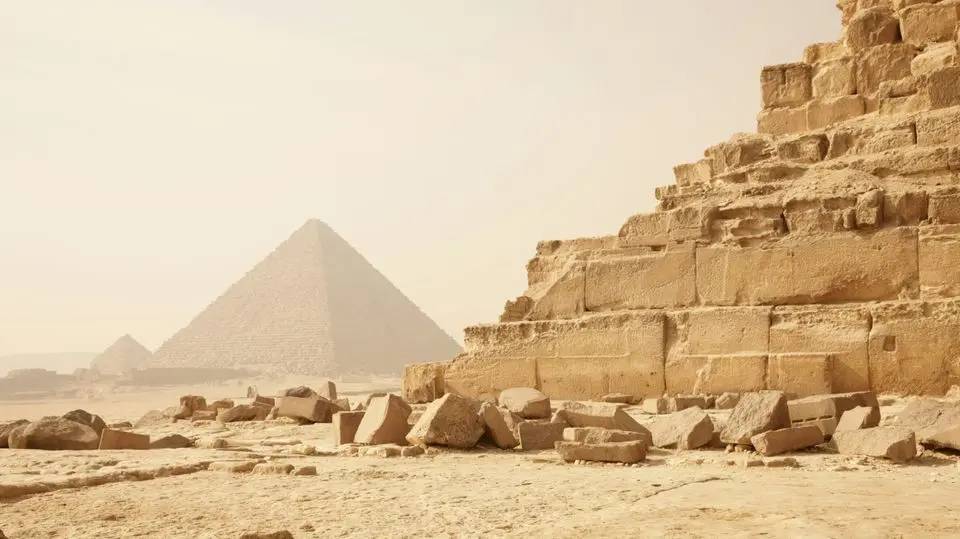
Closed shoes with grip. The plateau is sand and loose rock and there is climbing over blocks involved, and sandals are the wrong tool.
Hat, sunglasses, high factor sun cream. There is no shade anywhere on the plateau, none at all, and the sun in the middle of the day between May and September is not something to be brave about.
Carry more water than you think you need and drink it before you are thirsty. Most of the people who have a bad morning at Giza are dehydrated rather than unfit.
Cover shoulders and knees if the afternoon continues to a mosque, which on most Cairo days it does. Nobody at Giza minds what you wear, but the next stop might.
Cost, and Why the Range Is So Wide
Private pyramid tours egypt is a search term rather than a product with a list price.
A shared coach seat and a genuinely private morning are advertised under similar words and are not comparable products.
What moves the price is the guide's licence and experience, whether the vehicle is yours alone, the size of the party, whether any early or after hours access is arranged, and how much of the day is covered. Those five, in roughly that order.
We do not publish a figure on this page because a number without those five variables attached would be meaningless. Ask for the breakdown rather than the total, and compare the breakdowns.
Where This Fits in a Longer Trip
Giza is a morning, not a holiday, and treating it as the whole point of Cairo is the most common planning error here.
The city needs three days: one for the plateau and the older pyramid fields, one for the museum, and one for Islamic and Coptic Cairo at a slower pace. The guide to touring Cairo privately covers how those days fit together, and the Cairo destination guide covers the rest of the city.
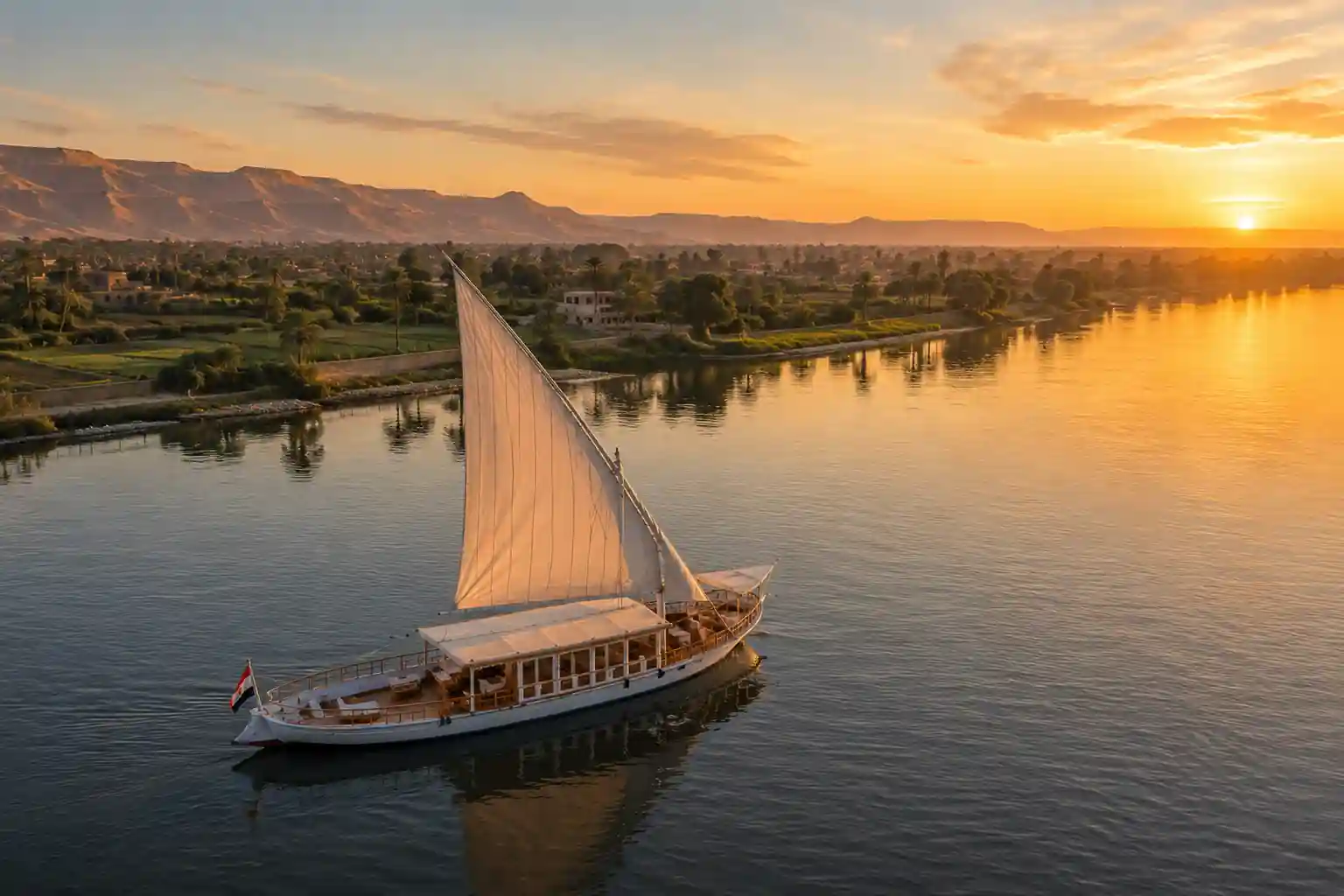
Most guests see the pyramids as the first two days of something longer that runs down to Luxor and Aswan. These private itineraries show the usual shapes, and any of them can start with an early morning at Giza instead of a mid morning one, which is the single change most worth asking for.
One thing worth watching before you fix your dates is the tethered balloon installed near the plateau, which entered trial operation at the end of August 2026 and is covered in our guide to seeing the Giza pyramids from above.