You walk down into it.
Street level in this part of the city has risen several metres over nineteen centuries, so the entrance to Coptic Cairo is a staircase going down to the ground everything here was built on. That descent is the most useful thing about the visit, because it tells you immediately that you are standing in an older layer of the city rather than a quarter that happens to have old buildings in it.
Inside a walled enclosure a few hundred metres across are a church built into a Roman gate, one of the oldest synagogues in Egypt, several other churches, a cemetery and a museum. You can walk the whole thing in two hours.
What Coptic Cairo Is
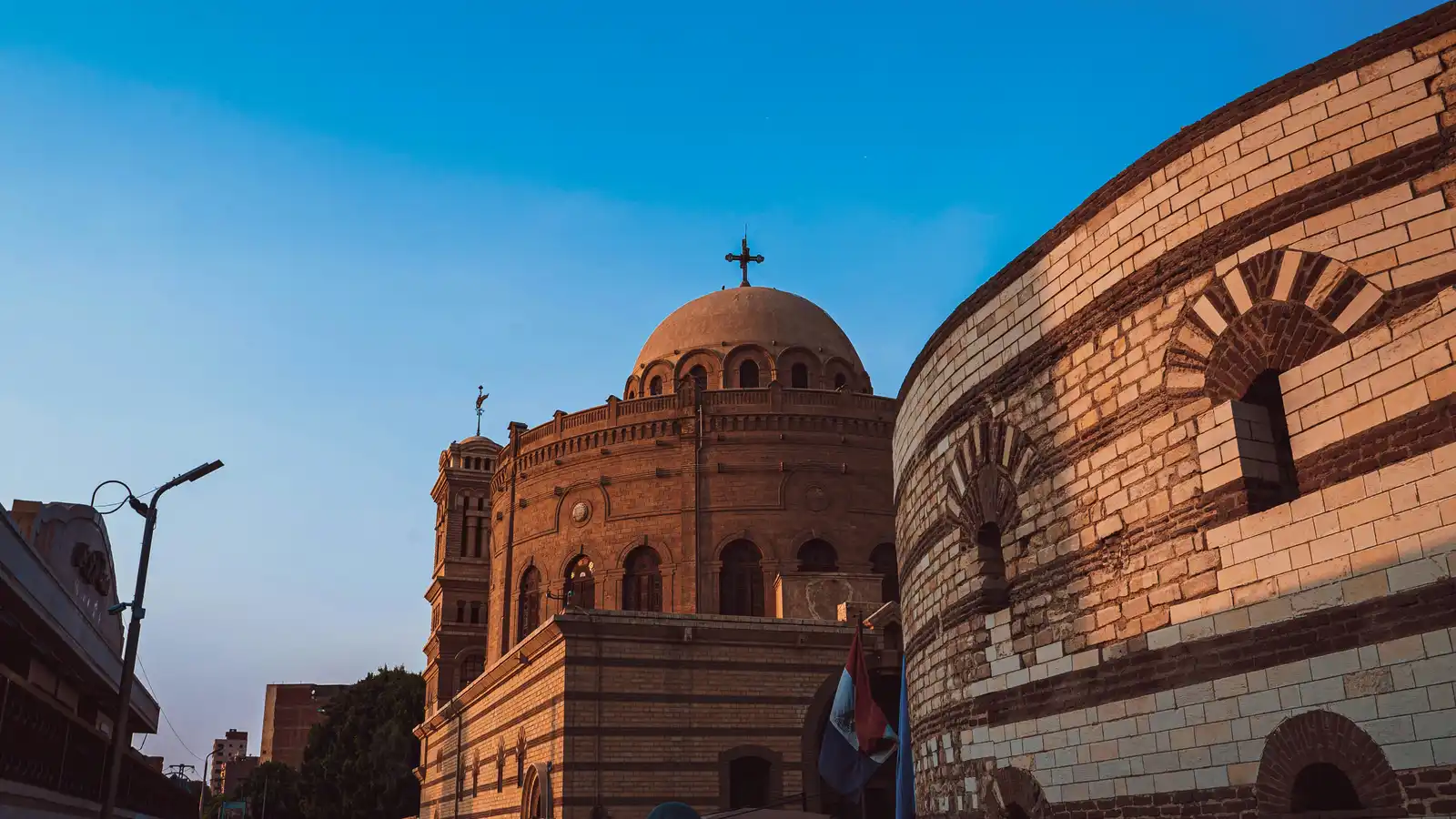
The enclosure is the remains of Babylon, a Roman fortress that guarded the point where a canal met the Nile. Two of its round towers still stand, and the river has since moved several hundred metres west, which is why a fort built on a waterfront is now inland.
Copts are Egyptian Christians, and the Coptic Orthodox Church traces its founding to the evangelist Mark in the first century. Estimates of the Christian share of Egypt's population range from about 5 to 15 per cent and no census settles it, but by any of them this is the largest Christian community in the Middle East.
The buildings here span from the Roman fort through the early churches to a nineteenth century synagogue restoration. They are working religious sites, not a museum quarter, and several hold services you may walk into.
The enclosure also holds a Greek Orthodox church, a convent, and a cemetery that is still in use. It is a quarter of a living city that happens to be very old, which is a different thing from a preserved site.
The Hanging Church
Al Muallaqa, the suspended one, is built across the gap between two towers of the Roman gate, its nave resting on the old masonry with nothing underneath. A section of glass floor inside lets you look down the drop.
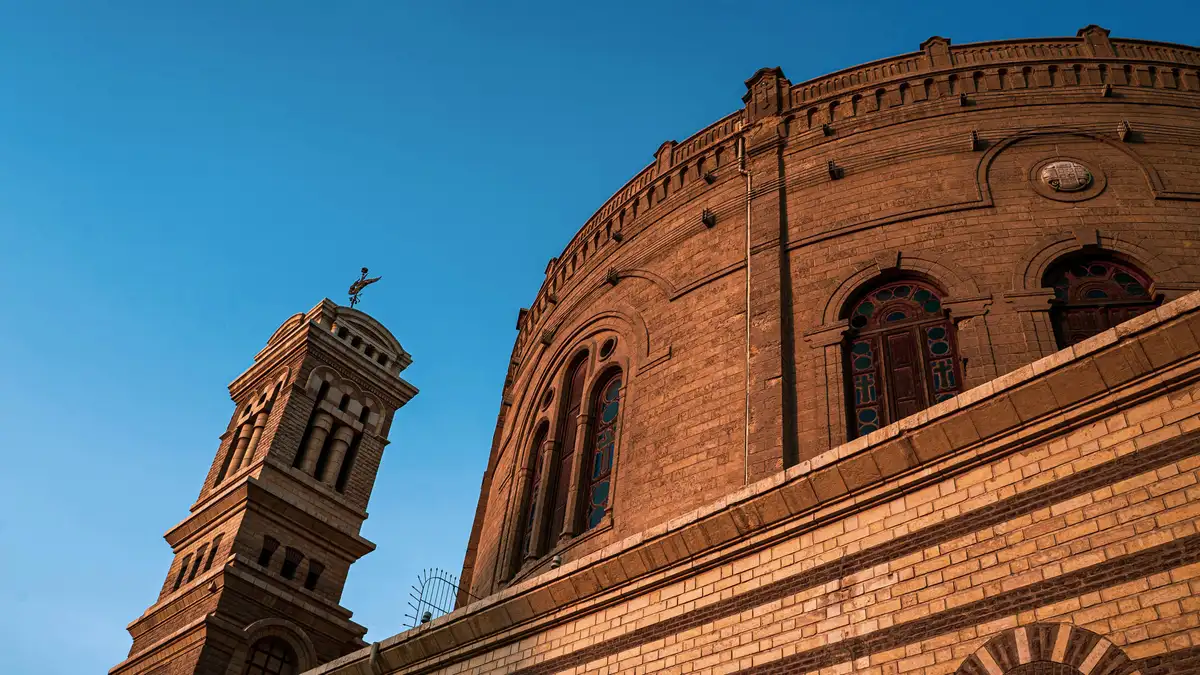
The present building is mostly eleventh century and later, with a facade and twin bell towers from the nineteenth. Inside are a marble pulpit on thirteen columns, ebony and ivory screens, and a set of icons in the dim light behind them.
The hanging church cairo visitors queue for is the most photographed building in the enclosure and the most crowded. Go first thing, or in the last hour before closing, and you will have the nave to yourself for a few minutes.
The Church of St Sergius and Bacchus
Abu Serga is the one to see if you see only one interior. It is fifth century in origin, built over a crypt that tradition identifies as a resting place of the Holy Family during their flight into Egypt.
The crypt is often closed because of groundwater, and this is worth knowing before you go rather than discovering at the steps. When it is open it is a small, plain, waterlogged room, and the queue is long.
The church above is the better building anyway: a basilica plan with ancient columns reused from earlier structures, a wooden ark ceiling shaped like an upturned boat, and far fewer people in it than in the Hanging Church a hundred metres away.
Ben Ezra Synagogue
A synagogue since the ninth century, on the site of a church that was sold to pay a tax, standing where a Jewish community lived in Cairo for well over a thousand years.
Its importance is documentary. A geniza, a storeroom for papers bearing the name of God that could not be destroyed, was walled up here and left. When it was opened in the nineteenth century it held around 300,000 fragments: letters, contracts, shopping lists, schoolwork, court records, poetry, spanning roughly the ninth to the nineteenth centuries.
The Cairo Geniza is one of the greatest single sources for medieval Mediterranean life anywhere, and almost everything scholars know about ordinary Jewish, Muslim and Christian commerce in that world comes out of this building. The interior is restored and modest. Photography inside is not allowed.
Stand in it for a minute anyway. The room is small and plain and the documents that came out of the roof space above it rewrote a field, which is a strange thing to be standing inside.
The Coptic Museum
Most visitors walk past it, and it is the best thing in the enclosure.
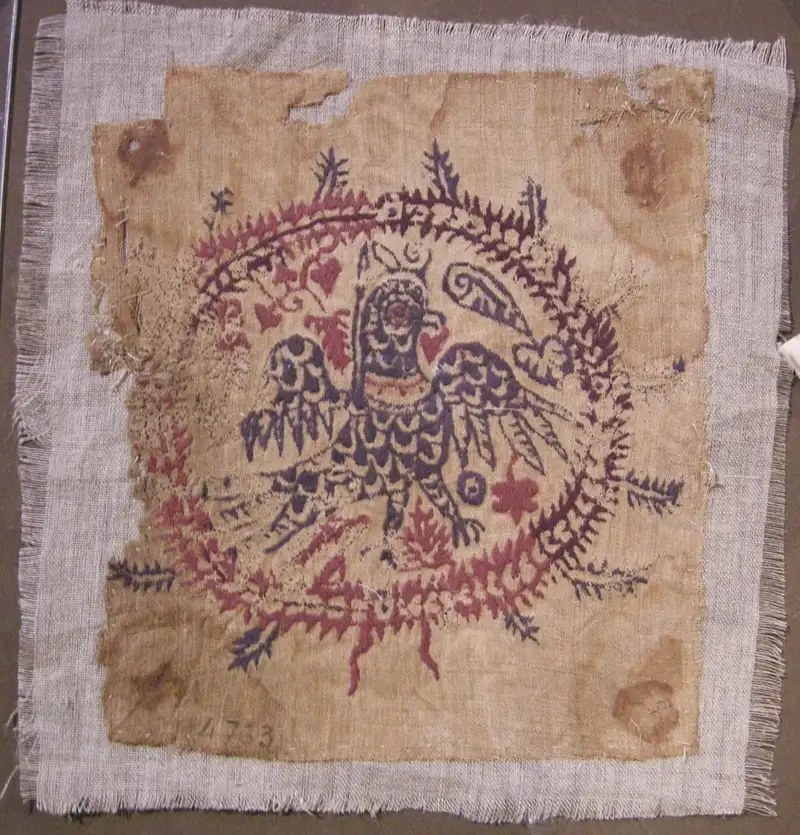
The coptic museum cairo keeps is a purpose built house of Coptic art founded in 1908, with carved wooden ceilings and mashrabiya screens that are worth the ticket before you look at a single exhibit. Inside are textiles, stonework, manuscripts and icons covering the period between pharaonic Egypt and Islamic Egypt, which is the gap almost nobody fills in.
It also holds part of the Nag Hammadi library, the codices found in Upper Egypt in 1945 that contain the Gospel of Thomas and other texts left out of the canon. Seeing the actual bound papyrus is not something the Grand Egyptian Museum can offer.
Allow forty five minutes. It is air conditioned, which on a Cairo afternoon is not a small consideration.
How to Walk It
Start at the Coptic Museum while you are fresh, then the Hanging Church, then down the sunken lane to Abu Serga, then Ben Ezra, then out past the cemetery. That is roughly a loop and it takes two hours at a steady pace.
Doing the museum last, which is what most groups do, means arriving at the best building of the four already tired and out of time. It is the single change that improves the visit most.
The lane between the churches is sunken, narrow and partly covered, which makes it several degrees cooler than the street above. In July that matters, and it is the reason this is one of the few Cairo walks that works at two in the afternoon.
The Metro stops at Mar Girgis, directly outside the entrance, which makes this one of the few Cairo sites where public transport is genuinely the easiest option. Line 1, about twenty minutes from downtown.
Visiting a Working Church
Dress as you would for any place of worship: shoulders and knees covered, for everyone. Nobody will hand you a robe at the door, and nobody will say anything if you get it wrong, which is precisely why it is worth getting right.
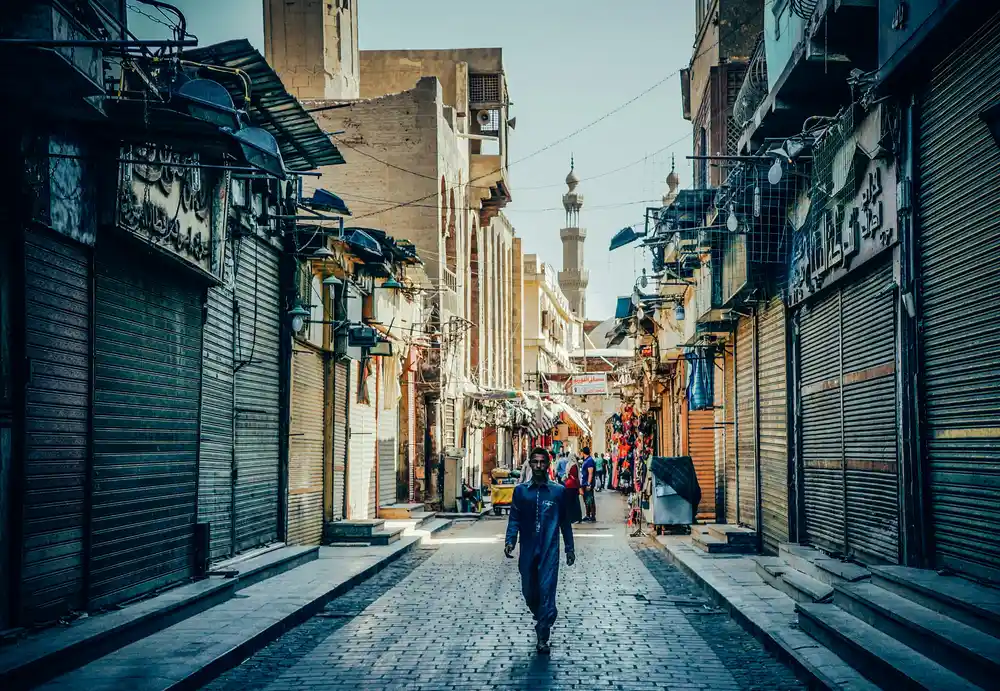
Services run on Sundays and on Coptic feast days, and the enclosure is busy with worshippers rather than visitors on those mornings. You are not excluded, but you are a guest at something that is happening rather than a spectator at something arranged.
Keep your voice down inside and your phone silent. Photography is allowed in most of the churches and not in Ben Ezra; the rule is posted at each door and it is followed.
What Is Not Worth Your Time
The souvenir stalls along the lane sell the same machine made items as every other site in the country, at the same prices, and they take up the walk between two of the best buildings here.
The Church of St George, the round one on the north side, is a twentieth century rebuild after a fire and is rarely open to visitors. It photographs well from outside and that is about the size of it.
And if the Abu Serga crypt is closed, do not wait around hoping. It stays closed for months at a time when the water is high.
Where It Fits in a Cairo Day
Half a day, easily. It pairs naturally with a visit to the Amr ibn al As mosque a short walk north, which is the oldest mosque in Africa, or with Islamic Cairo further north for a full day of the city's religious history in chronological order.
Coptic Cairo Egypt visitors reach by metro is also one of the few parts of the city that works in the middle of the day, because most of what you came for is indoors and cool.
The Cairo area guide covers how the districts fit together, and the Grand Egyptian Museum guide covers the other half of a Cairo stay. Our private Cairo itineraries usually pair this enclosure with Old Cairo rather than with Giza, because the two halves of that day belong to the same city and the pyramids do not.
One last practical note. There are clean public toilets by the museum entrance and effectively nowhere else in the enclosure, which is the sort of thing no guidebook prints and everybody needs to know.