Last reviewed: September 2026. Advisories change. Read the official page linked below before you travel rather than relying on any summary, including this one.
So, is egypt safe for americans. The US State Department has Egypt at Level 2, Exercise Increased Caution, which is the same level it gives France, the United Kingdom, Germany and Italy. Two areas are excluded at Level 4, Do Not Travel: Northern and Middle Sinai, and parts of the Western Desert.
Neither excluded area sits on a standard Egypt itinerary. The detail below is where the lines are actually drawn and what they mean for a trip that includes the Western Desert, which is the one case where it matters.
What Level 2 Actually Means
The State Department runs four levels, from Exercise Normal Precautions at Level 1 to Do Not Travel at Level 4. Exercise Increased Caution is Level 2 and Reconsider Travel is Level 3.
Level 2 is the level most of Western Europe sits at. France, Germany, Italy, Spain and the United Kingdom have all carried it, for reasons ranging from terrorism risk to pickpocketing. It is a long way from a warning against going.
It is also not nothing. Level 2 means there are identified risks that an ordinary traveller should be aware of and take account of, and the advisory names them rather than leaving you to guess.
The full text, and any change to it, lives at the State Department's Egypt advisory page. That is the source. Read it yourself.
The Two Regions at Do Not Travel
This is the part that gets summarised badly, so here it is plainly.
Northern and Middle Sinai are at Level 4, Do Not Travel. That is a security situation and it has been in place for years.
It does not include the South Sinai resort area around Sharm el Sheikh and Dahab, which is treated separately. Nor does it include St Catherine's, though the access routes there have their own restrictions at times.
Parts of the Western Desert are also at Level 4, Do Not Travel. The desert is enormous and the advisory does not put all of it in that category, but some of it is there, and any article that tells you the Western Desert is simply fine is not describing the advisory accurately.
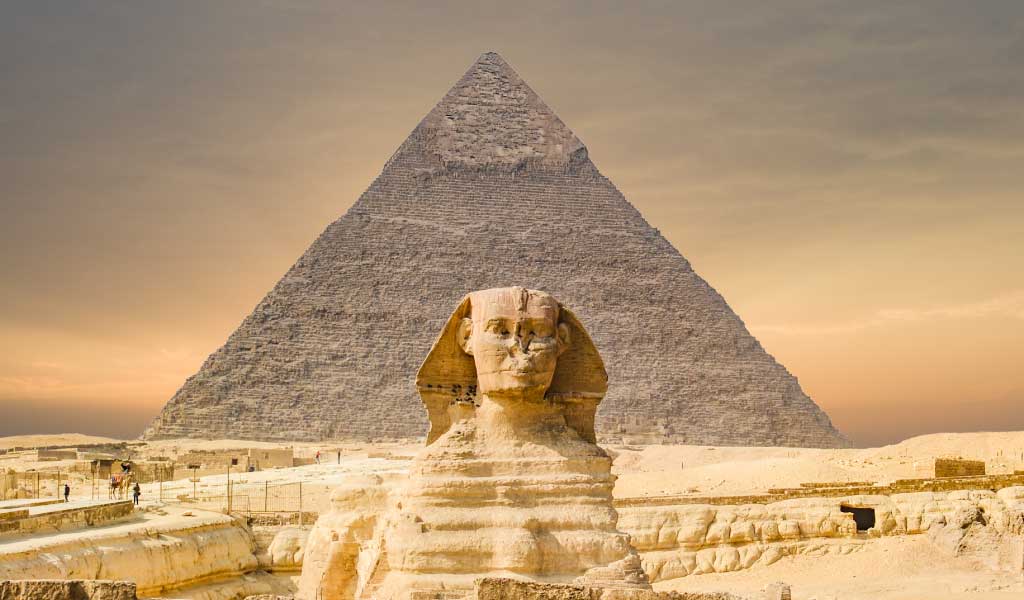
This matters to real itineraries, because Bahariya and the White Desert are in the Western Desert and are genuinely popular. The answer is not that the warning does not apply. The answer is that the permitted routes and the excluded areas are different things.
How We Handle the Western Desert
Our Bahariya and White Desert trips run only with a licensed operator, on permitted routes, with the permits that requires. That is not a marketing position. It is the legal condition for being out there at all: the White Desert is a national park, independent camping is not allowed, and the tracks that are open are not the ones you would choose from a map.
If you want the chalk formations and the black hills, that is how it is done. If an operator offers to take you into the Western Desert without a licence and without permits, the problem is larger than the advisory.
And if the current advisory position for a particular route changes, the trip changes. That is the honest version and it is the one worth hearing before you book.
Is Egypt Safe for Americans in Practice, Away From the Advisory
The question is it safe for americans to travel to egypt usually means something narrower than the advisory answers: will I be targeted for being American. Anyone asking is egypt safe for americans in that sense is asking about reception rather than about security policy.
In ordinary tourist Egypt, no. Americans are a large and long standing share of visitors, the tourism economy is enormous and visible, and the reception is warm to the point of being tiring. You will be asked where you are from constantly and the answer is received with enthusiasm rather than anything else.
The risks that actually affect visitors are mundane. Road traffic is the big one, by a wide margin. Then heat, then stomach upsets, then the persistent commercial attention at major sites that wears people down and is not dangerous.
Violent crime against tourists is rare. Petty theft exists at the level of any busy city.
How Safe Is Egypt for Americans Compared With Home
An awkward comparison, and worth making anyway. The question how safe is egypt for americans is usually asked by people who do not ask it about a trip to a major US city.
On the measures that can be compared, violent crime rates in Egypt are low. The country's serious risk is concentrated in specific regions, which is exactly why the advisory is regional rather than national.
The thing that is genuinely more dangerous than at home is the road. Egyptian traffic is fast, dense, and governed by conventions rather than rules, and road deaths per vehicle are high. This is the argument for a driver rather than a hire car, and it is a stronger argument than anything on the advisory page.
Women Travelling, and Travelling Alone
Street harassment is common in Egypt and it is mostly verbal. Women travelling without a male companion should expect comment in crowded public places, particularly in Cairo, and it is wearing rather than threatening.
What reduces it, in order: being with a guide, dressing to cover shoulders and knees at sites and in neighbourhoods away from resorts, and using arranged transport rather than hailing in the street.
Solo travel here works and plenty of people do it. Solo travel with a private guide and driver works better, and that is a practical observation rather than a sales line.
The question is egypt safe to visit for americans travelling alone usually comes from women, and the honest answer separates the two halves of it. The security picture is the same whoever you are. The daily experience is not, and the difference is comment in the street rather than anything more serious.
What Changed, and What Did Not
People remember headlines from years ago and carry them into a booking decision without checking whether they still describe the country.
The attacks that shaped Egypt's reputation with American travellers were in the 1990s and in the years after 2011, and they were concentrated in places and periods that are not the present one. Tourist numbers collapsed and have since recovered substantially, which is itself a piece of evidence: a great many people are going and coming back without incident.
What has not changed is the regional pattern. Sinai has been a genuine security problem for over a decade and remains one. The border areas with Libya and Sudan are not casual destinations. Those facts sit alongside a Nile valley that is heavily policed and heavily visited.
Reading a fifteen year old article about Egyptian security is like reading a fifteen year old article about anywhere. The advisory is updated and this page is not the record. Anyone answering is egypt safe for americans from memory is answering about a country that has moved on.
What Your Operator Should Be Doing
Three things, and you can ask about all of them before you book.
Knowing the current advisory position for every region on your itinerary, not just the country headline. Holding the licences and permits for any restricted route, which in practice means the Western Desert. And having a contact in Egypt who answers at two in the morning rather than during office hours in another time zone.
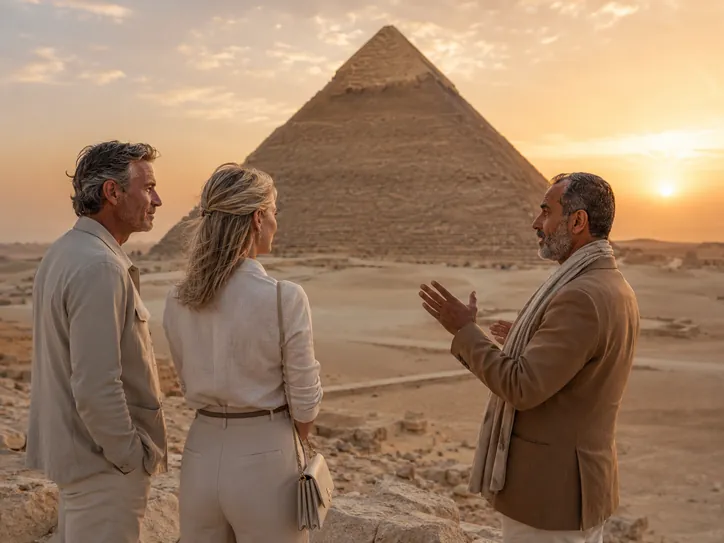
Beyond that, the ordinary things: a driver who is employed rather than hired at the roadside, vehicles that are maintained, and a guide who stays with you rather than handing you between local agents in each city.
None of that is exotic and all of it is checkable. An operator who cannot answer the Western Desert licence question in a sentence has told you something useful.
The Things That Actually Go Wrong
Almost never the things people worry about before they come.
Dehydration and heat exhaustion, especially in the Valley of the Kings between May and September. Stomach upsets in the first three days, usually from ice or salad rather than anything exotic. A fall on uneven ground at a site with no handrails. A missed connection because an arrival hall took ninety minutes.
Travel insurance that covers medical evacuation is the single most useful precaution for a trip here, and it is the one most people skip. The insurance article covers what to check in a policy for this specific destination.
Tourist Police, Convoys and the Visible Security
You will see more armed police in Egypt than at home, at hotels, at site entrances, and on the roads between cities. Vehicles are often stopped and checked.
This surprises first time visitors and reads as evidence of danger. It is better understood as the opposite: tourism is a central national industry and it is protected accordingly.
Convoy requirements for some desert and Upper Egypt routes come and go. Your operator will know the current position, and if the answer is vague, that is information.
Health, and the Thing Nobody Plans For
Serious illness abroad is rarer than a stomach upset and far more expensive.
Cairo has private hospitals that meet international standards and are used to treating visitors. Luxor and Aswan have decent facilities for ordinary problems. The gap opens up on a Nile boat between towns, in the Western Desert, or on a dive boat offshore, where the answer to a real emergency is evacuation rather than treatment.
That is why medical evacuation cover matters here more than in most destinations, and why it is worth reading the policy wording rather than the summary page. Many standard policies exclude diving below a certain depth, and some exclude it entirely.
Nothing on this page is medical advice. A travel clinic four to six weeks before departure is the right place for the health side of the question.
What to Do Before You Fly
Read the advisory itself rather than a summary of it. Enrol in STEP, the State Department's free traveller enrolment programme, which puts you on the embassy's list for alerts. Take a photograph of your passport and keep it somewhere separate.
Then check the practical things. The visa guide covers entry requirements, and our longer Egypt journeys run with a driver throughout, which addresses the one risk on this page that is genuinely higher than at home.
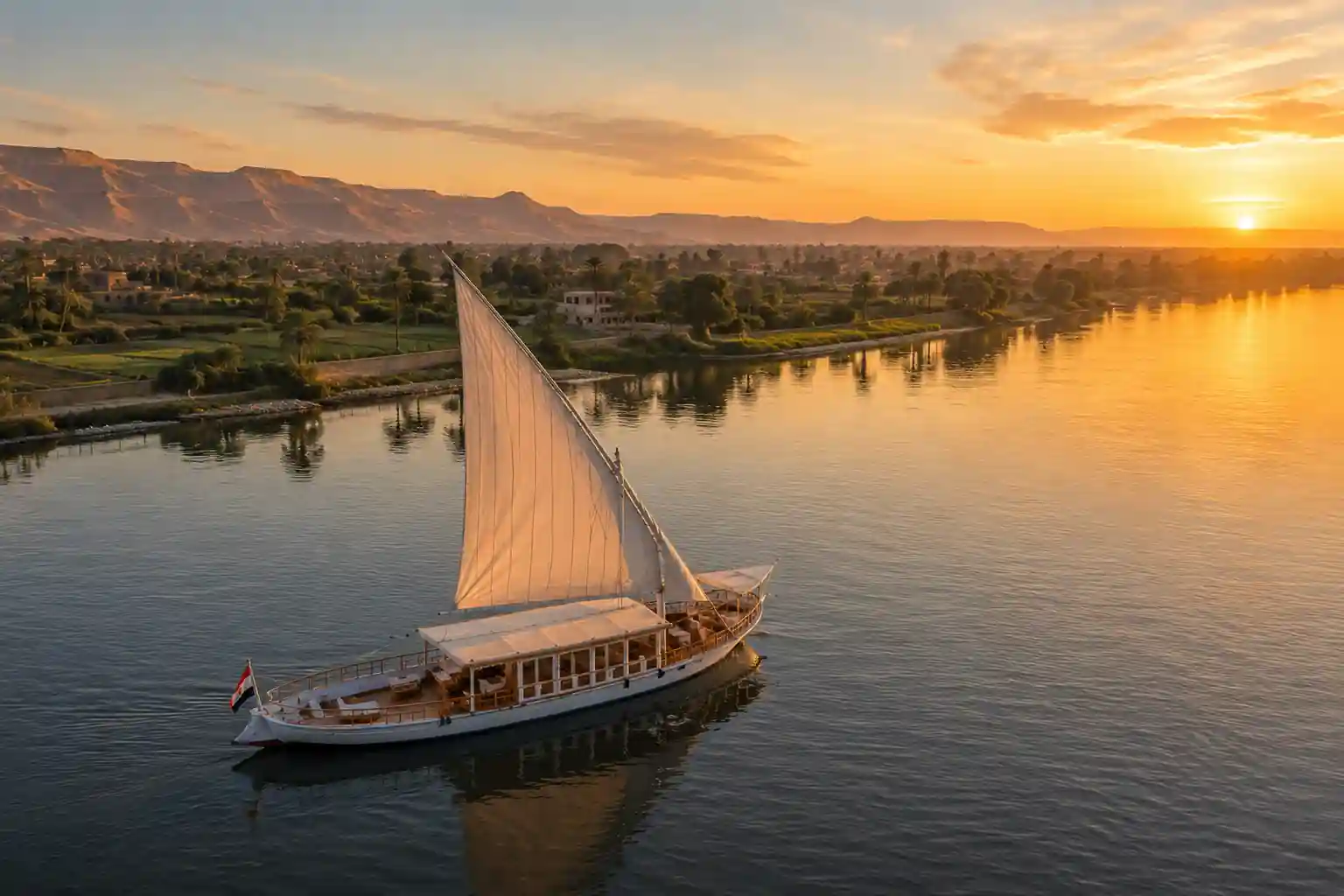
For the Nile itself, the Aswan guide covers the south, which is the calmest part of the country and the part visitors are most surprised by.
One instruction, and it is the most useful one on this page: before you book anything in the Western Desert, ask the operator for the name of the licence holder and the permitted route. A company running it properly will answer in a sentence.