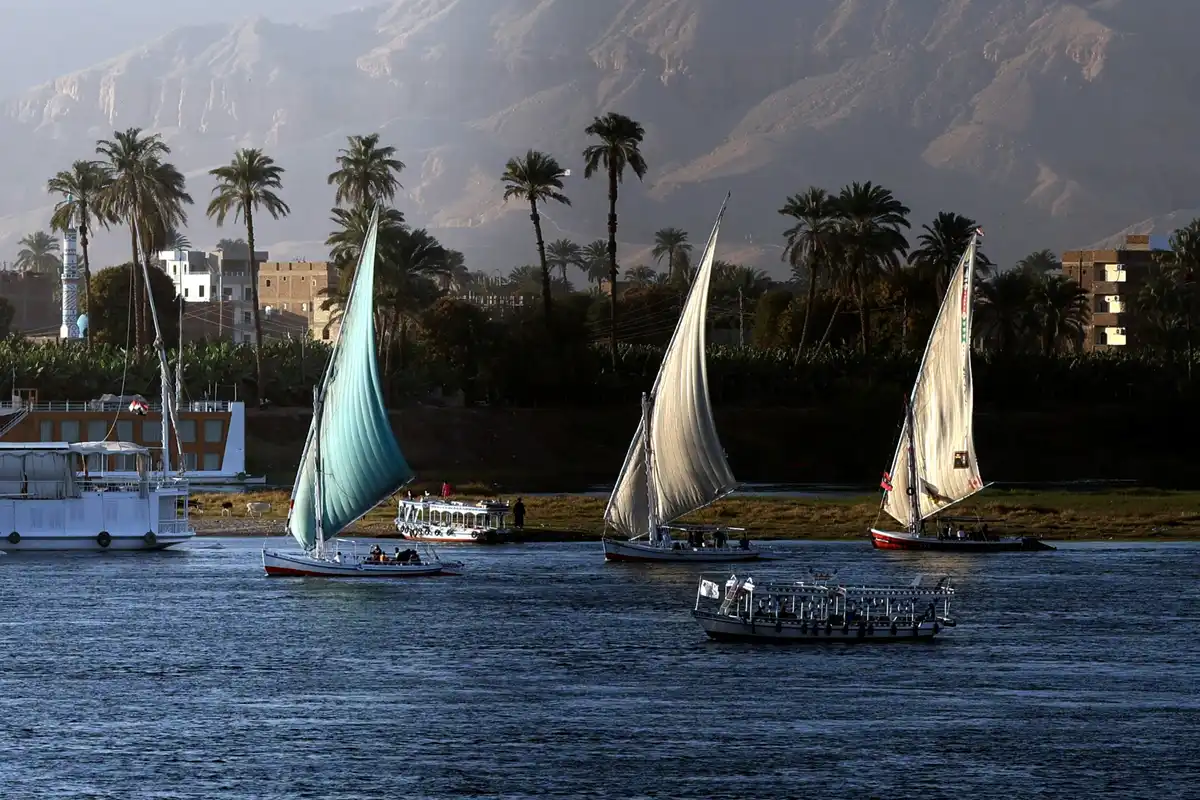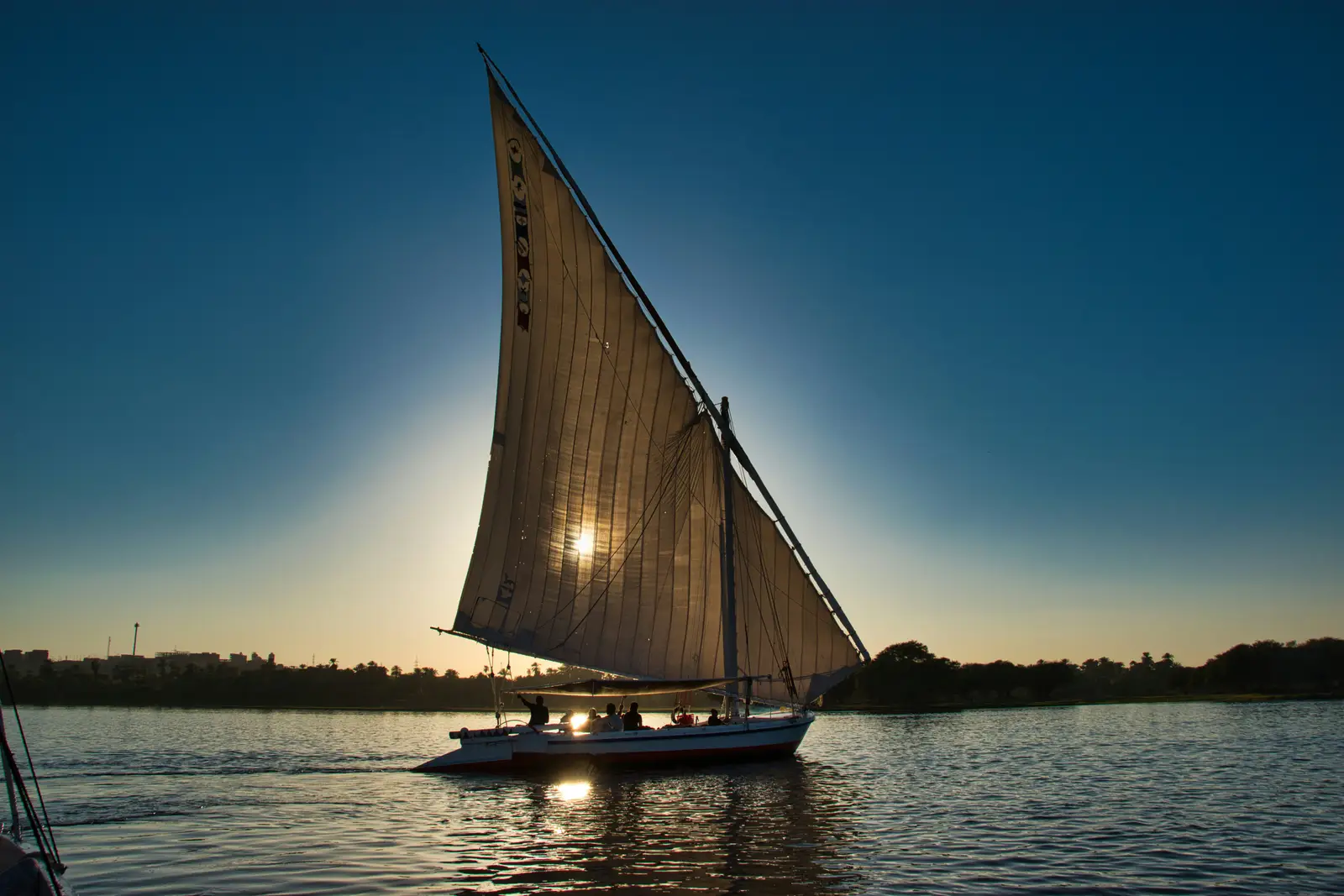
A dahabiya nile cruise is a sailing boat with a handful of cabins, moving at the speed of the wind between Aswan and Luxor. It moors against banks and islands rather than concrete quays, carries a fraction of the passengers a cruise ship does, and takes four or five nights over a stretch a motor vessel covers in three.
What a Dahabiya Actually Is
A flat bottomed sailing boat with two lateen sails, a shallow draught and somewhere between four and twelve cabins.
The form is old. Dahabiyas carried Victorian travellers up the river before steam took over, and the ones sailing today are either restored originals or new boats built to the same shape. The shallow draught is the whole point: it lets the boat sit against a sandbank in half a metre of water, which is where the evenings happen.
Most carry a name rather than a number and a history rather than a brochure. Some were built in the 1990s, some last decade, and a handful are genuine nineteenth century hulls rebuilt around their original frames.
A tug takes over when the wind dies, which it does most afternoons. Anyone selling you a week of pure sail is selling you a river that does not exist.
What you get instead is a boat that goes quiet when the engine stops, a deck that is the whole social space, and a crew of eight or ten who learn your name on the first day.
A Nile River Cruise Dahabiya Against the Bigger Boats
| Dahabiya | Boutique ship | Large cruiser | |
|---|---|---|---|
| Cabins | 4 to 12 | 20 to 50 | 50 to 150 |
| Propulsion | Sail, with a tug through the calms | Engine | Engine |
| Moorings | Banks, islands, small villages | Main quays, sometimes quieter ones | Main quays, often several deep |
| Nights Aswan to Luxor | 4 to 5 | 3 to 4 | 3 |
| On board | Deck, shade, one dining room | Pool, bar, sometimes a spa | Pool, bars, shops, entertainment |
| Suits | Couples, families and small parties who want quiet | Travellers who want space and facilities | Travellers who want amenities at a lower price |
Choosing a nile river cruise dahabiya over a ship is choosing fewer facilities and more river. Nobody regrets it for the reason they expected to.
To see the dahabiyas we work with, visit our Dahabiya Nile cruises page.
Where It Ties Up Is the Whole Decision
This is the line that separates the categories and it almost never appears in a comparison.
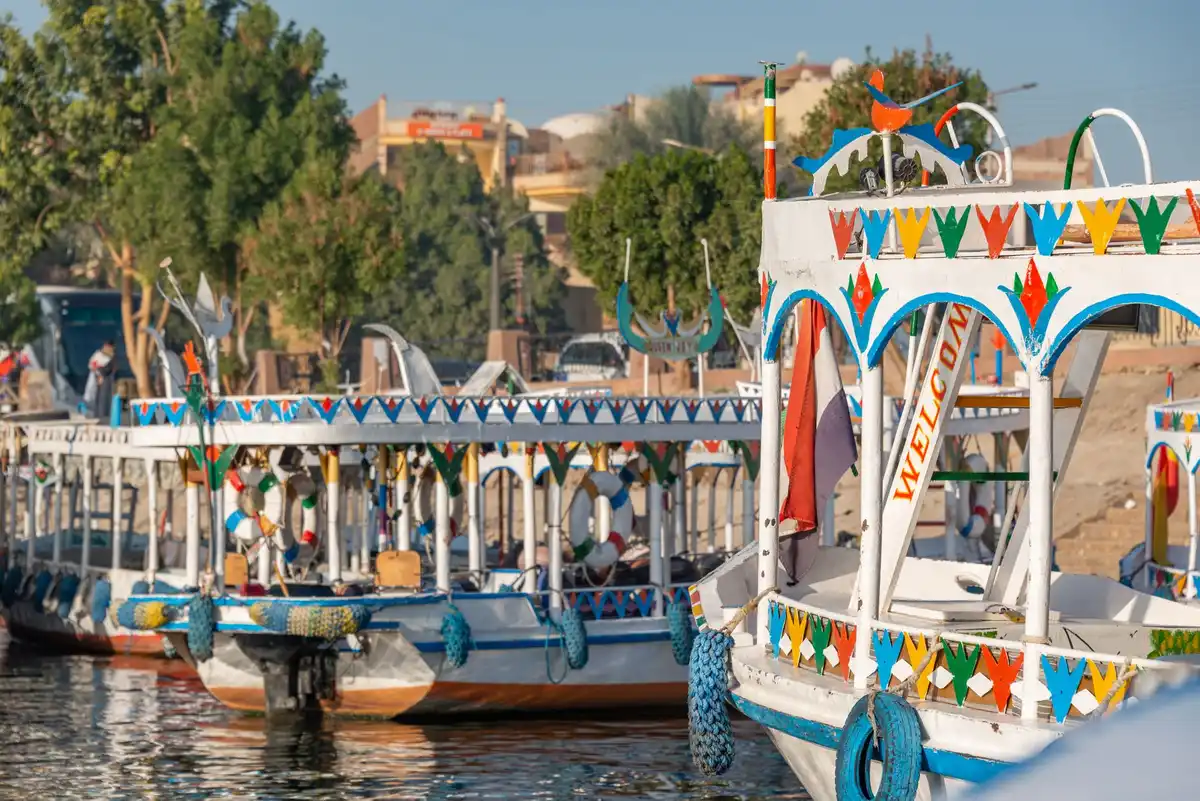
The main quays at Edfu and Kom Ombo are busy. A ship moored on the outside of a row of five means every arrival and departure crosses other people's decks, and the view from your window is somebody else's corridor.
A dahabiya ties up alone. An island above Kom Ombo, a bank below Gebel el Silsila, a village where the boat is the only thing on the water. That is the difference people describe afterwards, and it is worth more than a pool.
The Route, and Which Direction
Aswan to Luxor, downstream, over four or five nights.
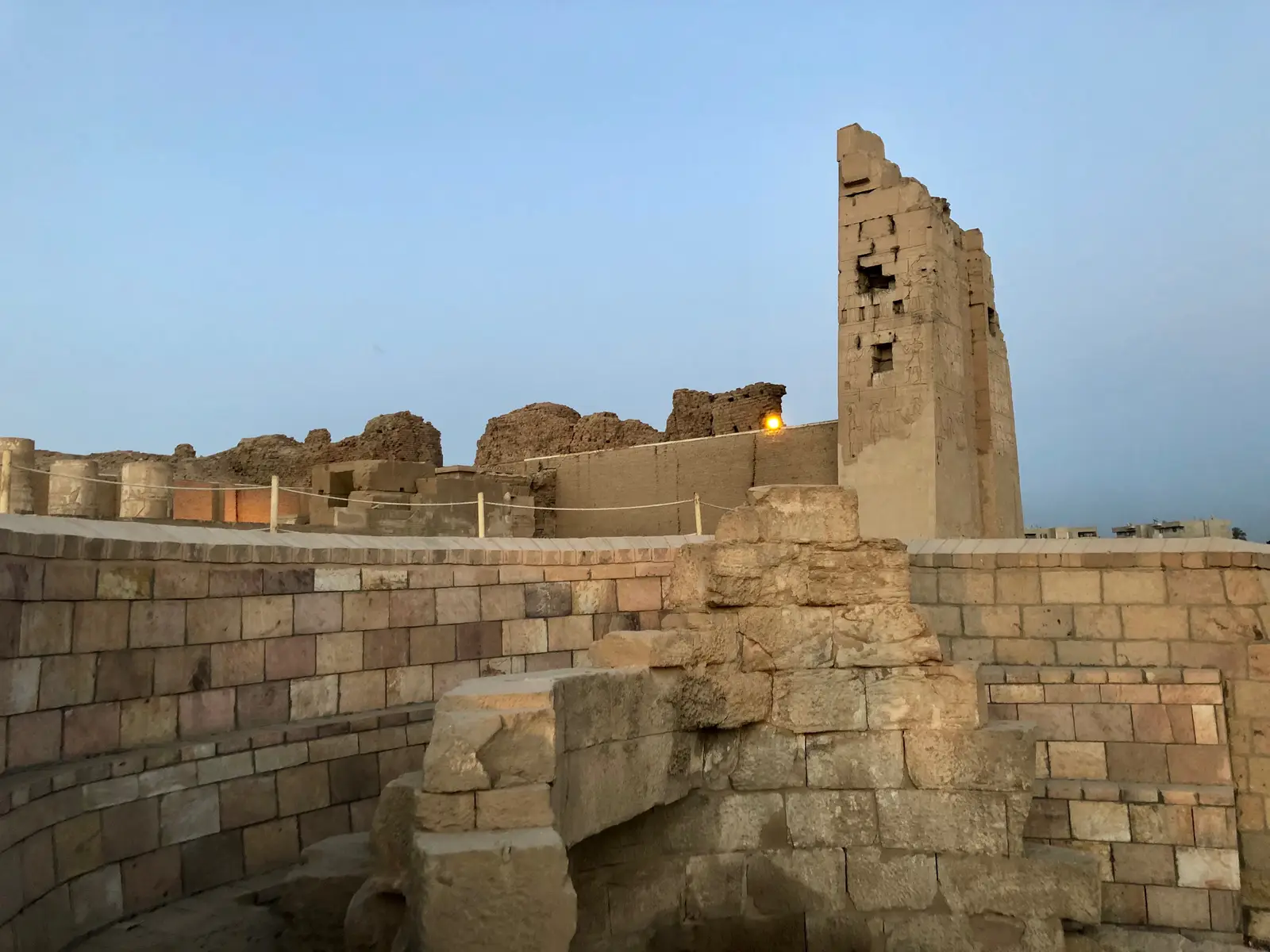
Downstream is gentler, the current does some of the work, and the sites arrive in a sensible order: Kom Ombo, Gebel el Silsila, Edfu, Esna, then Luxor with the west bank still ahead of you. Going upstream is not a mistake and it is slower for the wrong reasons.
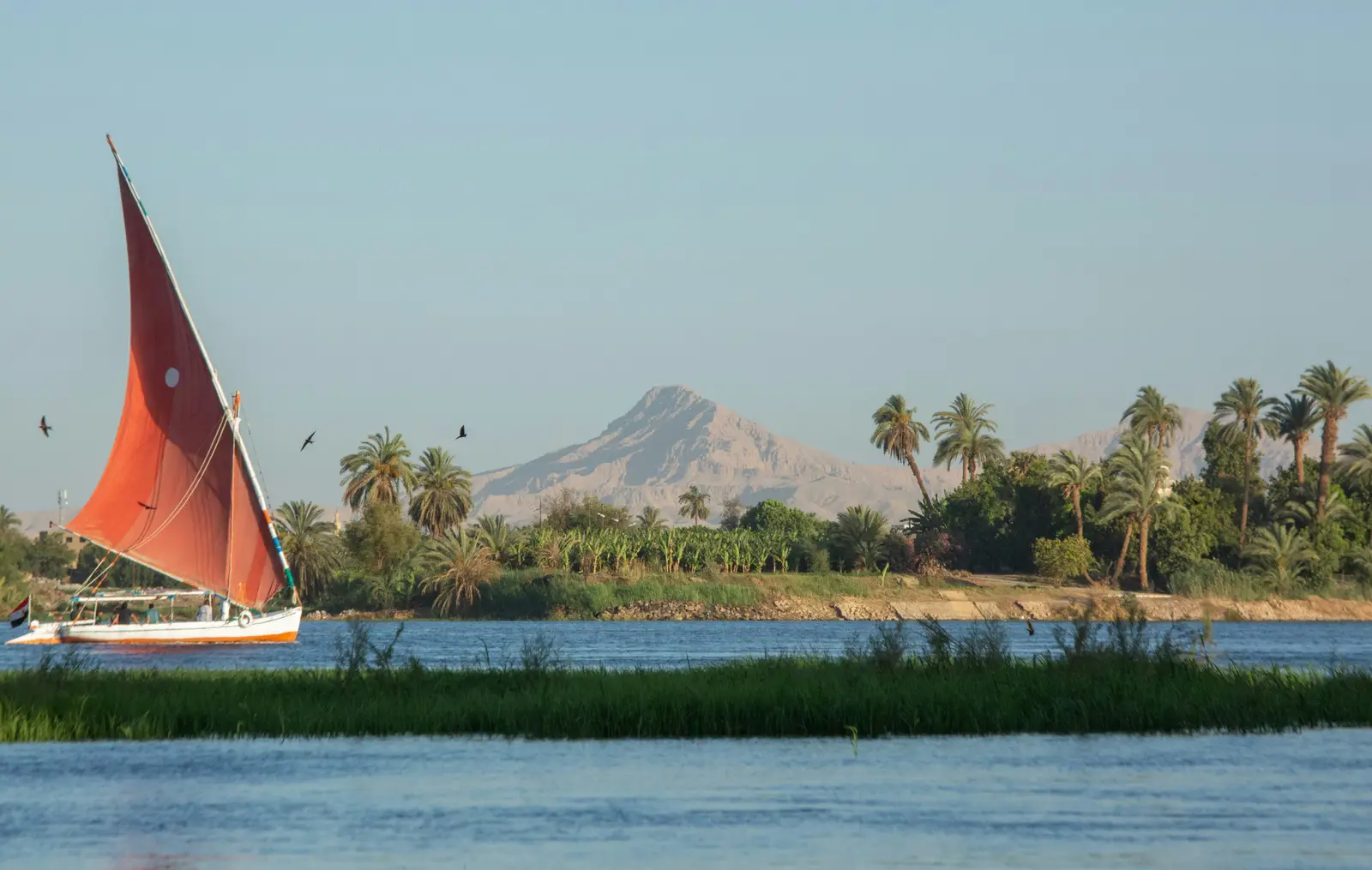
The days are short and unhurried. A temple in the morning, lunch under way, an afternoon of bank and palm and buffalo, then a mooring somewhere with no road to it.
The stops a dahabiya adds are the argument for it. El Kab, Gebel el Silsila and the smaller quarries and shrines along the bank are not on a big ship's schedule because a big ship cannot stop there.
Who Else Is On Board
On a shared boat, between six and twenty other people for five days, at one long table.
That is either the best part of the week or the reason to charter the whole thing. Small boats concentrate company rather than diluting it, and there is no second restaurant to escape to. Travellers who like meeting people do very well. Travellers who came to be left alone should take the whole boat.
A private charter is the same boat with nobody else on it, and for a family or two couples travelling together it is often barely more per person than cabins on a shared sailing.
Ask how many cabins the boat has and how many are sold. Those two numbers tell you more about the week than any photograph of the deck.
How Many Nights
Five if the dates allow it, four if they do not, three only as a taste.
Four nights covers Aswan, Kom Ombo, Edfu, Esna and Luxor with a full day at each end. The fifth adds a day with nothing scheduled in it, and on a sailing boat that is reliably the day people talk about.
Seven nights exists and usually means reaching Dendera. Worth it if you have the time, and not the first thing to add if you do not.
What Moves a Dahabiya Nile Cruise Price
Four things, and the first one is most of the answer.
Whether the boat is private to your party or you are buying cabins on a shared one. The season. How many cabins you fill, because a boat costs what it costs whether four people or ten are on it. And the length, since every extra night is a night of crew, food and mooring.
We do not publish a figure for the boat on its own, because a number without those four attached would mislead. Our private itineraries run seven to fourteen days and start at 4,000 USD per person, and the river is one part of that rather than a line you can lift out of it.
Ask for a breakdown along those four lines and compare the breakdowns, not the totals.
What a Luxury Dahabiya Nile Cruise Should Include
Full board, the sailing, the crew, and a guide who stays with the boat.
Usually outside the price: drinks, entrance fees to the temples, the tips collected at the end, and any excursion described as optional. None of that is a trick. It becomes one when it is not said in advance.
Read the word private carefully. It is used for the boat, for the guide and for the vehicle at either end, and a trip can be private in one of those senses and shared in the others.
Ask whether the guide is yours for the whole sailing or joins for each temple. One person who travels with you is a different week from a different local guide at every stop.
Picking the Best Dahabiya Nile Cruise for Your Week
Six questions, in writing, and the answers separate the operators faster than any photograph.
How many cabins does the boat carry. Is it private to us. Where does it moor each night, by name.
What time do we reach each temple. Is the guide ours throughout. And what happens to the itinerary if the wind or the water level changes.
An operator who answers all six plainly is telling you how the week will run. One who answers the mooring question vaguely has told you something too.
Cabins, Decks and the Things Worth Asking
Cabins are small. That is the trade for everything else, and a soft bag beats a hard case because there is nowhere to put the case.
Windows rather than portholes, and ask which deck. On a boat this size the upper deck cabins are a genuine upgrade rather than a marketing one, because you spend more waking hours looking out than you would in a hotel.
Power runs from a generator that may keep hours rather than running through the night. Bring a power bank and charge things while you are in the cabin.
Bed configuration is worth confirming. Twin and double are not always convertible on an old boat.
There is no lift and there are steps everywhere, which matters if anyone in the party finds stairs difficult. Say so early and it can be planned around with a lower deck cabin; say so on the day and it cannot.
Is a Luxury Small Boat Nile Cruise Right for You
Four questions sort this in about two minutes.
How many people do you want to eat dinner with. Do you need a pool. Does a fixed timetable reassure you or irritate you. Is the view from the cabin at night part of what you are buying.
Answer quiet, no, irritate, yes, and a luxury small boat nile cruise is your answer. Answer the opposite and take a ship, and enjoy it, because the sightseeing is identical either way.
What the Food and the Days Are Like
Cooked on board, in a galley the size of a domestic kitchen, by one cook.
That constraint produces better food than it sounds. There is no buffet, the menu is what the cook bought that morning, and it is mostly Egyptian home cooking: mezze, grilled fish or chicken, vegetables stewed properly, fruit. Tell the operator about anything you cannot eat well in advance, because there is no second kitchen to fall back on.
Meals happen on deck under an awning unless the wind makes that impossible. Breakfast is early on temple days and slow on the others.
When to Sail
October to April, and late October, November, February and March are the best of that window.
The deck is the reason. A dahabiya has shade rather than air conditioning outside the cabins, and between May and September the middle of the day on an open deck is not somewhere you want to be.
The water level matters more here than on a ship, because a shallow draught is an advantage until it is not. A good operator will tell you unprompted if a stretch or a lock is affected in your week, and the Esna lock closes for maintenance in some years.
December and January are lovely and the boats book furthest ahead. Small boats in the good months go first by a wide margin, so hold the sailing before anything else in the trip is fixed.
Where the River Fits in the Rest
Cairo first, then the river, then the sea or home. The sailing is the middle of a trip rather than the whole of it.
The full comparison of the three boat categories sits alongside this one and covers the motor ships in more detail, including the eight questions worth putting to any operator before a deposit.
The Aswan guide covers the two nights before you board, which are worth having. Our Nile cruise itineraries show how the sailing sits between Cairo and Luxor in a full route.