A nile cruise luxor to aswan sails upstream, stopping at Esna, Edfu and Kom Ombo over four or five nights. The temples are the same ones you see going the other way. What changes is the order, the pace against the current, and which city you finish in.
The Route, Whichever Way You Point
People search for a nile cruise luxor to aswan and for the reverse as though they were two products. They are one stretch of water with two timetables.
Between the two cities there are three temple stops and about 200 kilometres of river.
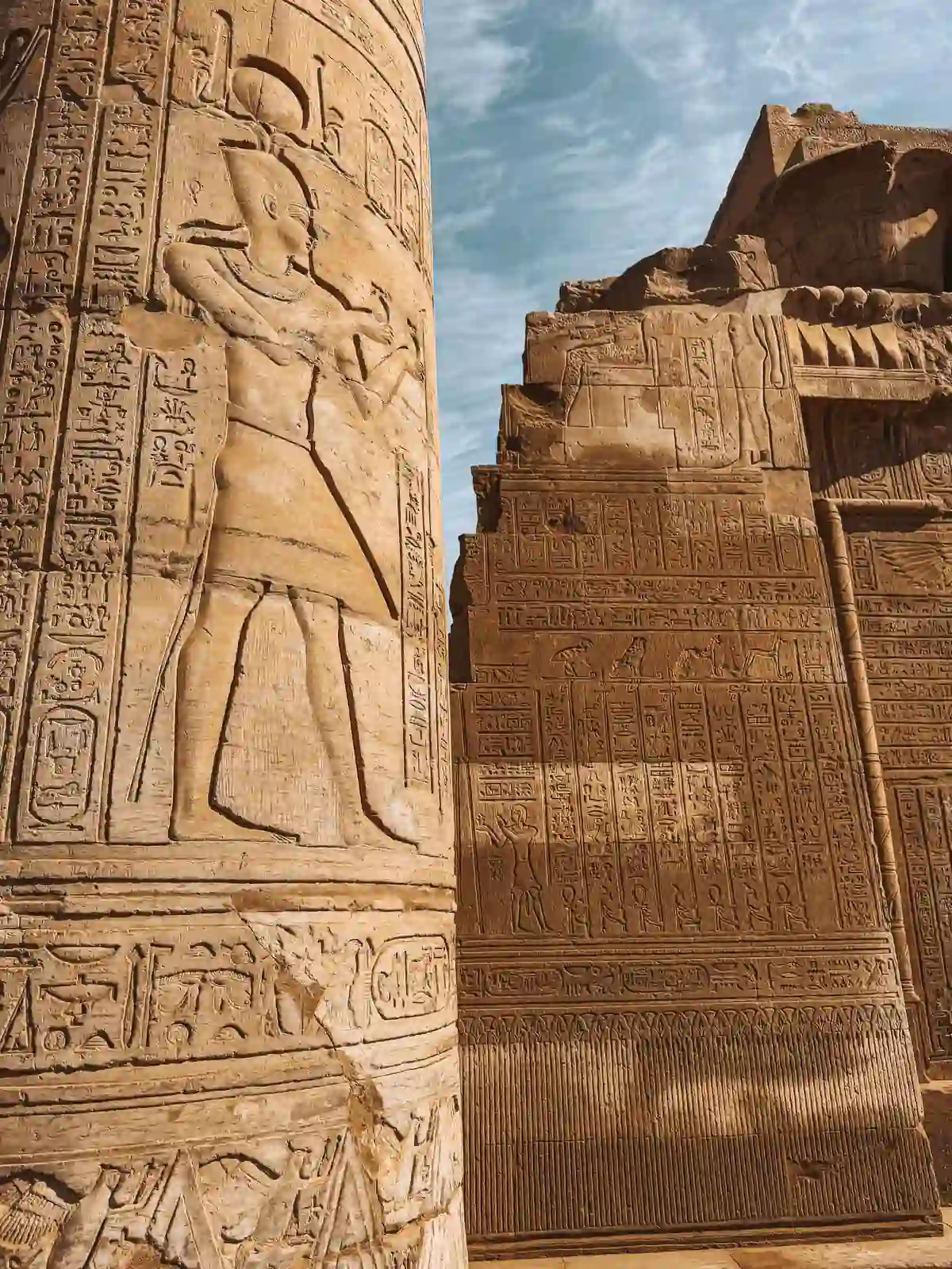
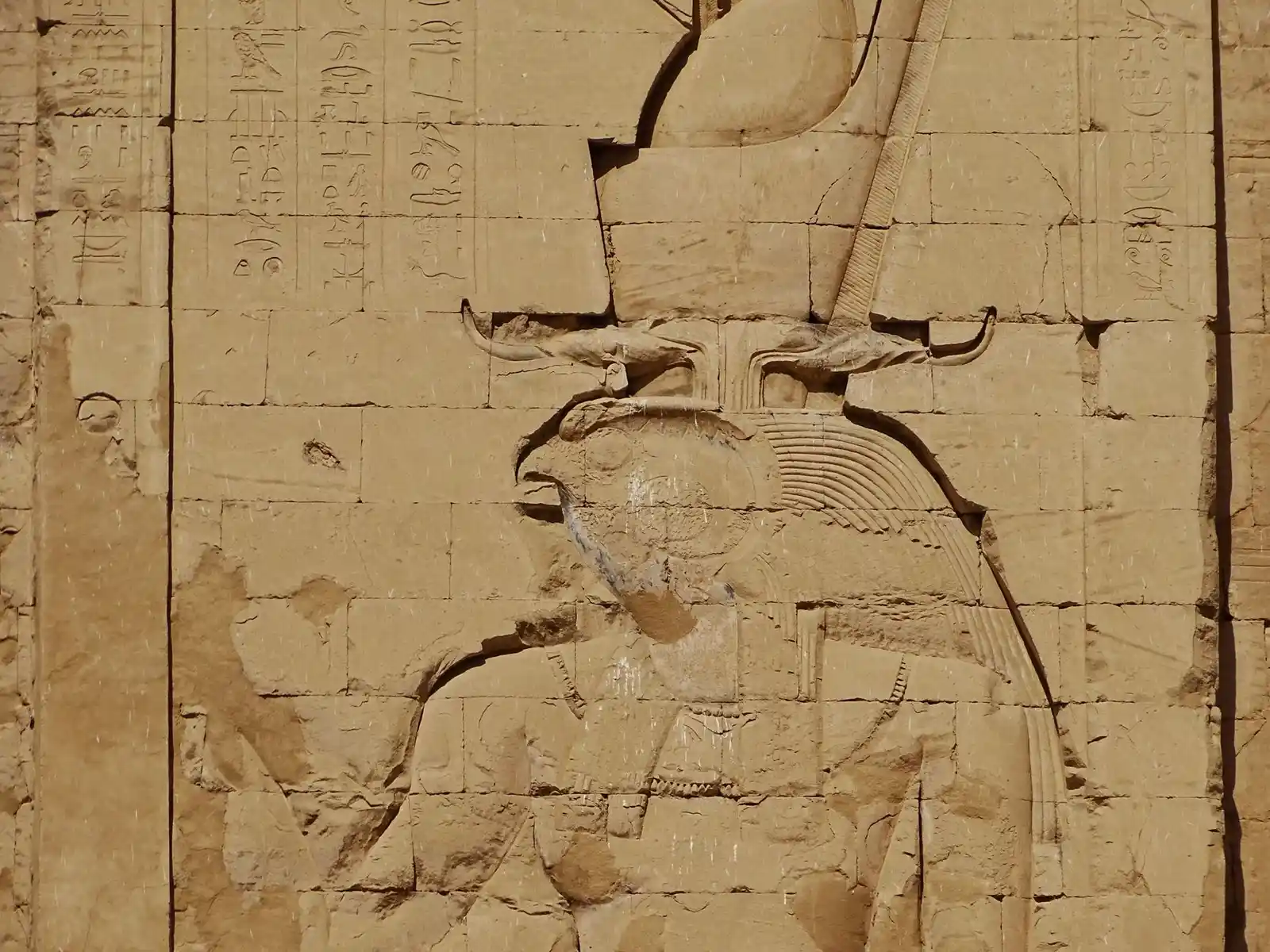
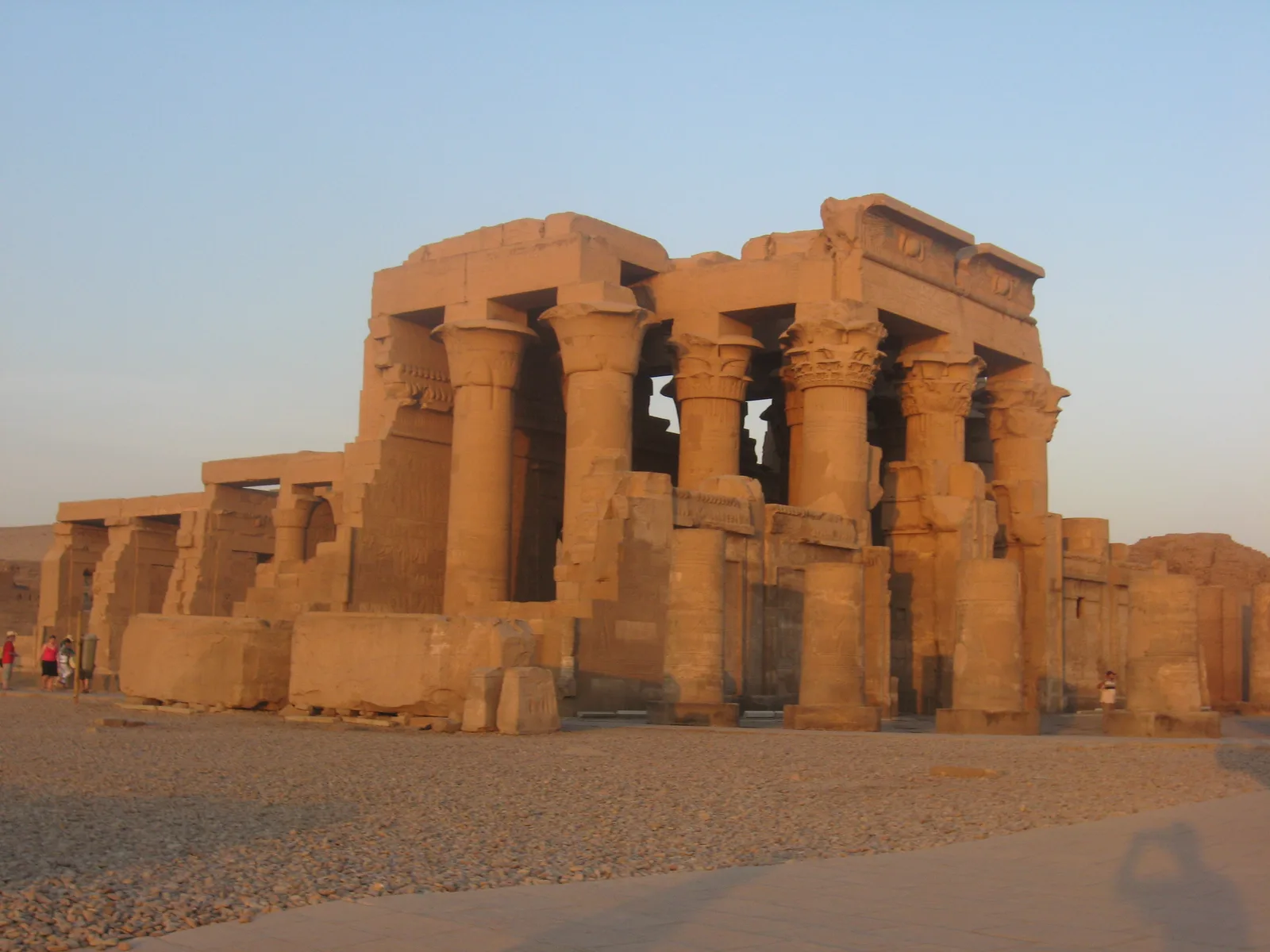
Esna sits closest to Luxor and is a small Ptolemaic temple in a pit below street level. Edfu is the best preserved temple in Egypt and the one people remember. Kom Ombo stands on a bend with the water almost at its feet and is unusual for being two temples in one building.
Everything else is the bank going past: sugar cane, palm, buffalo in the shallows, children who wave at every boat. That is not filler. It is most of what people describe afterwards.
A Nile Cruise Luxor to Aswan, Day by Day
| Day | Where | What happens |
|---|---|---|
| 1 | Luxor | Board in the afternoon, Karnak or the east bank, sail after dark |
| 2 | Esna and Edfu | The lock in the morning, Edfu temple by early afternoon |
| 3 | Kom Ombo | Sailing through the middle of the day, temple in the late afternoon |
| 4 | Aswan | Arrive in the morning, Philae and the felucca in the afternoon |
| 5 | Aswan | Disembark, Abu Simbel by road or air if it is booked |
Boats differ by a few hours either way. The shape is standard because the geography is.
Day two is the long one and the one worth understanding. Esna is a short stop and the lock beside it is not, so a boat that clears the queue early gets Edfu in daylight with room to spare, and a boat that does not arrives for the last hour of it.
Day three is the opposite. Kom Ombo is a late afternoon temple by design, because the light on the river front columns at that hour is the reason people photograph it.
Why Most People Do the Aswan to Luxor Cruise Instead
Downstream is gentler, faster and the sites arrive in a better order.
Going with the current the engine works less, the boat is quieter, and the same distance takes fewer hours. More usefully, you finish in Luxor with the west bank still ahead of you: the Valley of the Kings, Hatshepsut, Medinet Habu and the Nobles are the heaviest sightseeing of the whole trip and they are better met with a night's sleep behind them than on a departure morning.
A nile cruise aswan to luxor is also the one most boats are scheduled around, so there is more choice of vessel and date in that direction. Upstream sailings exist on most boats but not on every departure.
Ending in Aswan has the opposite shape. Aswan is the gentler city and finishing there is a soft landing, which some people prefer and which costs you the west bank done properly.
When a Nile Cruise From Luxor to Aswan Is the Right Call
Three situations, and in all three it is the better choice rather than a compromise.
Your international flights land in Luxor, which some charter routes do. You want Abu Simbel at the end rather than squeezed before boarding, since it is a day out of Aswan. Or you are continuing to the Red Sea from Aswan, which is a short hop.
In any of those, a nile cruise from luxor to aswan puts the logistics the right way round and the extra hours against the current cost you nothing you will notice.
There is a fourth, less obvious case. If your party includes someone who finds early mornings hard, a luxor to aswan nile cruise front loads the heavy west bank days into the land nights before boarding, and the sailing itself is the gentler half.
How Many Nights, and What They Cover
Four nights downstream, four or five upstream.
Four covers Esna, Edfu, Kom Ombo and a full day at each end. Five adds a day with nothing scheduled, which is the day people ask for once they have had one. Three nights is a shortened downstream itinerary that drops a temple, usually Esna, and rushes the rest.
The cruise nights are not the same as sightseeing nights in the cities. Two nights on land in Luxor and two in Aswan, either side of the sailing, is what a proper look at both requires.
The Locks, and Why They Matter to Your Timing
There is one lock on this stretch, at Esna, and it decides more of the schedule than anything else.
Boats queue for it. In a busy week that queue is hours, and it is the single most common reason an itinerary shifts a temple from the morning to the afternoon. Nobody controls it and a good operator will say so rather than promise a time.
The lock also closes for maintenance in some years, usually in the summer. When it does, boats run shortened routes on one side of it and the itinerary is rebuilt around that.
Ask about it. The answer tells you how honest the rest of the schedule is.
Choosing the Boat for a Nile River Cruise Aswan to Luxor
Three categories, and the sightseeing is identical on all of them.
We arrange Nile cruises in all three categories: luxury boutique ships, deluxe 5-star ships and dahabiyas. Compare them all on our Nile cruises page.
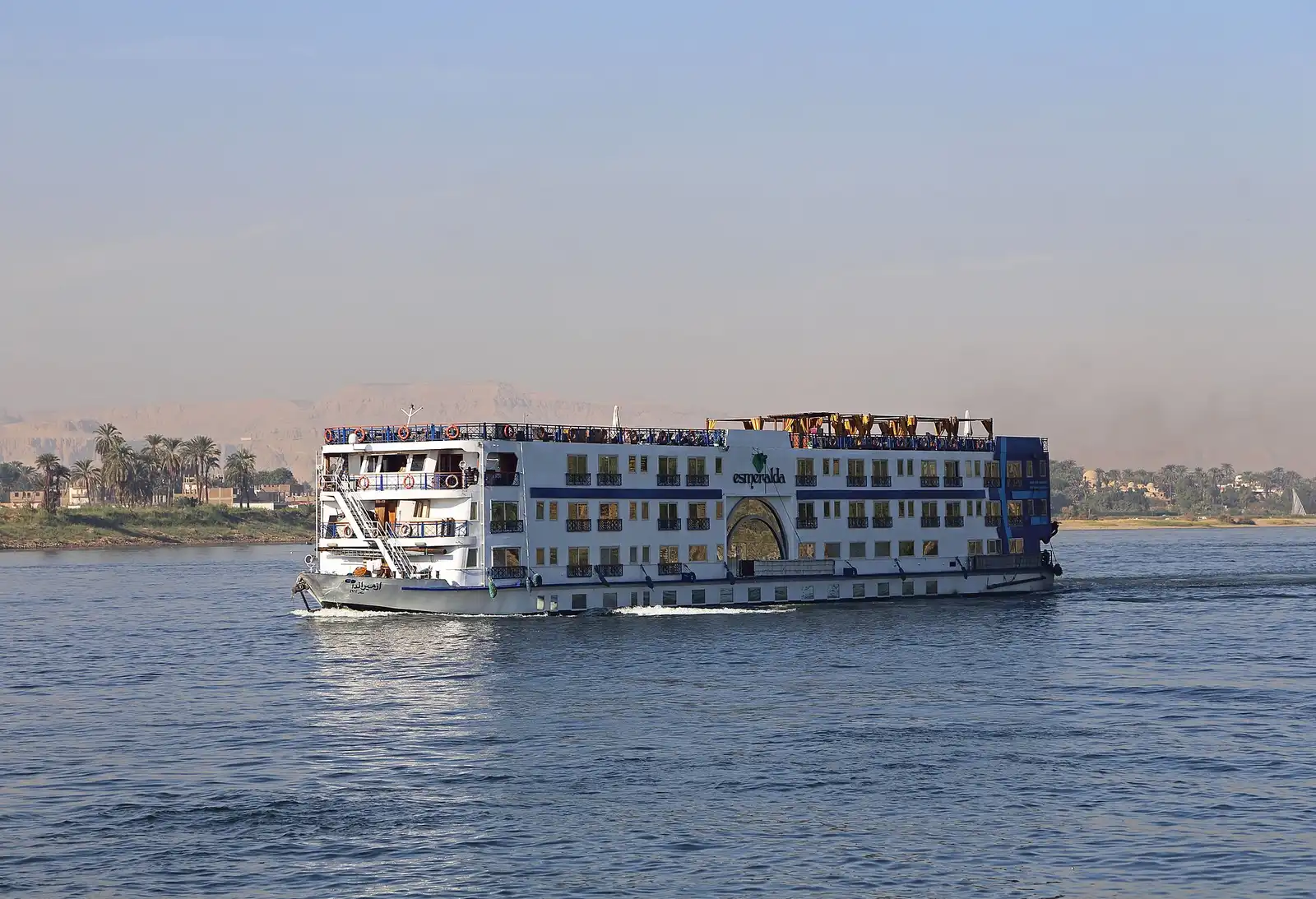
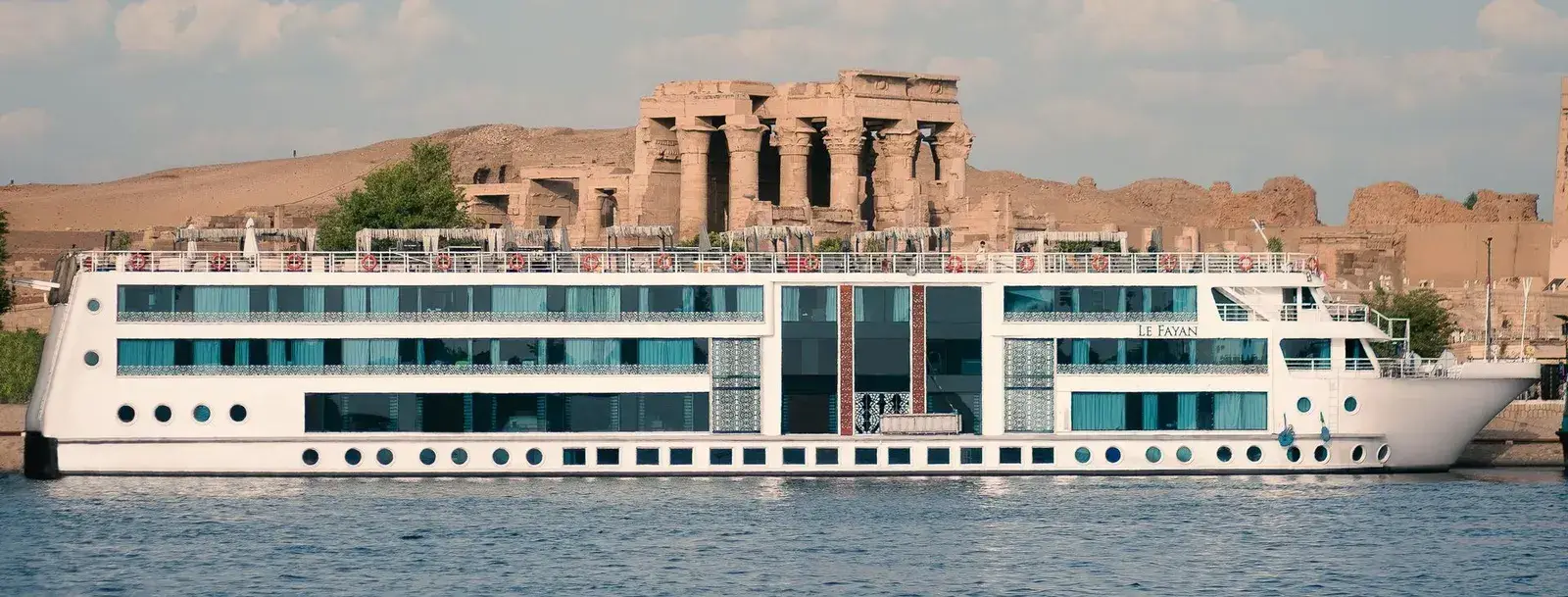
A large cruiser is the cheapest per night and ties up at the main quays, sometimes four or five boats deep, so the view from the cabin can be another boat's corridor. A boutique ship is smaller with a pool and more space. A dahabiya sails, carries a handful of cabins, and moors at banks and islands the bigger boats cannot reach.
Which one suits you turns on how many people you want to eat dinner with and whether the view at night is part of what you are buying.
The side by side comparison of the three goes through what to ask about each, and the sailing boat option in particular covers the smallest of them in detail.
Feluccas and the Short Alternatives
Not every journey on this water is a cruise, and two shorter options confuse people looking at the same route.
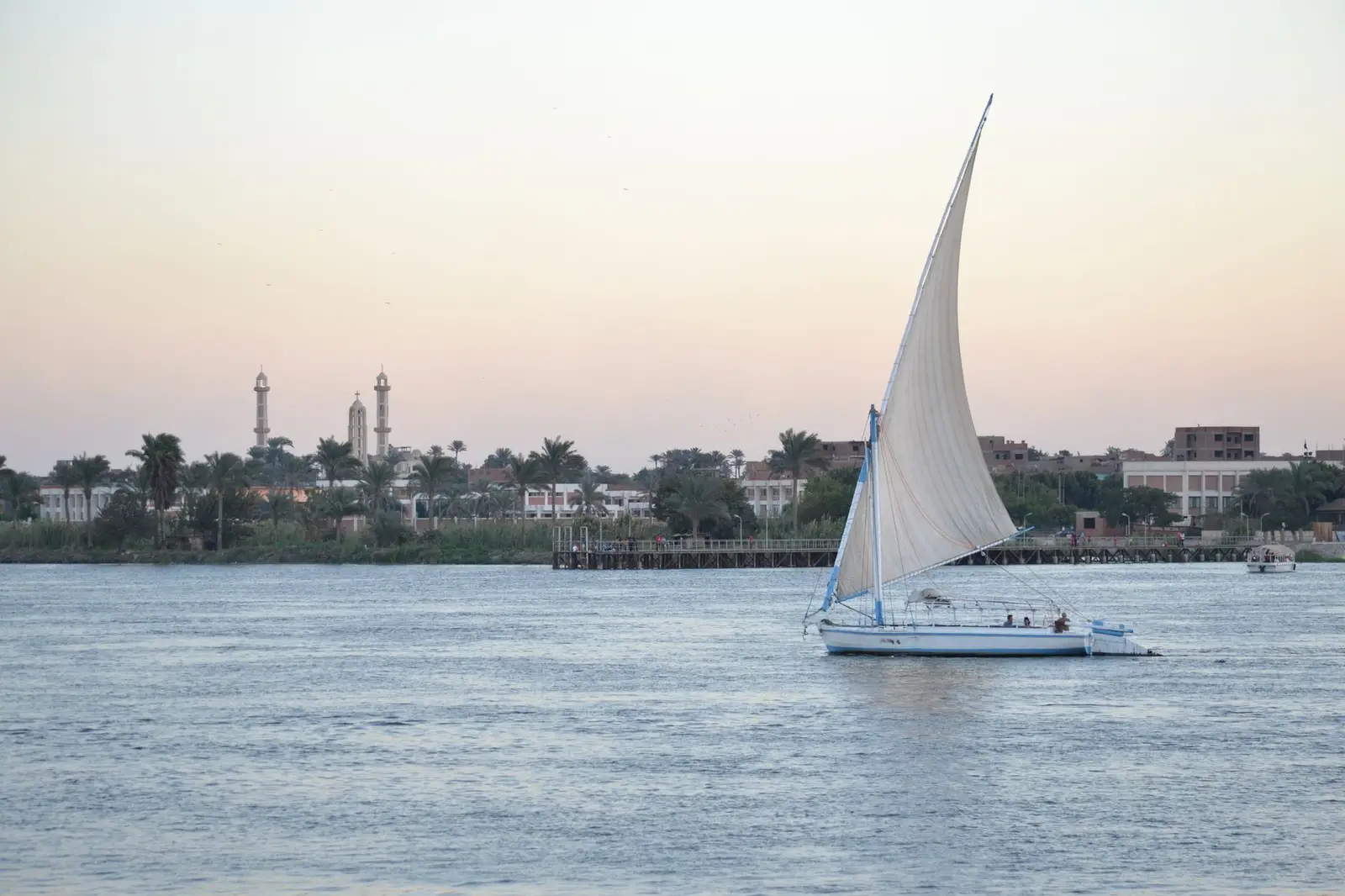
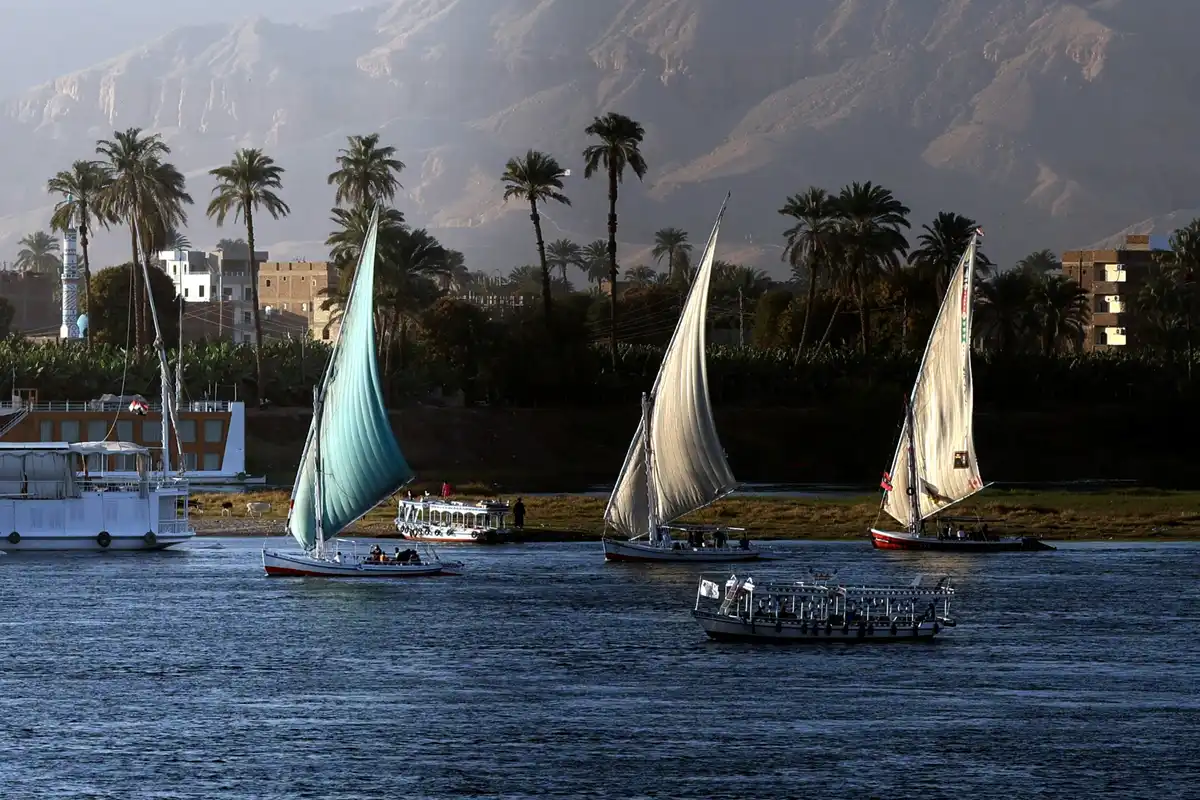
A felucca is an open sailing boat with no cabins. Multi day felucca trips exist between Aswan and Kom Ombo, sleeping on deck under blankets, and they are genuinely good and genuinely basic. An hour on one at sunset in Aswan is a different thing again and is on almost every itinerary.
The other is a two or three night motor boat run that covers part of the stretch and skips a temple. It suits a short trip and it is not the route described on this page.
If you have four nights, use them on the full run. The compressed versions save a day and lose the part that makes the river worth doing at all.
What Is Included and What Is Not
Full board is normal on every category. Everything else varies.
Drinks are the usual exclusion and on a five night sailing they add up. Temple entrance fees are sometimes inside the price and sometimes a separate line. Crew tips are separate everywhere and are collected once at the end.
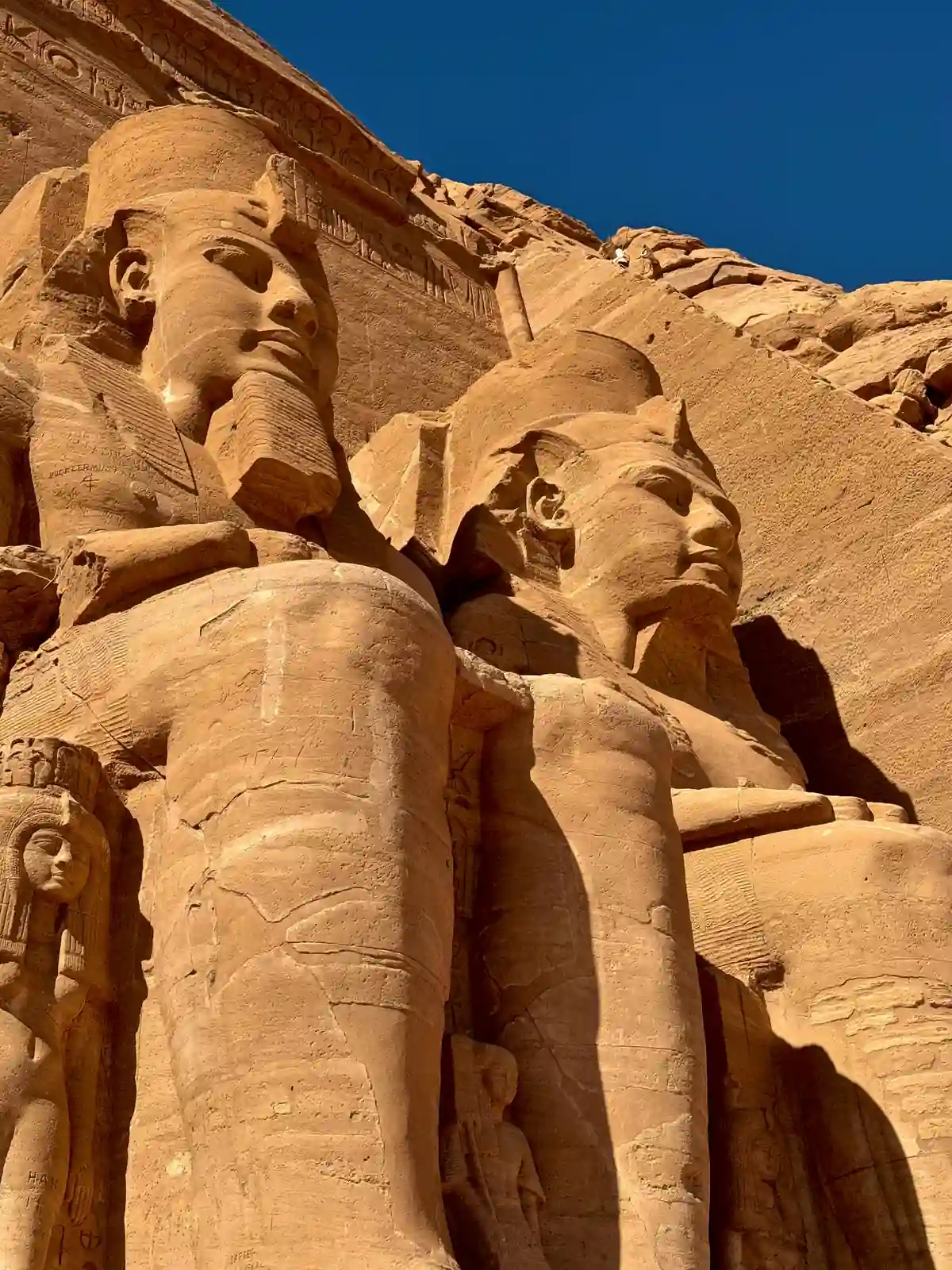
Abu Simbel is almost always an extra, whichever direction you sail, because it is a full day out of Aswan by road or a flight.
Read the word optional carefully. A cruise sold as all inclusive with three optional excursions attached is a normal arrangement and should not be a surprise.
Cabins, Decks and the Small Decisions
Upper deck, windows rather than portholes, and ask which side the boat moors on if you can.
A lower cabin on a big ship can sit close to waterline looking at a quay wall. The supplement for a deck up is worth more here than on most trips, because you spend far more waking hours looking out of a cabin window on a river than you ever do in a hotel.
Bed configuration is worth confirming rather than assuming, and twin and double are not always convertible.
Ask which side of the boat the cabin is on if the operator will tell you. Moored at a quay, one side looks at the bank and the other looks at whatever tied up alongside, and on a busy night in Edfu that is a wall of somebody else's windows.
The Two Cities at Either End
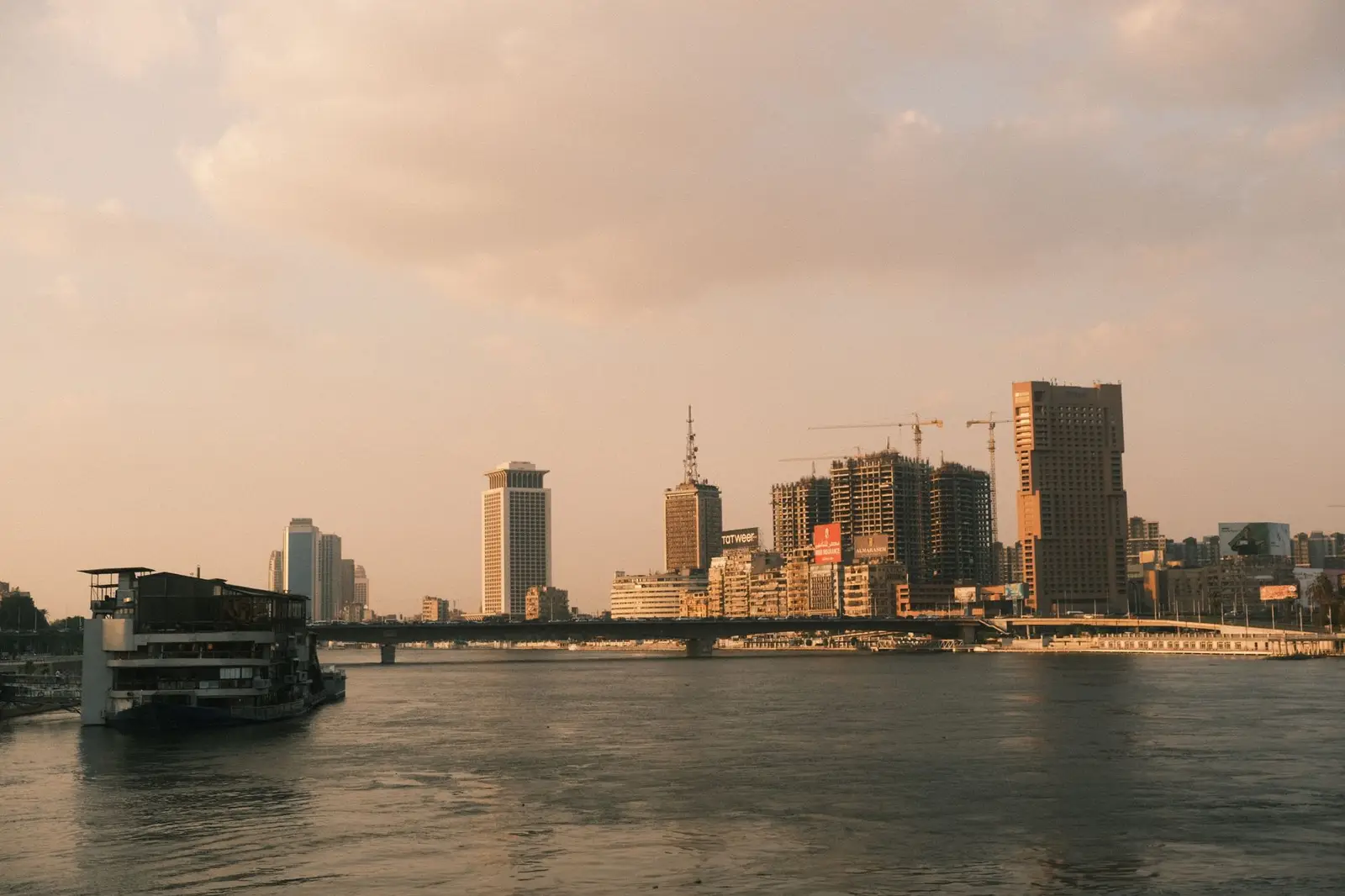
Neither is a place to arrive at and leave from the same day, and both get treated that way constantly.
The temptation is obvious. The boat covers the nights, the cities look like transit points on a map, and two extra hotel nights at each end look like an easy saving. What they actually buy is the difference between seeing Luxor and passing through it.
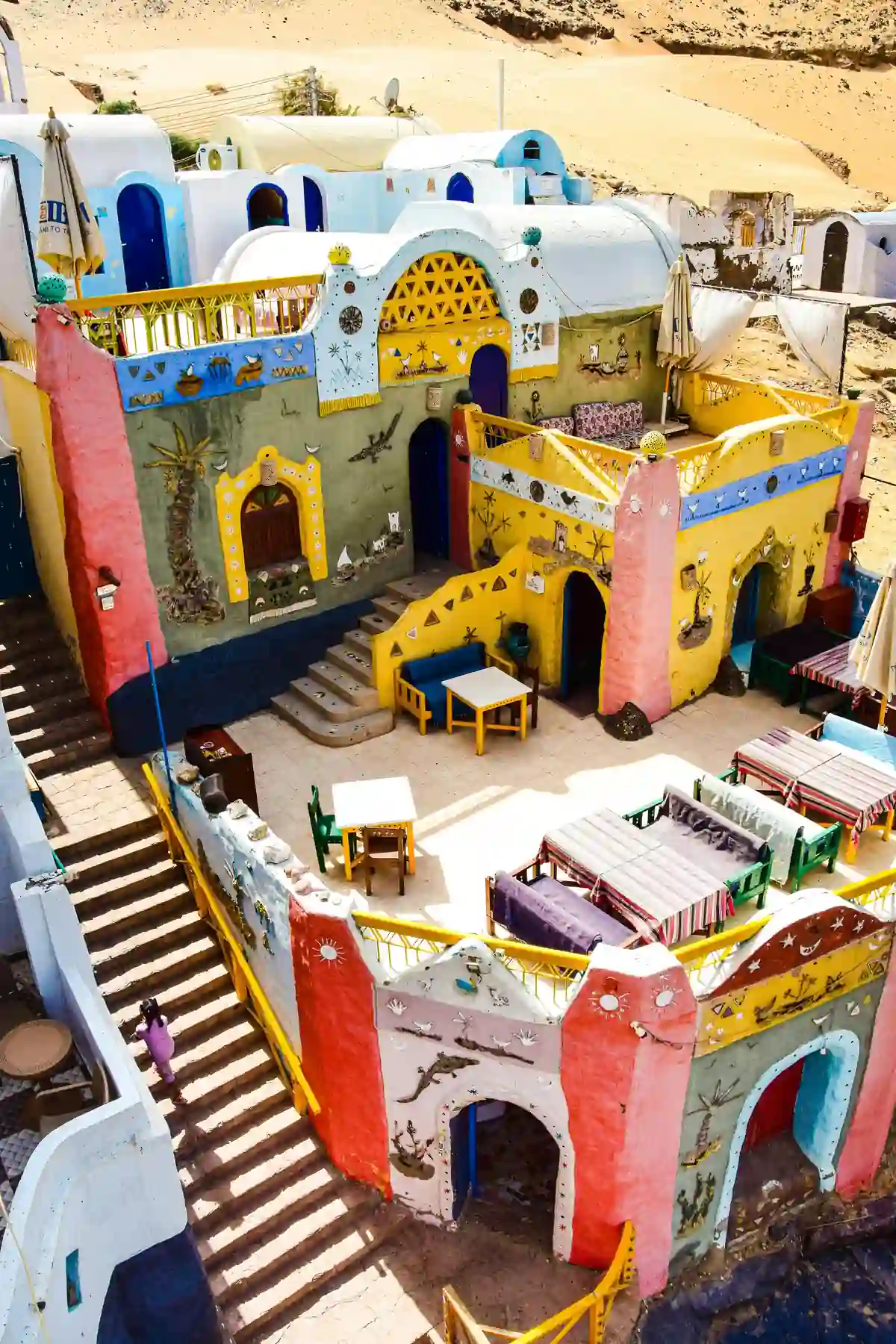
Luxor needs two full days: the east bank temples on one, the west bank on the other, both starting early. Aswan is gentler and needs two as well, for Philae, the felucca and either the Nubian villages or a slow afternoon doing nothing.
The Luxor guide covers what the west bank actually involves, which is the part people underestimate.
Booking It Against the Rest of the Trip
Hold the boat before you ticket anything, because the boats run out long before the flights do.
That is the single practical thing to take from this page. Whether you end up on a nile cruise luxor to aswan or the downstream version matters far less than whether the boat you wanted was still free when you asked.
Then fly into one end and out of the other. Doubling back to where you started costs a day and there is nothing on it worth the day.
Book the internal flights last and let whoever is running the trip handle them. Egyptian domestic schedules move, sometimes by an hour and sometimes by more, and a boat that sails at four does not wait for a flight that slipped.
Our Nile cruise itineraries show the sailing built into a full route with Cairo at the front, which is how almost every trip here is shaped.
Anyone sailing this stretch in the summer of 2027 should read the eclipse guide first, because the total eclipse of 2 August lasts 6 minutes and 23 seconds at Luxor and only four to five minutes at Aswan.
Related Topics
Frequently Asked Questions
Related journey
Egypt Nile Cruise Packages: 10-Day Luxury Journey
10 Days / 9 Nights · From USD 4,811
Plan this trip