A honeymoon in egypt is an unusual choice and it suits some couples very well and others not at all, so the useful question is not whether it is good but whether it is good for you.
It is not a lie down and do nothing destination unless you build it that way deliberately.
It is also one of the few places where two people can spend a fortnight and still be talking about what they saw a year later.
This article answers the questions couples actually ask before booking, in roughly the order they ask them.
Is a Honeymoon in Egypt Actually a Good Idea
For couples who like seeing things, yes, and the reason is density.
The distance between the pyramids, the Valley of the Kings and the temples at Aswan is short by the standards of a country with this much in it, and internal flights make the whole southern half reachable inside a fortnight.
For couples whose idea of a honeymoon is two weeks of not moving, it is the wrong country unless you spend most of it on the Red Sea coast, in which case you may as well be somewhere closer.
The honest split is this.
If you want a trip you will talk about, Egypt is one of the strongest choices anywhere.
If you want a trip you will recover on, it is a compromise.
The middle path, which most couples take, is a week of sites followed by three or four days of nothing.
Is It Safe for Couples
Safety is the first question most couples ask and it deserves a straight answer rather than reassurance.
The tourist corridor of Cairo, Luxor, Aswan and the Red Sea resorts is heavily policed and very well used, and the practical risks for visiting couples are the ordinary ones of a busy country: traffic, heat, stomach upsets, and persistent selling around major sites.
Travel advice changes and differs by government, so the right source is your own foreign ministry rather than any tour operator, including this one.
The advice for the United States is published at travel.state.gov and other countries publish their own.
What a private guide and driver genuinely changes is friction rather than danger: you are not negotiating at gates, not navigating, and not being approached constantly while you work out where to go.
Many couples say afterwards that this was the thing that made the trip feel relaxed.
Best Time for Egypt Honeymoon Travel
The best time for egypt honeymoon travel is October to April, and the reason is simply heat.
Upper Egypt from May to September reaches temperatures that turn a morning at Karnak into an endurance exercise, and most site visits in those months move to early morning and late afternoon with a long gap in the middle.
December and January are the most comfortable and also the busiest, with the sites noticeably fuller.
October, November, March and April are the compromise most couples end up making, warm enough for the Red Sea and bearable on the west bank.
The Red Sea coast copes with summer far better than the valley does, so a June or July trip weighted towards the coast is workable where a temple heavy itinerary is not.
If your dates are fixed by a wedding rather than chosen, tell whoever is planning the trip early, because the itinerary shape should follow the month rather than the other way round.
How Long to Go For
Seven days covers Cairo and one other place properly, and nothing more.
Nine to ten days is where the country starts to make sense, because it lets you see Giza, spend real time in Luxor and reach Aswan without any day feeling like a transfer.
Fourteen days lets you add either the Red Sea or somewhere off the standard route, and it is the length at which nobody feels rushed.
The common mistake is compressing: four nights in Cairo and three in Luxor sounds balanced and produces two half trips.
If you only have a week, the better answer is to do less rather than to move faster.
Nile Cruise, Red Sea, or Both
This is the decision that shapes everything else, and the three answers suit different couples.
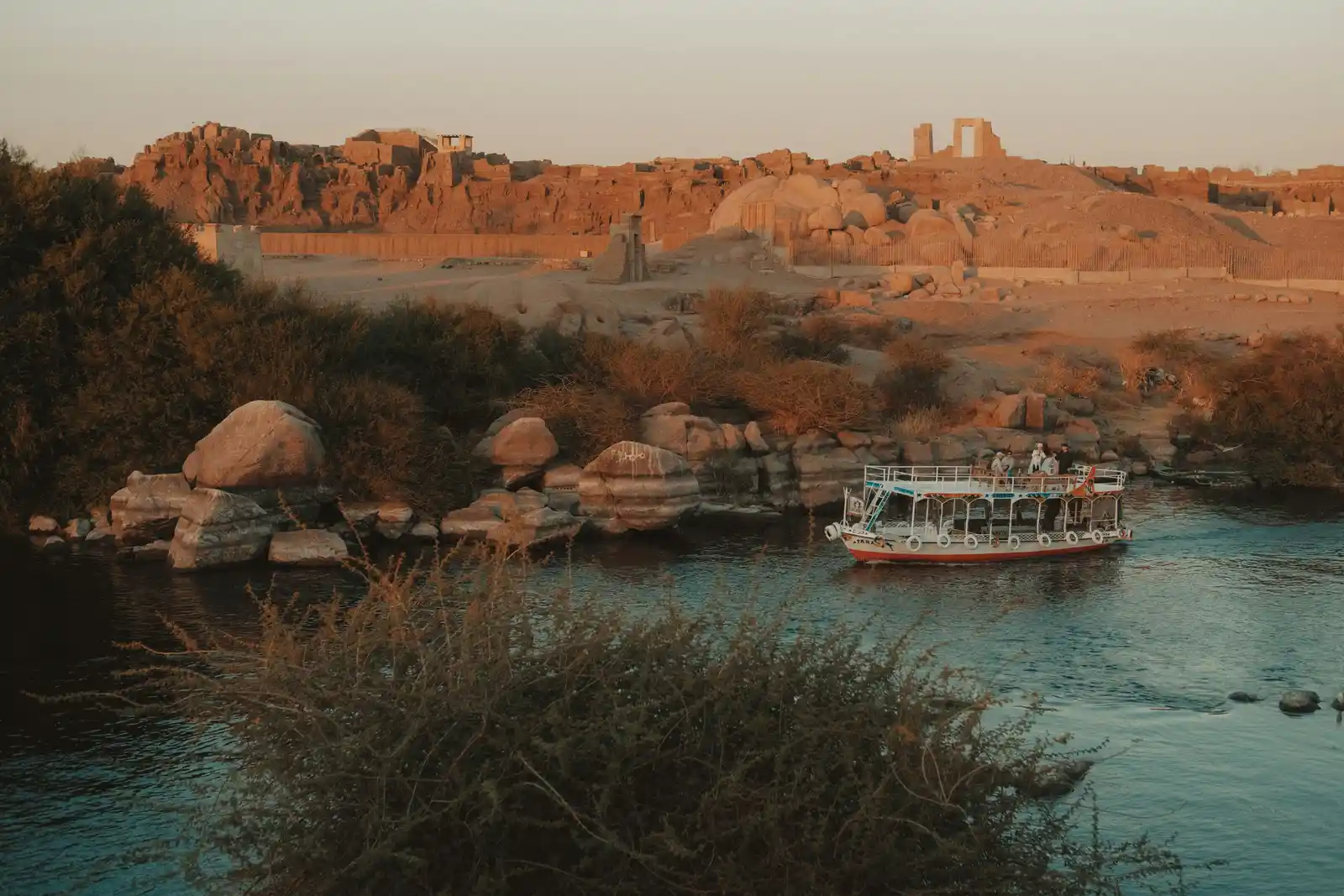
The river is the classic choice, and its appeal is that the temples on the stretch between Aswan and Luxor arrive without a drive attached to them, so the hours between sites are spent watching the bank go past rather than sitting in a vehicle.
The Red Sea is the resting half, and the reef at the southern resorts starts close enough to shore that you do not need a boat to see it.
Doing both inside ten days is possible and usually a mistake, because it adds two internal flights and leaves neither half with enough time.
Inside fourteen days both work comfortably.
The nine day Luxury Honeymoon in Egypt itinerary is the river version with no coast at all, which is the cleanest expression of that choice.

Do Hotels Do Anything for Honeymooners
Usually yes, and it is worth being realistic about what.
Egyptian hotels at the upper end are generous with honeymoon gestures: a room upgrade where one is available, flowers or a cake on arrival, a decorated bed, sometimes a private dinner arrangement.
None of it is contractual and nobody should promise it to you in advance, including us.
What makes it more likely is telling the hotel, through whoever books it, well before you arrive rather than at check in.
Anyone who guarantees a specific upgrade at a specific property is telling you something they cannot know.
What It Costs, in Shape Rather Than Numbers
The cost of a honeymoon in egypt is driven by four things and only four.
The first is the season, because the same itinerary in January and in July are not close.
The second is whether you are flying internally or driving, which buys time at a real cost.
The third is the standard of accommodation, which in Egypt spans a wider range than in most countries.
The fourth is whether the trip is private or a group departure, which is the largest single factor on a short itinerary.
Knowing which of those four you care about is more useful than any number, because it tells whoever is quoting you where to spend and where not to.
Is It Too Much Walking for a Relaxed Trip
It is more walking than most beach honeymoons and less than people fear.
The demanding days are the Luxor west bank, where the Valley of the Kings and Deir el-Bahari in one morning means a few hours on uneven ground in heat, and Saqqara, which is sand and slope.
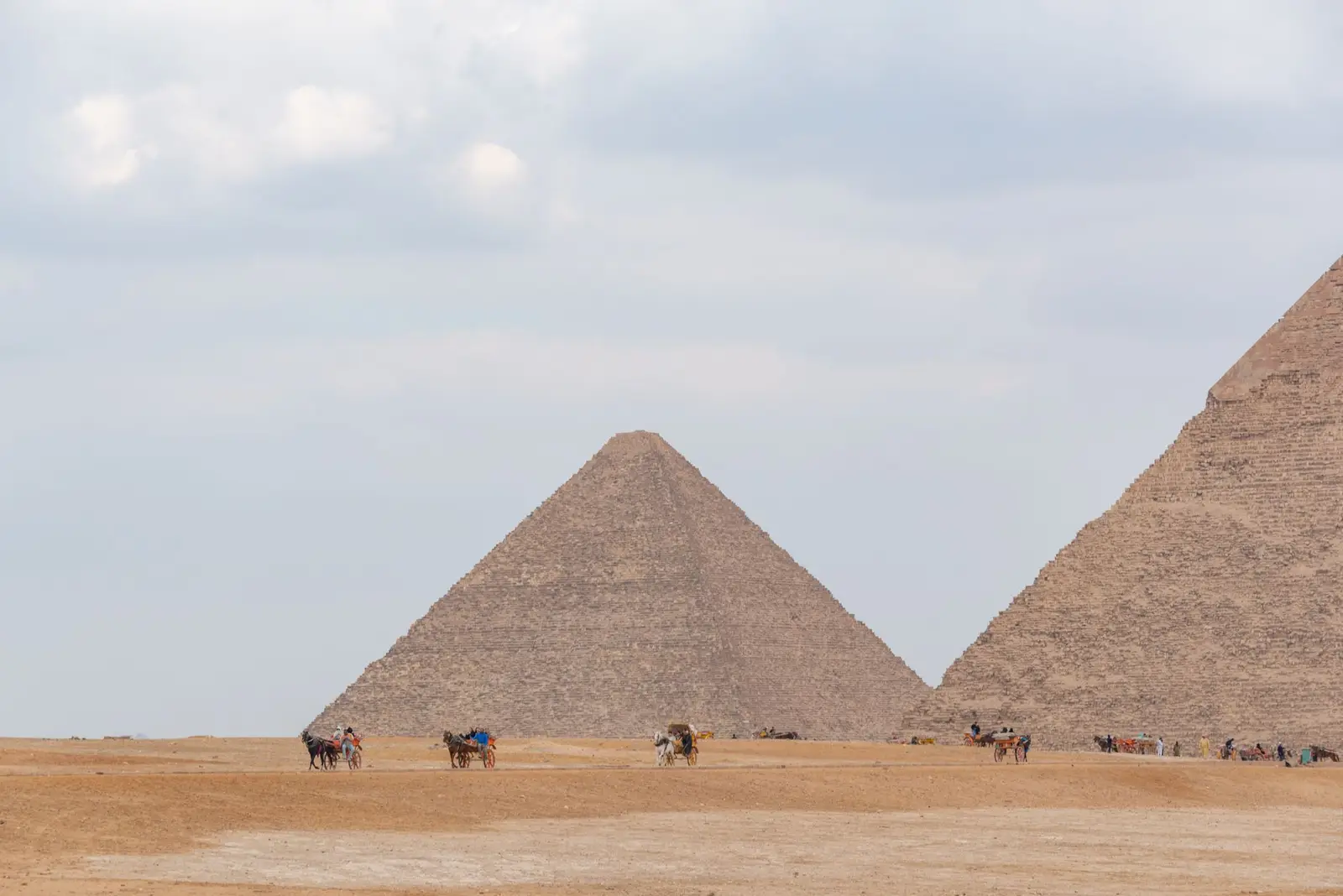
Karnak and the Giza plateau are each a couple of hours on foot at a pace you set.
Nothing on a standard itinerary requires climbing, and the interiors that do, such as the passage into the Great Pyramid, are optional.
On a private trip the pace inside each site is yours, which is the practical difference: you stop when you want to rather than when a group does.
Couples who want the sites without the walking should ask for a west bank day split across two mornings rather than compressed into one.
The Mistakes That Spoil a Honeymoon in Egypt
Four go wrong more often than anything else, and all four are avoidable at the planning stage.
The first is arriving late in the day and scheduling a site for that same evening, which turns the first twenty four hours into a blur nobody enjoys.
The second is booking an itinerary with no unstructured day in it at all, so that a couple who needs a morning off has to lose a site to get one.
The third is putting the Red Sea first, because the resting half works far better after the sites than before them, when you have nothing to recover from yet.
The fourth is treating the internal flights as optional to save a little, which trades several hours of road for money in a country where the roads between Cairo and Luxor are long and dull.
A fifth, less common but harder to fix, is not saying it is a honeymoon until arrival, which removes any chance of the hotels doing anything about it.
Privacy, and What Private Actually Means
Private on an Egyptian itinerary means your own guide, your own driver and your own vehicle, and it does not mean the sites are empty.
Karnak at ten in the morning is busy whether you arrive alone or with forty people.
What you control is when you arrive, and arriving at opening time is the single most effective thing a couple can do for the feel of a trip.
The other half of privacy is the evenings, which on a private itinerary are genuinely unstructured rather than filled with a group dinner.
The Practical Things Couples Ask Last and Should Ask First
Visas are issued on arrival for many nationalities and in advance online for others, and the official portal is visa2.egypt.gov.eg rather than any of the lookalike sites that rank alongside it.
Two people travelling on different passports should check separately, because the rules are not the same for every nationality.
If either of you has changed name after the wedding, travel in the name on the passport and not the new one, and leave the name change until after the trip.
Health advice for Egypt is published by national health services and the United States version sits at wwwnc.cdc.gov.
Travel insurance that covers a hot air balloon flight is worth checking specifically if Luxor is on the itinerary, because a number of standard policies exclude it.
Where to Start if You Are Comparing
The three itineraries under Egypt Honeymoon Packages are built not to overlap, so comparing them takes a few minutes rather than an evening: one ends on the Red Sea, one is the river, and one runs widest and includes Alexandria.
Couples with only a few days, or who want Cairo as the romantic half rather than the whole trip, will find the article on short Cairo honeymoons more directly useful than this one.
The questions worth asking whoever you book with are the same four every time: what is the pace of each day, who is guiding, what is not included, and what happens if a site is closed on the day.