The Coptic calendar is one of the oldest calendars still in daily use anywhere in the world. Egypt's Coptic Orthodox Church keeps every feast and fast by it, farmers along the Nile still name the seasons by its months, and its roots run back to the calendar the ancient Egyptians carved on their temple walls. For a visitor, it explains why Egypt celebrates Christmas on 7 January, why Easter rarely matches the Western date, and when the country's most moving religious festivals take place.
This guide explains how the Coptic calendar works, lists the thirteen Coptic months with their dates for the current year, and sets out the main Coptic feasts of 2027, with notes on planning a journey around them.
What Is the Coptic Calendar?
The Coptic calendar, also called the Alexandrian calendar, is a solar calendar of 365 days, with an extra day every fourth year. It has twelve months of exactly thirty days each, followed by a short thirteenth month of five days, or six in a leap year. The Coptic year begins in September, on the feast of Nayrouz, and years are counted from 284 AD rather than from the birth of Christ.
Today the Coptic Orthodox calendar governs the life of the church: its feasts, its long fasting seasons and its daily readings, including the commemorations of saints and martyrs. Egypt's civil life runs on the Gregorian calendar and its Islamic holidays on the lunar Hijri calendar, so Egyptians live with three calendars at once, and most know all three.
From the Pharaohs to the Church
The structure is ancient Egyptian. The pharaonic civil calendar also had twelve months of thirty days and five extra days at the end of the year, the days on which, in myth, the gods Osiris, Horus, Set, Isis and Nephthys were born. The year was divided into three seasons of four months, each tied to the river: Akhet, the flood; Peret, the time of planting and growth; and Shemu, the harvest.
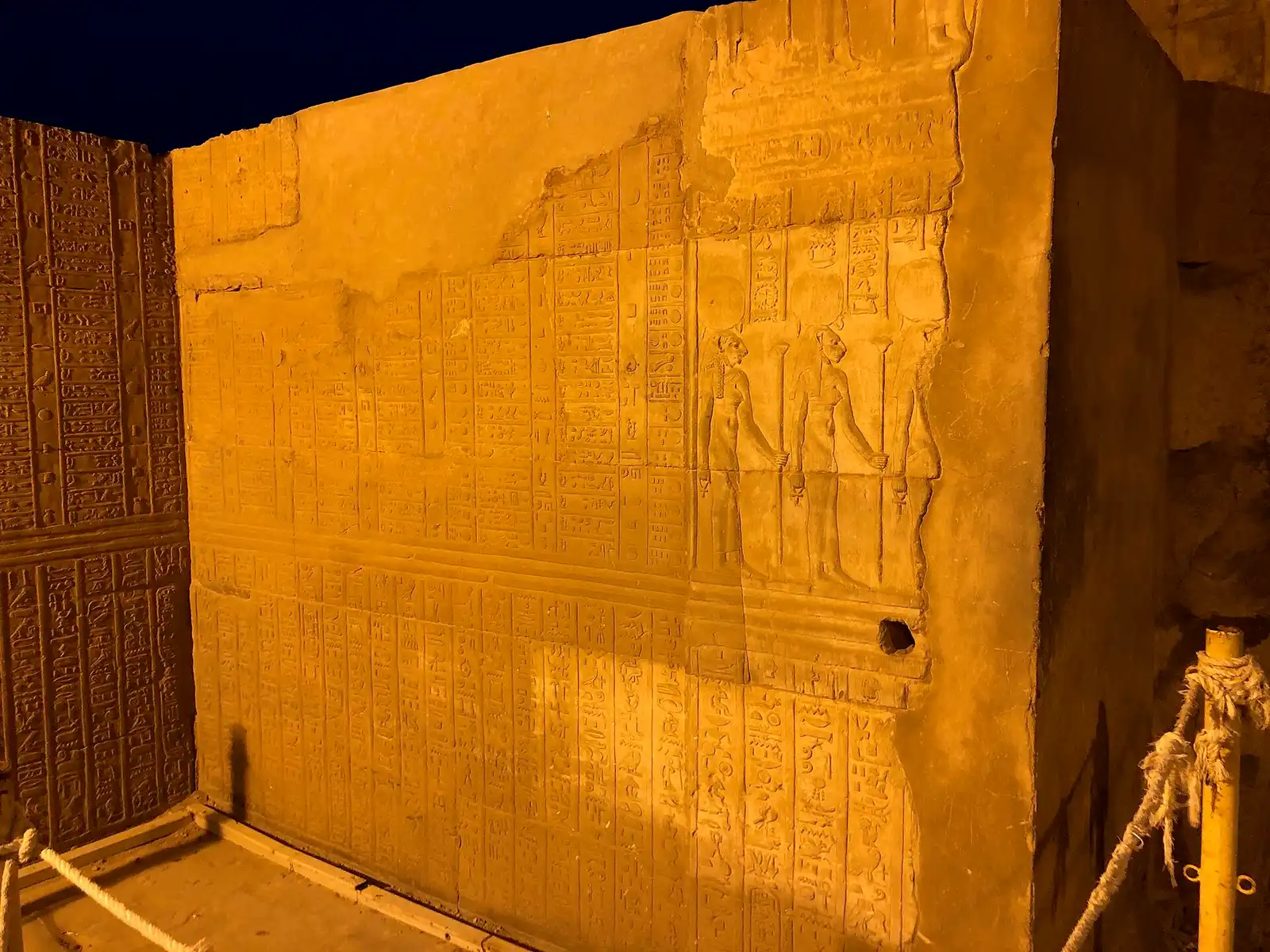
The weakness of the old calendar was that it had no leap year, so it drifted slowly against the seasons. Under Roman rule in the late first century BC a leap day was added every four years, fixing the calendar to the sun. That reformed Alexandrian calendar is, in all essentials, the one the Coptic Church uses now. The ancient Egyptian calendar can still be seen carved in stone at Kom Ombo Temple, where a wall lists offerings day by day through the year.
The Era of the Martyrs
Coptic years are counted Anno Martyrum, in the Era of the Martyrs, from 284 AD, the year the Roman emperor Diocletian came to power. His reign brought the most severe persecution Egypt's Christians had known, and the church chose to remember it by starting its count of years there. The Coptic year that began in September 2026 is 1743, and the year that begins in September 2027 is 1744.
The Thirteen Coptic Months
The Coptic months keep names descended from ancient Egyptian. Thout takes its name from Thoth, the god of wisdom and writing, and Hathor from the goddess of love and music. Egyptians use the Arabic forms of the names, given in brackets below. In the Coptic year 1743, the months begin on these dates:
- Thout (Tut): 11 September 2026
- Paopi (Baba): 11 October 2026
- Hathor (Hatur): 10 November 2026
- Koiak (Kiahk): 10 December 2026
- Tobi (Tuba): 9 January 2027
- Meshir (Amshir): 8 February 2027
- Paremhat (Baramhat): 10 March 2027
- Parmouti (Baramuda): 9 April 2027
- Pashons (Bashans): 9 May 2027
- Paoni (Ba'una): 8 June 2027
- Epip (Abib): 8 July 2027
- Mesori (Misra): 7 August 2027
- Pi Kogi Enavot (Nasi): 6 September 2027, six days this year
The Coptic months are still part of everyday Egyptian speech. Farmers time their planting by them, and old sayings match each month to its weather: Tuba is remembered for its cold, Amshir for its winds and sudden dust, and Ba'una for the heat that ripens the harvest.
Planning a journey to Egypt? Ask Hamdy on WhatsApp or share your dates for a personal reply within 24 hours.
Coptic Calendar 2027: Feasts and Fasts
The Coptic calendar 2027 holds these main feasts and fasts. Fixed feasts fall on the same date every year; Easter and the feasts tied to it move, because Easter follows the Orthodox calculation from the spring full moon.
- 7 January: Coptic Christmas, after the 43 day Nativity Fast
- 19 January: Epiphany, the Baptism of Christ, known in Egypt as Eid el Ghitas
- 22 to 24 February: the Fast of Nineveh, recalling the story of Jonah
- 8 March: Great Lent begins, 55 days of fasting before Easter
- 7 April: the Annunciation
- 25 April: Palm Sunday
- 30 April: Good Friday
- 2 May: Coptic Easter, followed on 3 May by Sham el Nessim, a national spring holiday
- 1 June: the Entry of the Holy Family into Egypt
- 10 June: the Ascension
- 20 June: Pentecost, followed by the Apostles' Fast
- 12 July: the Feast of the Apostles
- 7 to 21 August: the Fast of the Virgin Mary, ending with her feast on 22 August
- 12 September: Nayrouz, the Coptic New Year of 1744
- Late November: the Nativity Fast begins again
Of the Coptic feasts 2027 brings, Christmas and Easter are national public holidays, and Sham el Nessim is a day off for everyone, Muslim and Christian alike, spent outdoors with picnics of salted fish, onions and coloured eggs.
Nayrouz, the Coptic New Year
Nayrouz falls on 1 Thout, which is 11 September in most years and 12 September in the year before a Gregorian leap year, as in 2027. The church keeps it as a feast of the martyrs, and red, for their blood, and white, for their faith, are its colours. Traditional foods include red dates, whose red flesh and white stone carry the same meaning, and guavas. In ancient Egypt the New Year was tied to the rising of the star Sirius and the coming of the Nile flood, and Nayrouz still sits at the time of year when the flood once arrived.

Planning a Journey Around a Coptic Feast
For travellers, the Coptic calendar is worth checking before choosing dates. A few feasts in particular are memorable to share:
Christmas, 7 January. The midnight liturgy on the night of the 6th is the most moving service of the year. Our guide to Coptic Christmas explains how it works and where to attend, and our Christmas and New Year journeys can be shaped around it.
Easter, 2 May 2027. Holy Week services, the long Saturday night vigil and Sham el Nessim the next day make late April and early May a rich time to visit, with warm but not yet hot weather.
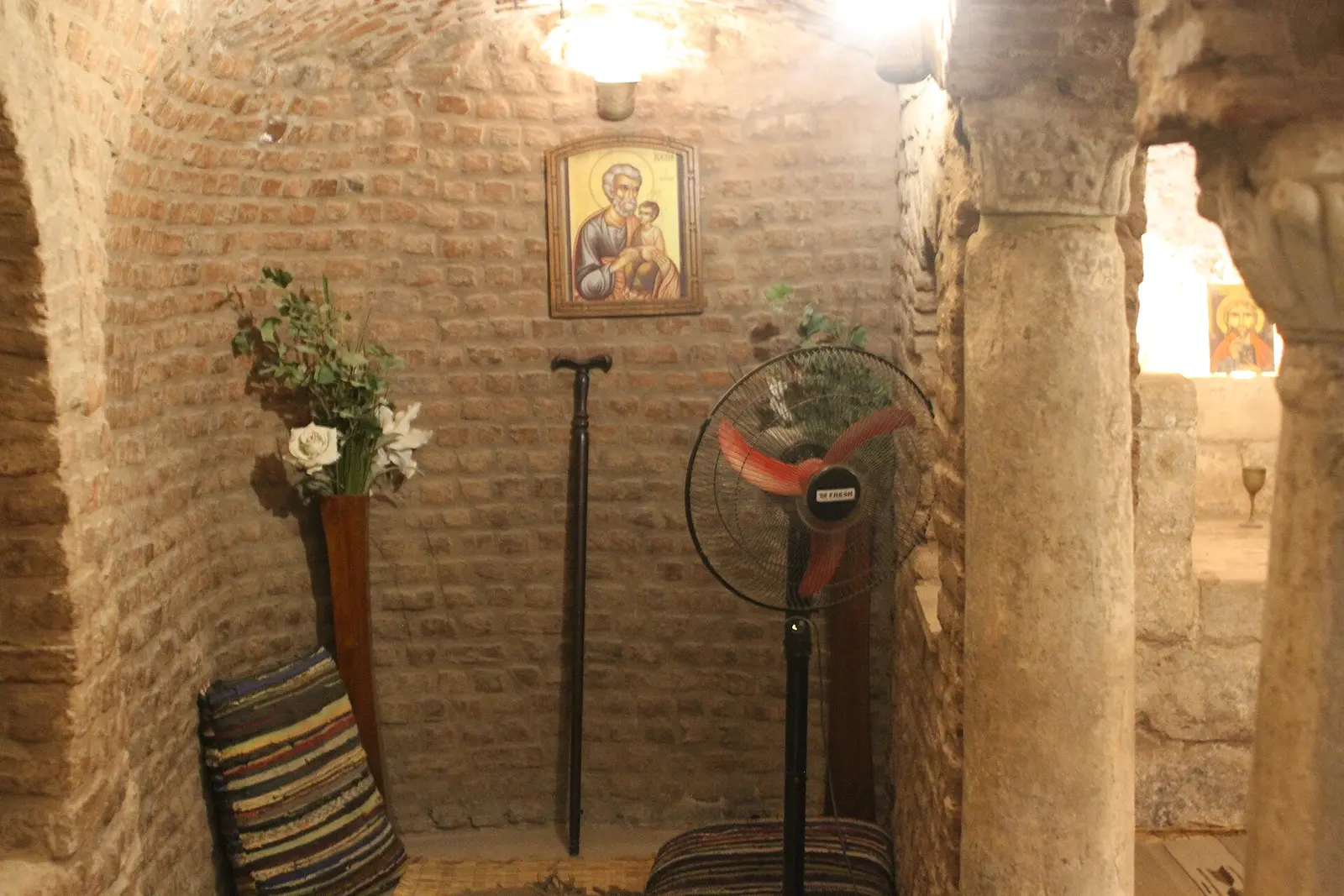
The Holy Family, 1 June. Coptic tradition traces the route of the Holy Family through Egypt, from Sinai through the Delta and Coptic Cairo to Upper Egypt. Churches along the route celebrate their arrival, and Abu Serga in Old Cairo, built over the crypt where they are said to have sheltered, is the most visited.
The Virgin Mary, August. During the fortnight of the Virgin's fast, pilgrims gather at monasteries linked to the Holy Family, above all at Durunka near Assiut, for one of the largest religious festivals in Egypt. It is a hot time of year in the south, and a visit needs local arrangements.
Dress modestly for any church service, follow your guide on where and when photographs are allowed, and expect security at the larger churches on feast days.
A Calendar That Connects Egypt's Ages
Few things show the continuity of Egypt as clearly as the Coptic calendar. Its months carry the names of gods worshipped at Karnak and Dendera, its year still turns with the old rhythm of the Nile, and its feasts fill the churches of Cairo every winter and spring. Knowing it adds a layer of meaning to any journey through the country.
If you would like to plan a journey around the Coptic calendar, whether for Christmas, Easter or the Holy Family route, tell us your dates or ask Hamdy on WhatsApp, and we will arrange the churches, the guides and everything around them.