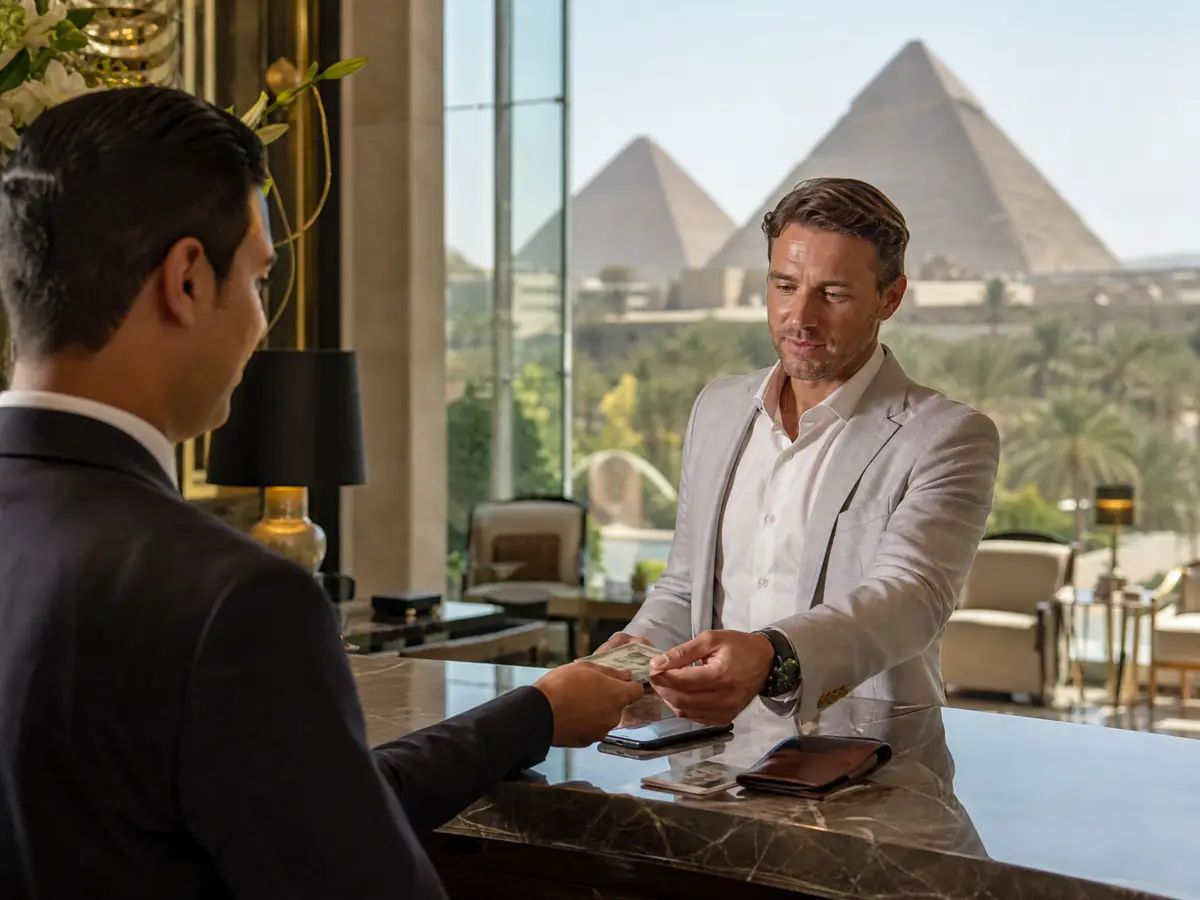
Things to Know Before Traveling to Egypt
Is Egypt safe? Can you drink the water? Do you need cash? Everything Americans need to know before their first Egypt trip from a luxury Egypt tour operator.
14 min read
12 Days / 11 Nights
Duration
1 - 8
Group Size
4
Destinations
Daily
Departures
This 12 days Egypt tour covers a fuller span of the country's history than most itineraries attempt, moving from pharaonic Saqqara through Greek and Roman Alexandria to the Red Sea coast. Alexandria in particular feels unlike anywhere else in Egypt, a Mediterranean city with Roman amphitheatres and a literary history of its own.
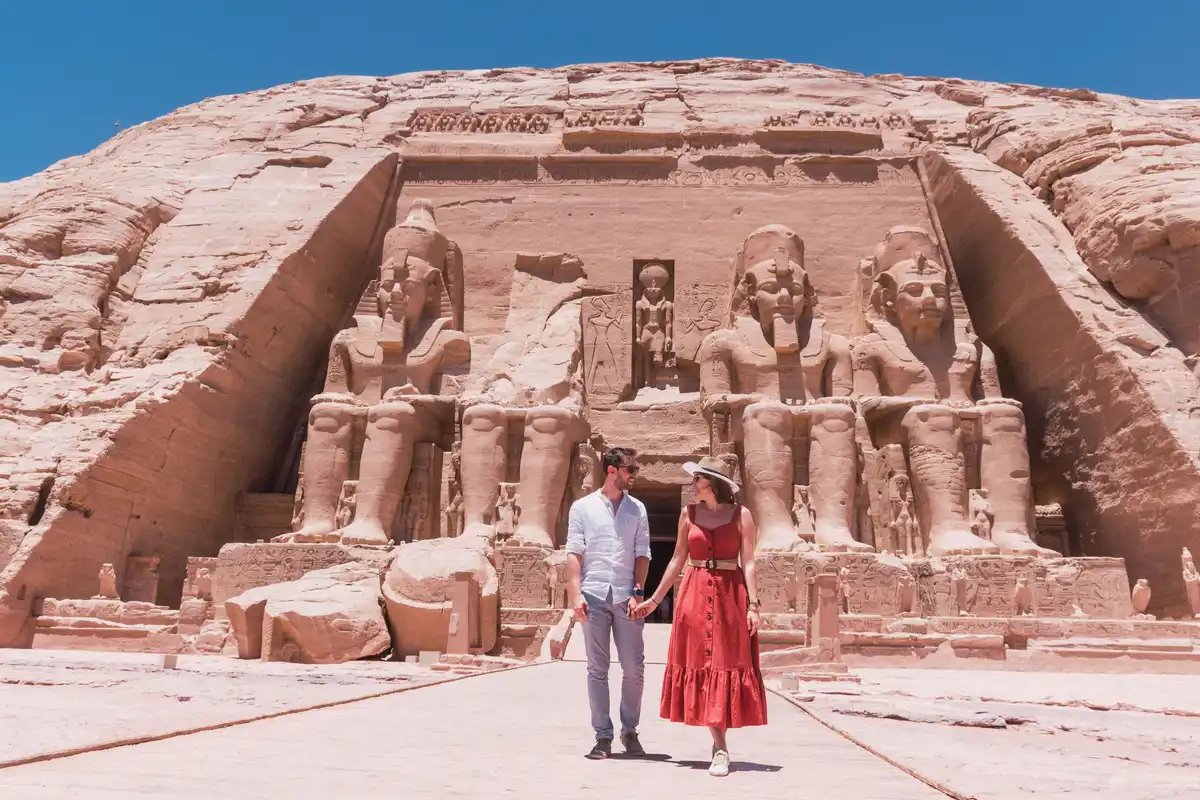
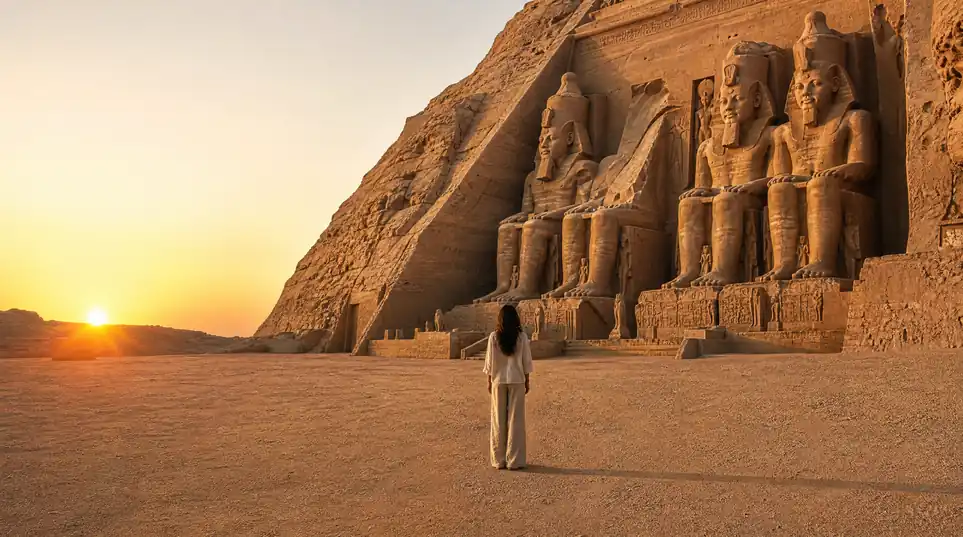
Archaeological highlights are deliberately varied. The Serapeum at Saqqara, a vast underground gallery of granite sarcophagi built for sacred bulls, ranks among Egypt's strangest spaces. Abu Simbel's colossal cliff temples near Aswan, visited before the tour groups arrive, deliver a completely different encounter at that hour. In Alexandria, Roman catacombs sit a short drive from a Mediterranean corniche most visitors never expect from Egypt.
The final days shift entirely. Two nights on the Red Sea offer open water, world-class diving for those certified, and something increasingly rare in structured travel: a day with no schedule at all, after more than a week of intensive exploration.








Your journey begins at Saqqara, but rather than only the Step Pyramid, you spend time in the mastaba tombs of Ti and Mereruka, where relief carvings of daily life remain remarkably crisp. The Serapeum, a vast underground gallery of granite sarcophagi built for sacred bulls, offers one of Egypt's strangest and most atmospheric spaces, and it is usually nearly empty.
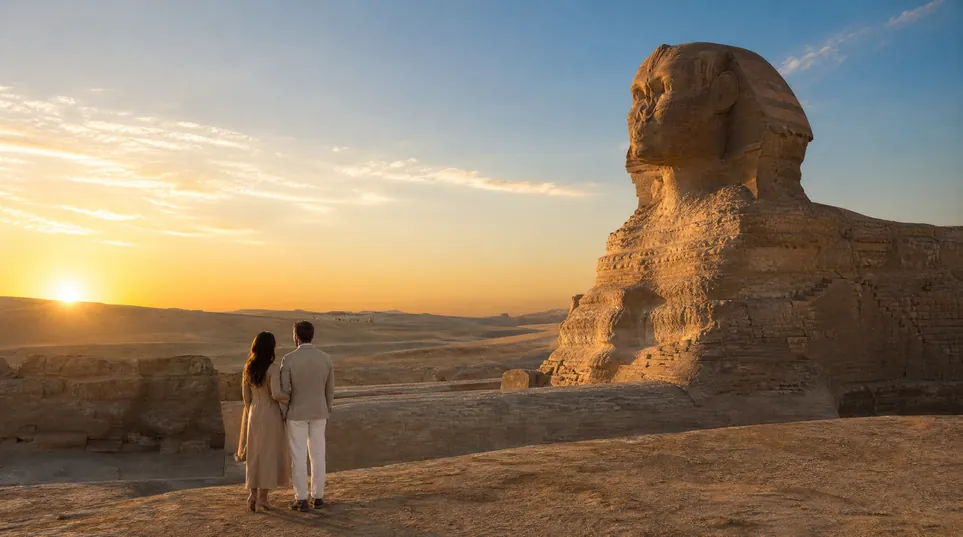
An early start brings you to the Giza pyramids before the crowds, with time to walk the site properly rather than following a fixed loop. The afternoon moves to the Grand Egyptian Museum, where your Egyptologist focuses on specific collections aligned with your interests instead of attempting the entire building in one visit.
A drive north brings you to Alexandria, a city that feels entirely unlike the rest of Egypt. The Catacombs of Kom el Shoqafa descend three levels into bedrock, blending Egyptian, Greek, and Roman funerary traditions in a single structure. The evening belongs to the corniche, where Alexandria's Mediterranean character is most apparent.
Kom el Dikka preserves Egypt's only well-known Roman amphitheatre alongside villas and mosaics, a reminder of how thoroughly Roman this city once was. In the afternoon, the Cavafy Museum, the preserved apartment of the Greek poet who lived here for twenty-five years, offers a literary counterpoint to archaeology. The return drive to Cairo follows.
In Luxor, you begin on the west bank with Medinet Habu, whose painted reliefs of the Sea Peoples' invasion retain colour that has survived three thousand years. The Ramesseum follows, where the fallen colossus of Ramesses II inspired Shelley's poem about the impermanence of power, a fitting reflection for a solo traveller.
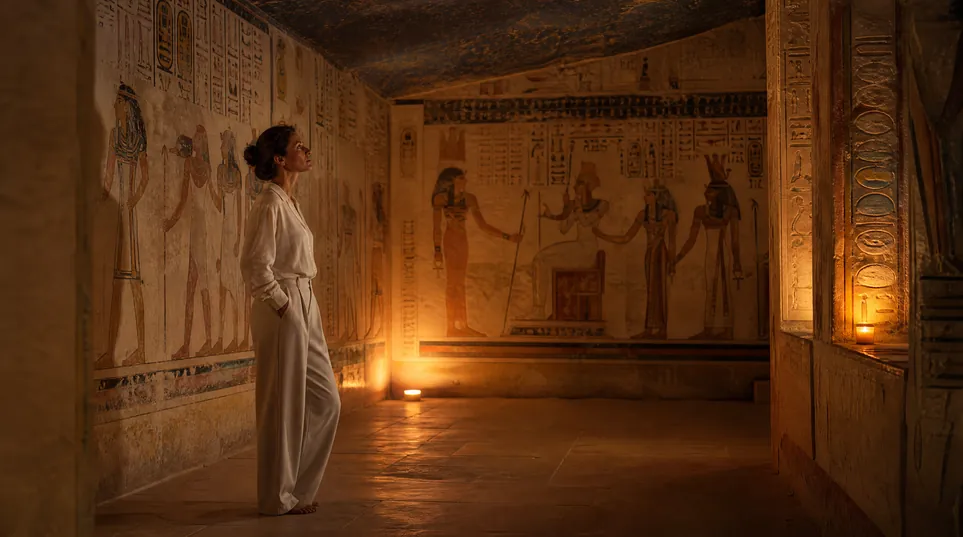
The Valley of the Queens holds the tomb of Nefertari, widely regarded as the most beautifully painted burial chamber to survive from the ancient world. Nearby, Howard Carter's restored house preserves the archaeologist's equipment and photographs from the 1922 discovery, connecting the tombs you have just visited to the modern history of their rediscovery.
Philae, relocated stone by stone to save it from rising waters, remains one of Egypt's most atmospheric temples, approached only by boat. The Unfinished Obelisk in Aswan's granite quarries lies exactly where ancient workers abandoned it, offering rare insight into how these monuments were actually carved and moved.
An early departure south brings you to Abu Simbel, where Ramesses II's colossal temples were cut from a cliff face and later relocated in one of the twentieth century's greatest engineering rescues. Arriving before the main tour groups means the four twenty-metre statues can be experienced in relative quiet, which fundamentally changes the encounter.
A short flight carries you from ancient monuments to the Red Sea coast. The afternoon is entirely unstructured, whether that means swimming, reading by the water, or simply doing nothing at all after eight days of intensive exploration. This is the journey's deliberate change of pace.
A full day with no fixed schedule. For divers, the Red Sea offers some of the world's clearest water and healthiest reefs, with a dive on the SS Thistlegorm wreck available for certified divers. For everyone else, the day is simply open, an increasingly rare luxury in structured travel.
An early flight returns you to Cairo with the full day ahead. Al-Muizz Street holds the highest concentration of medieval Islamic architecture anywhere in the world, and walking it slowly, stopping at Sultan Hassan Mosque and Bab Zuweila, provides a fitting final chapter after two weeks spanning pharaonic, Greek, Roman, and Islamic Egypt.
Your final morning is yours, unhurried and unscheduled. A private transfer takes you to the airport whenever suits your flight, closing twelve days that covered nearly the full span of Egyptian history and geography.
Your itinerary includes time in the Red Sea's reefs near Hurghada, Egypt — the kind of moment that's hard to book once you're already there.
A single journey spanning Cairo → Aswan → Abu Simbel → Luxor, each stop with its own guide and pace rather than a single itinerary stretched too thin.
Group size on this journey: 1 - 8 — intimate enough that your private Egyptologist adjusts the pace to you, not the other way around.
A private, professionally trained Egyptologist accompanies you throughout — no shared coach, no megaphone, no rushing to keep up with a group.
A dedicated concierge based in Egypt is reachable around the clock for the length of your trip, for anything from a restaurant table to a change of plans.
Every stop on this itinerary was chosen and sequenced by our own Egypt specialists — not licensed from a template, but built one relationship, one property, one guide at a time.
We design boutique Egypt travel for guests who want more than a checklist of pyramids — private access, hand-picked hotels, and a team on the ground who treat every detail as personal.
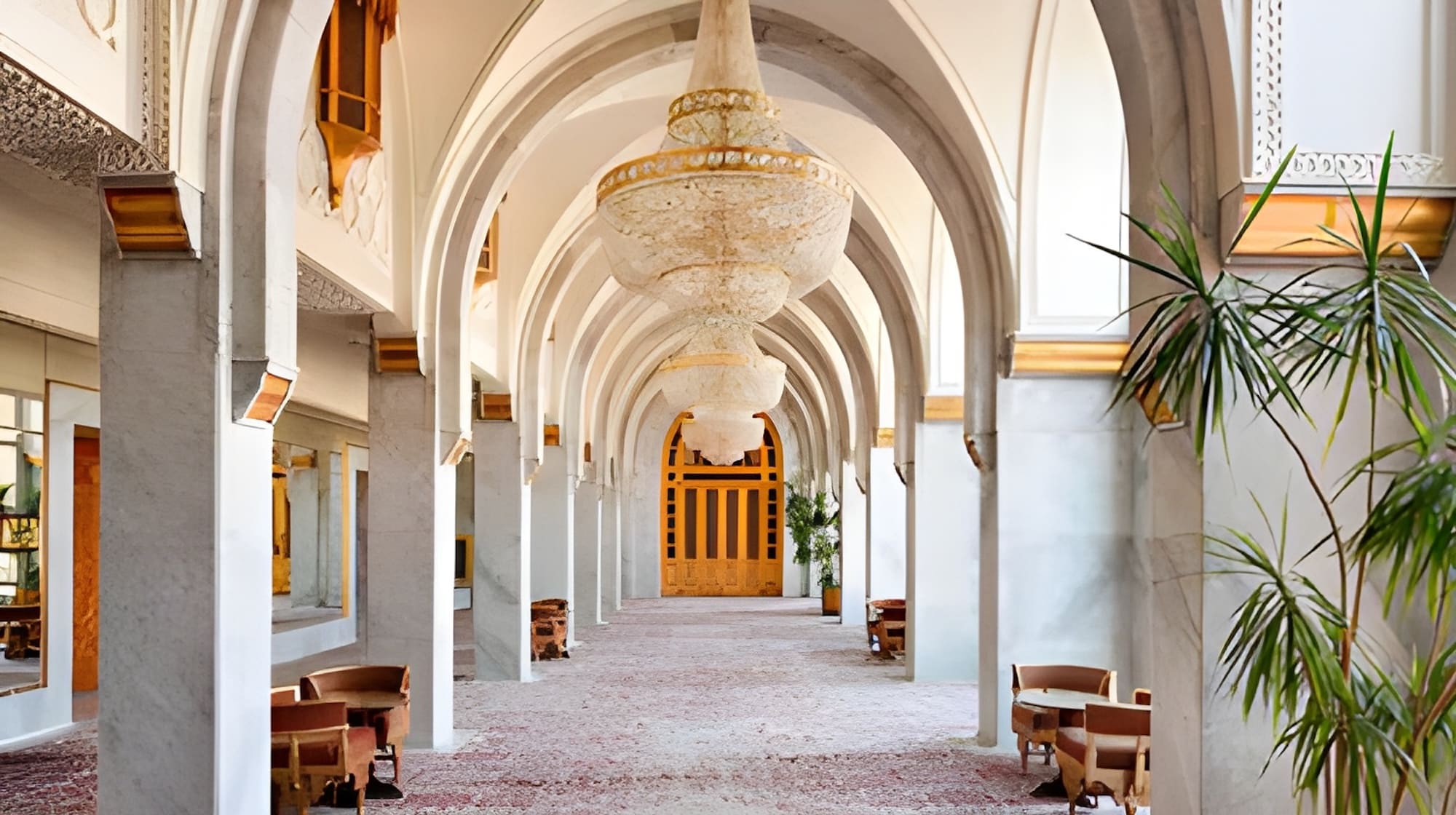
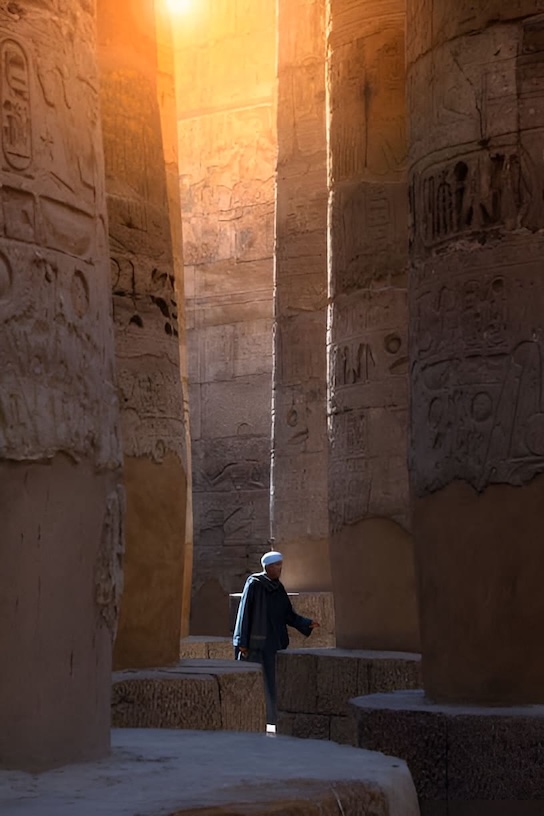
Every journey is led by a private, professionally trained Egyptologist — not a shared coach tour with a megaphone. You set the pace; they bring 5,000 years of history to life.
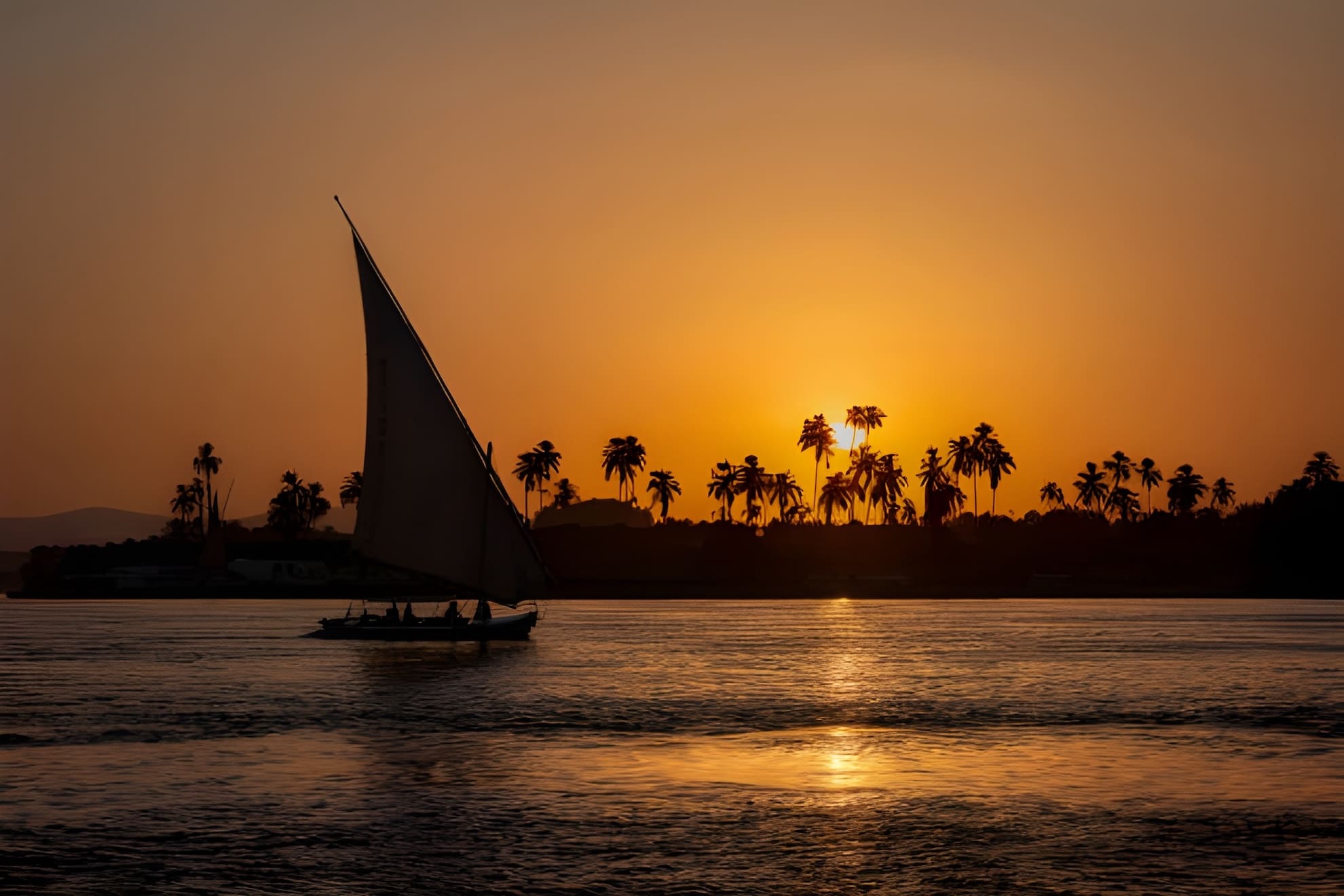
Group size on this journey: 1 - 8 — small enough that a temple visit feels like a discovery, not a queue.
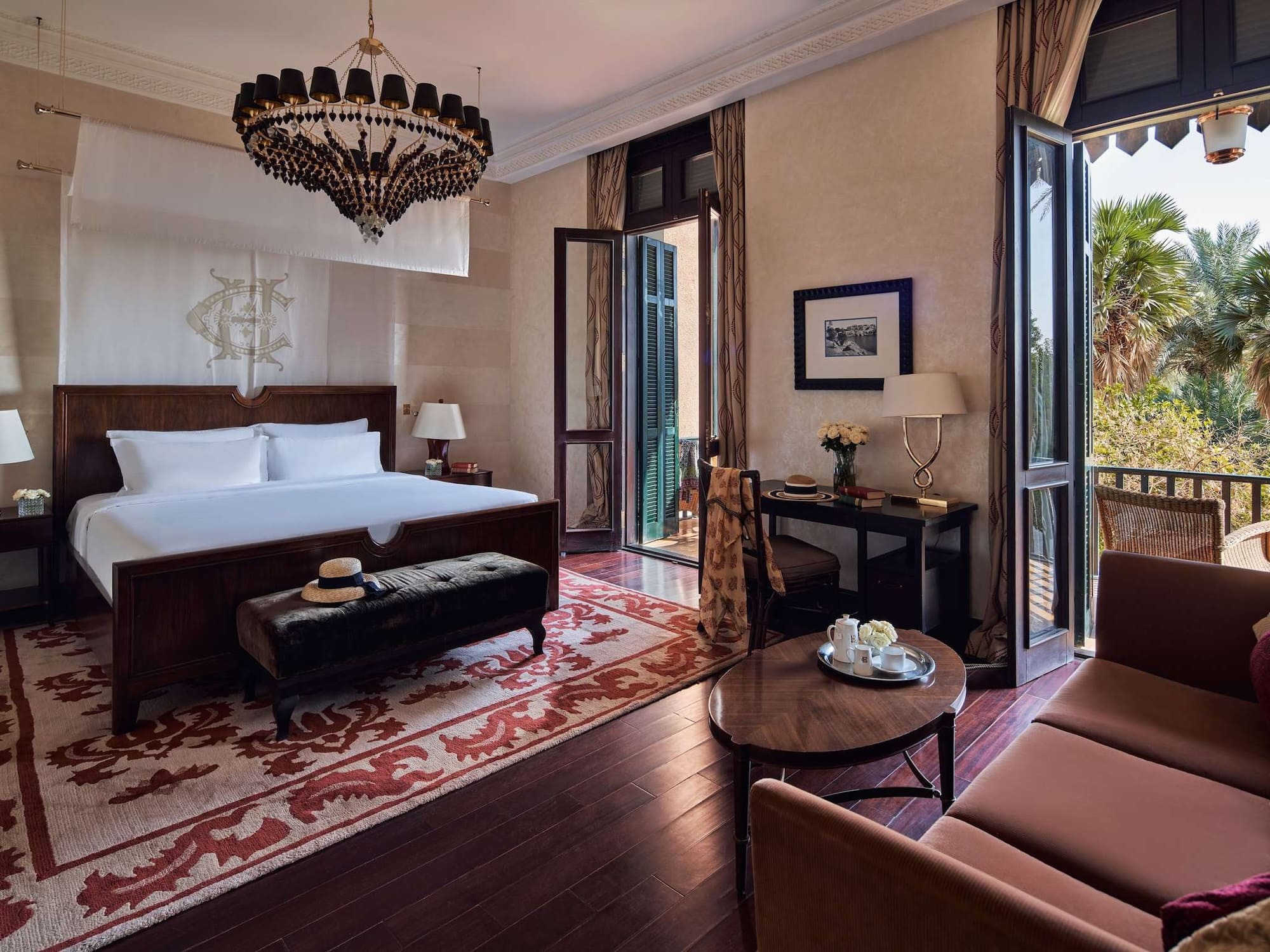
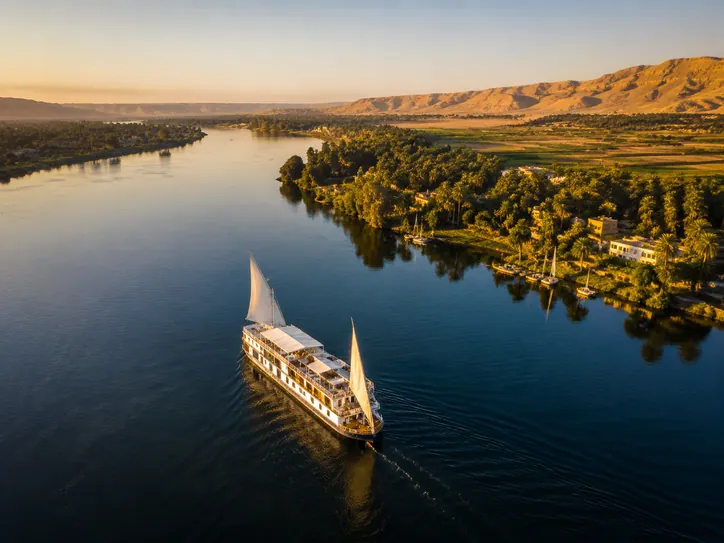
We personally vet every property on your itinerary — from Nile-view suites in Cairo to boutique dahabiyas on the river — so each night matches the standard of the day before it.
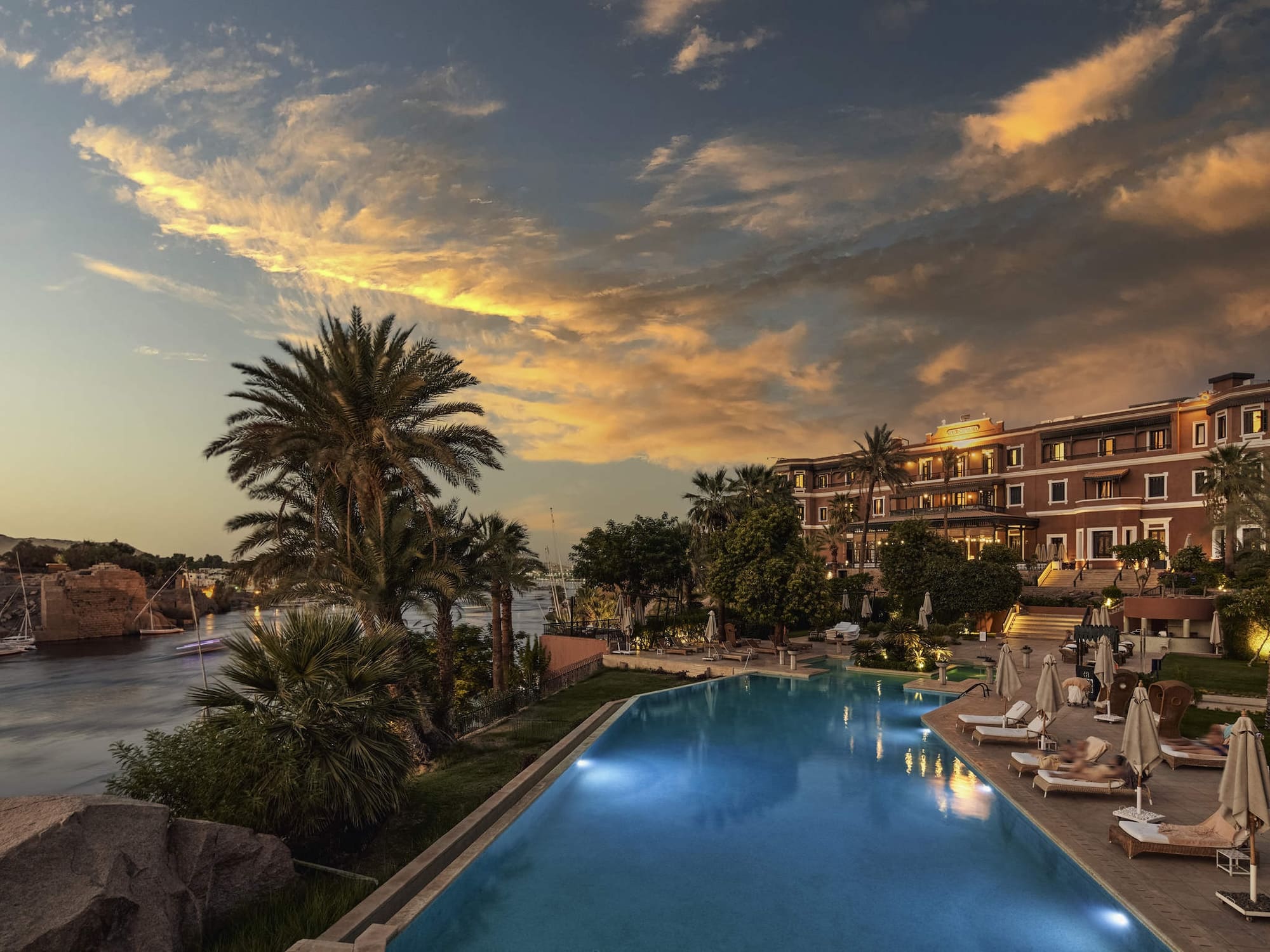
A dedicated concierge is reachable around the clock throughout your trip, on the ground in Egypt — not a call center reading from a script.
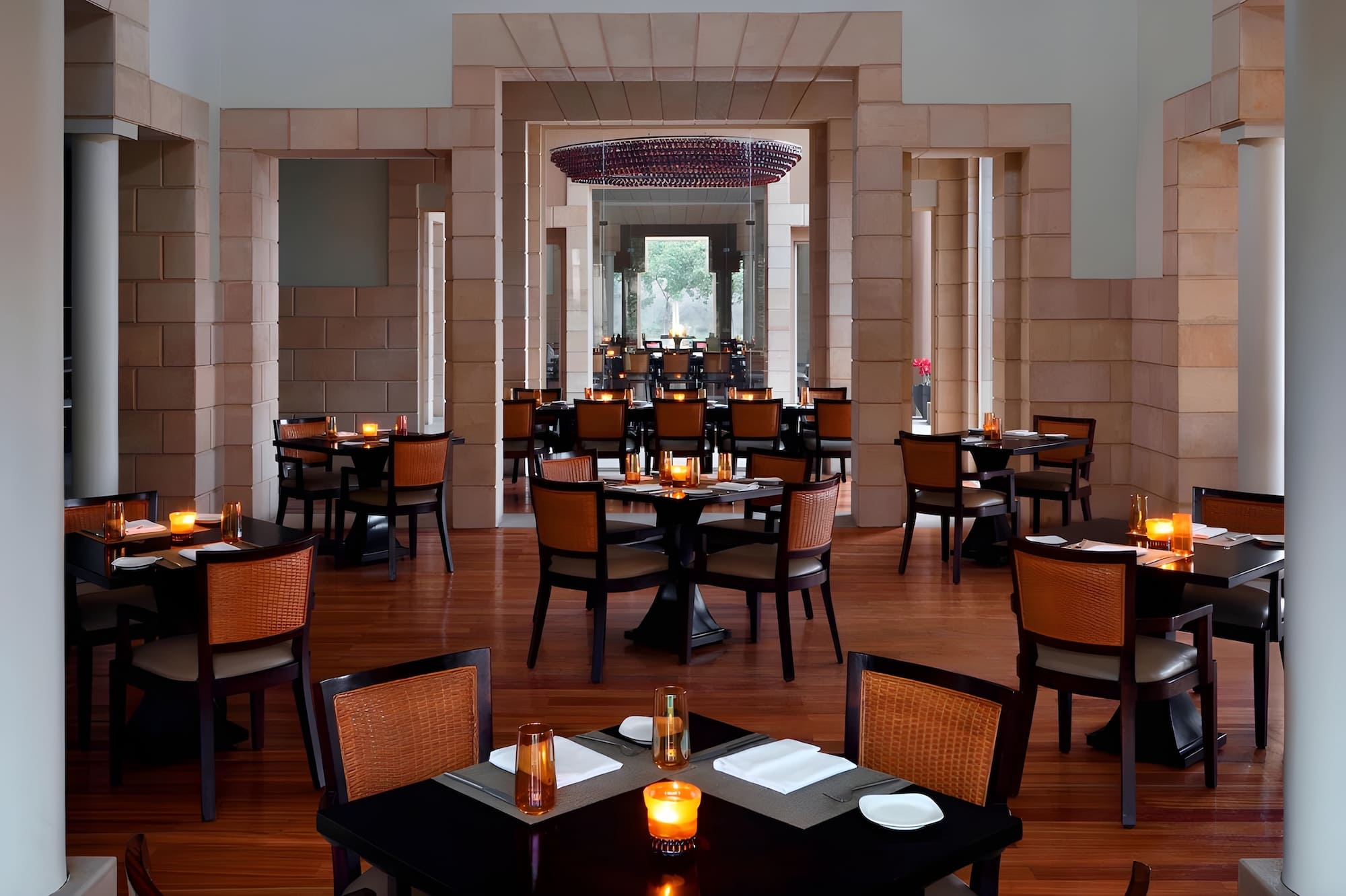
Two decades of relationships across Cairo, Aswan, Abu Simbel, and Luxor mean access most operators simply don't have: early museum entry, private felucca sunsets, tables at restaurants without a sign.
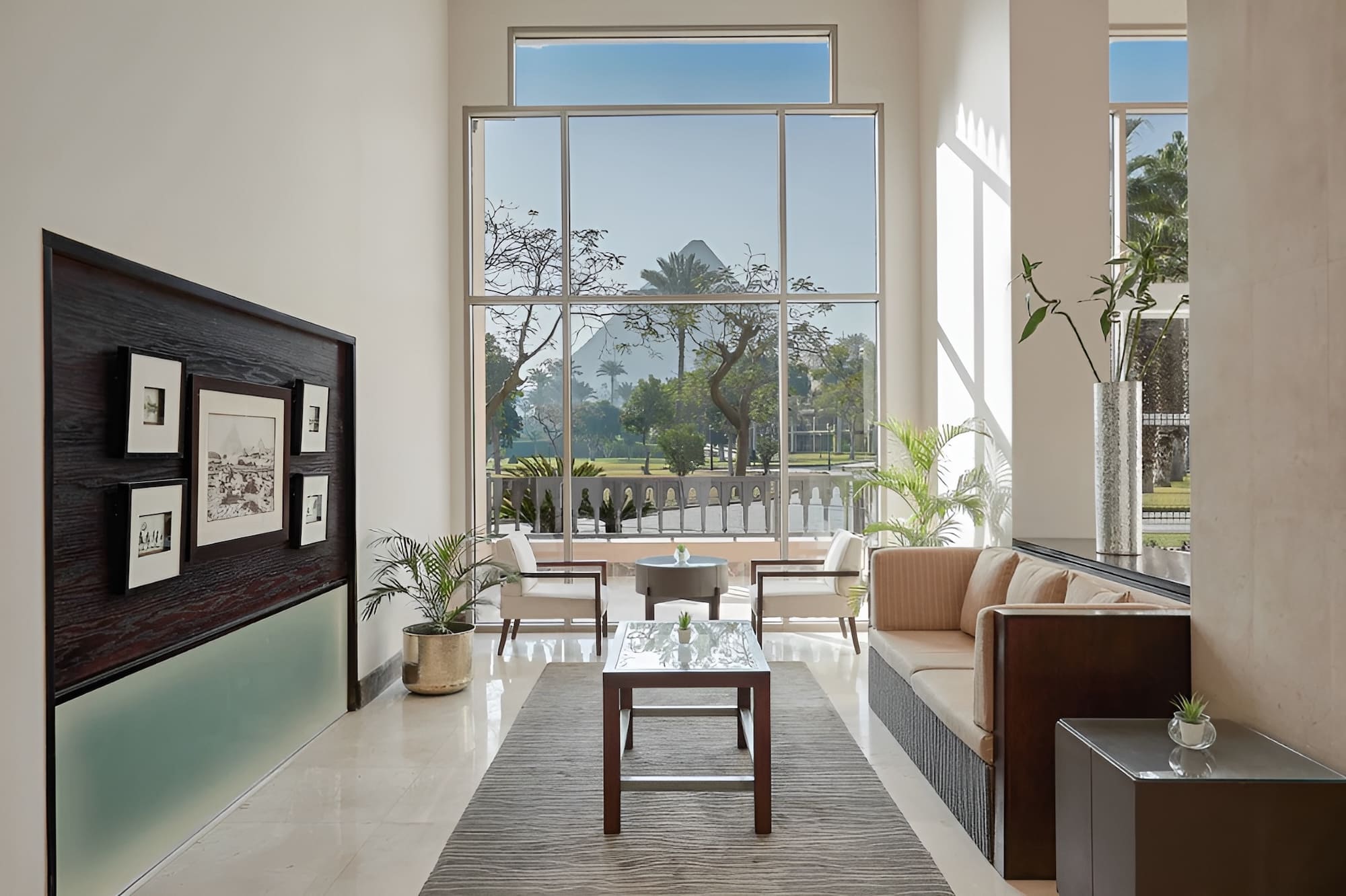
Every private Nile cruise and boutique Egypt travel itinerary we build starts from a conversation with you, not a brochure.
Let our travel experts turn this itinerary into your own bespoke Egyptian story.
September
From, per person
Practical guidance from our team for a first visit to Egypt — what to pack, when to go, and what to expect once you land.
Is Egypt safe? Can you drink the water? Do you need cash? Everything Americans need to know before their first Egypt trip from a luxury Egypt tour operator.
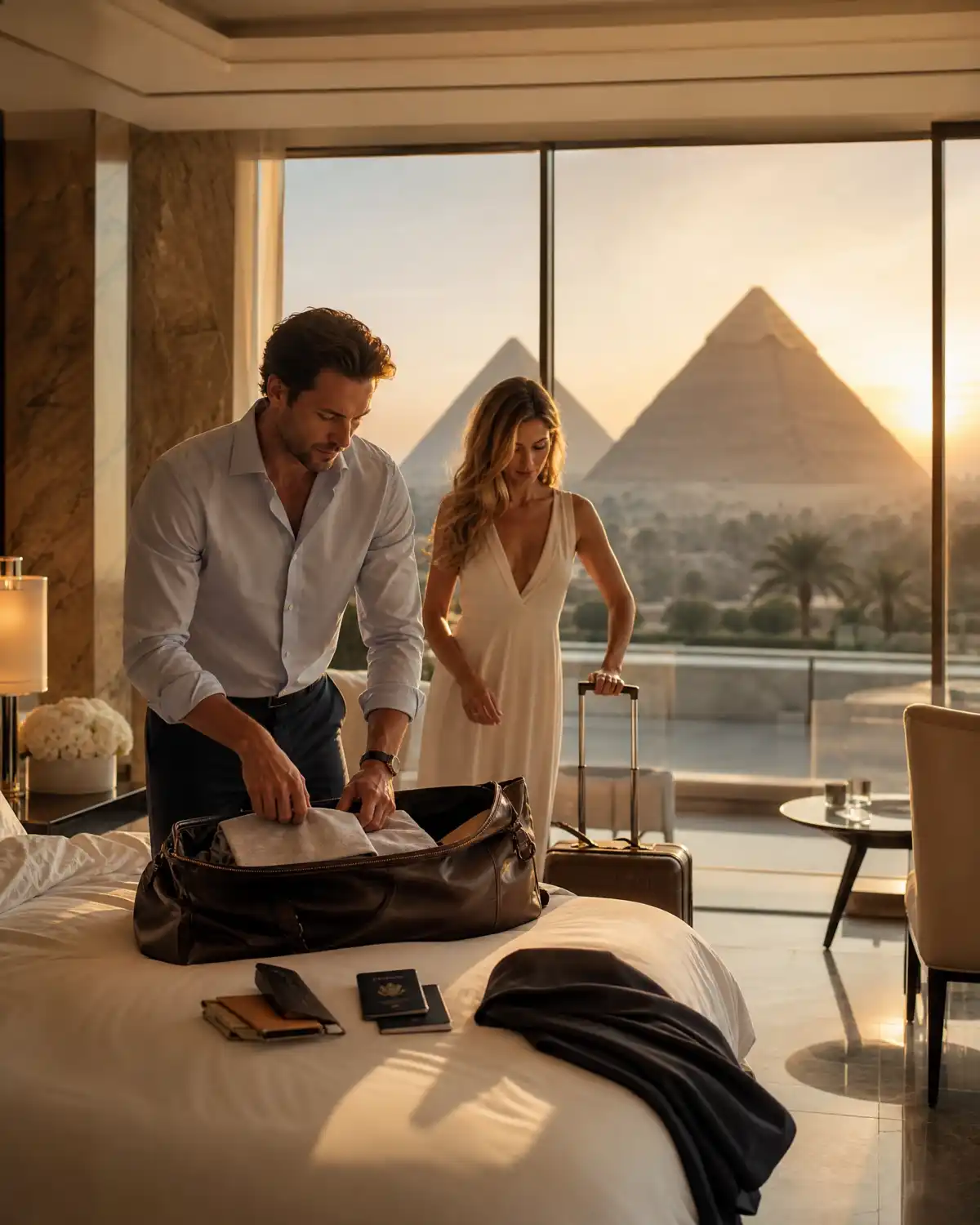
The only Egypt packing list written for discerning American travelers. What to bring, what to leave home, and what Egypt's finest hotels already provide.
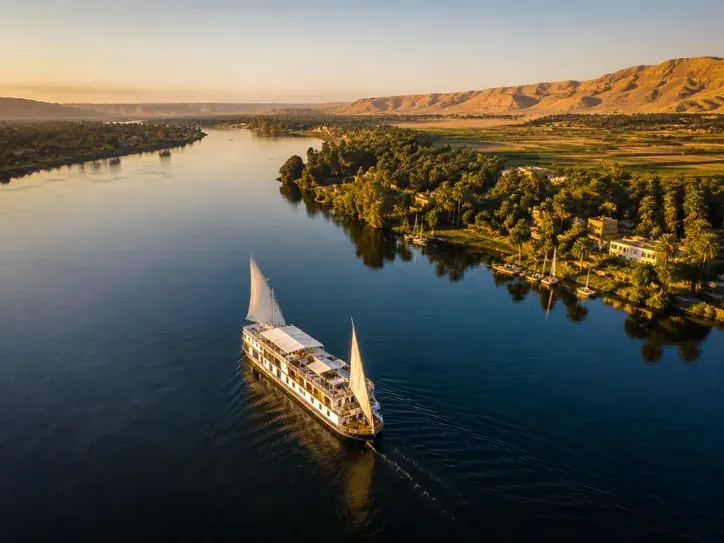
October through April for most travelers. But the real answer depends on what you want to experience. A month-by-month guide from an Egypt luxury tour operator.

Egypt uses the Egyptian Pound. But can you use USD? Credit cards? Apple Pay? The complete money guide for American travelers planning a private Egypt journey.
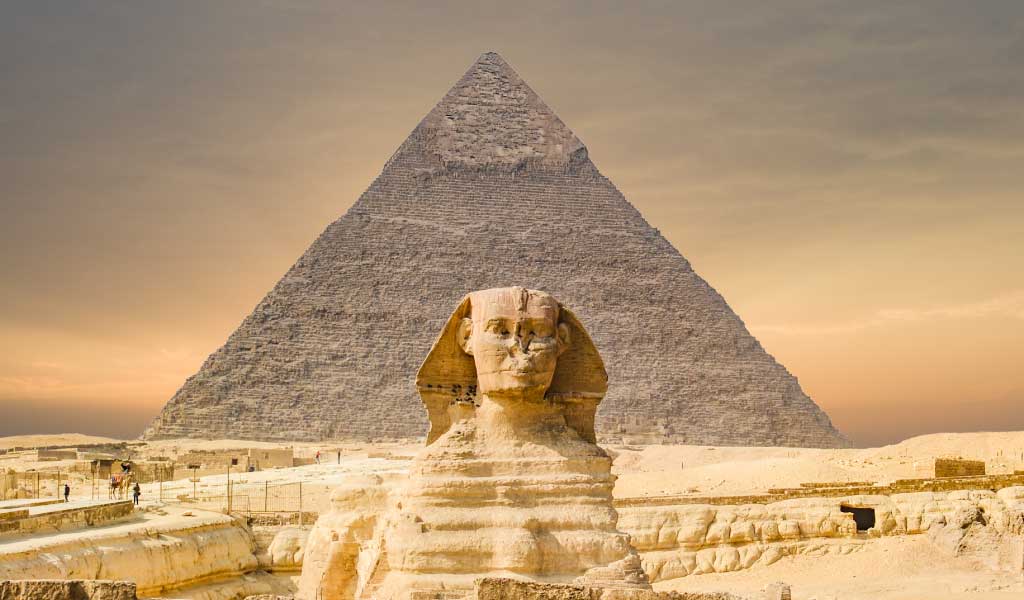
An honest answer from a Cairo-based luxury travel team. What the State Department advisory actually means and why American travelers return every year.
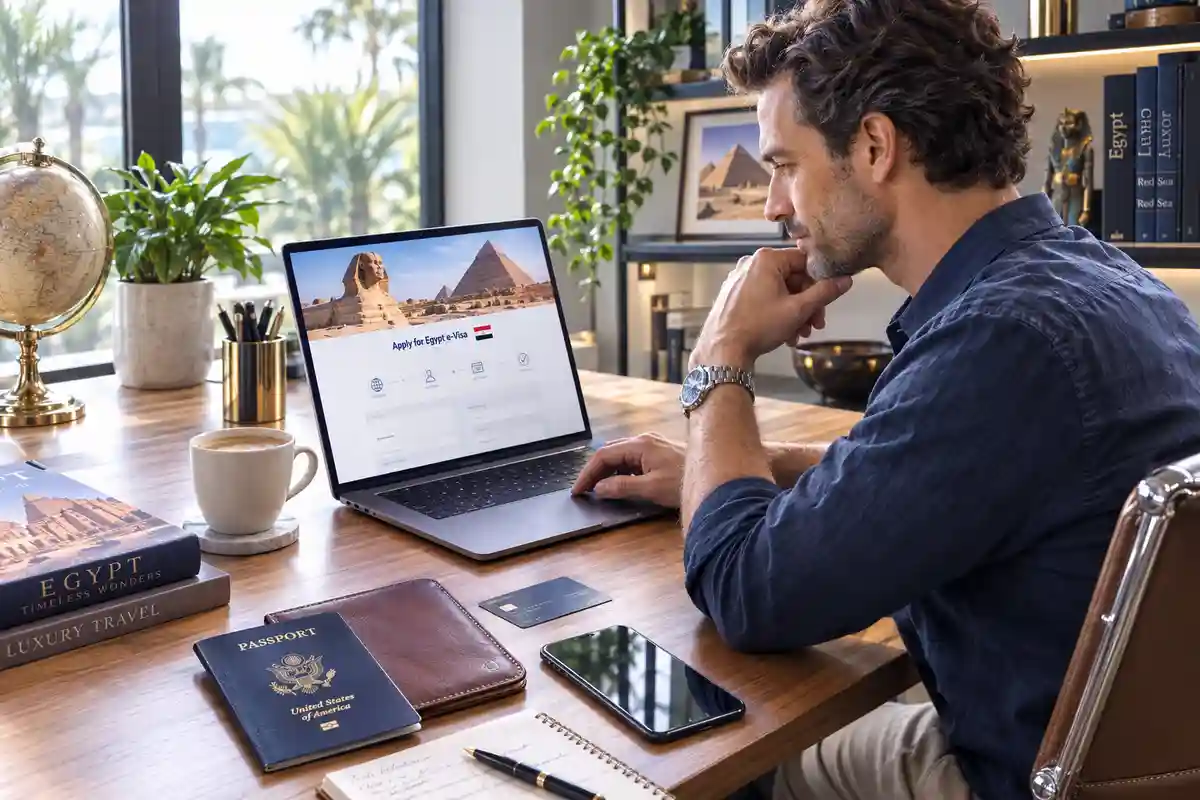
Yes — US citizens need a visa for Egypt. But it takes 5 minutes online or 15 minutes at the airport. Complete guide to both options and what comes next.
More experiences you might love