You will change your mind about which one you preferred at least twice.
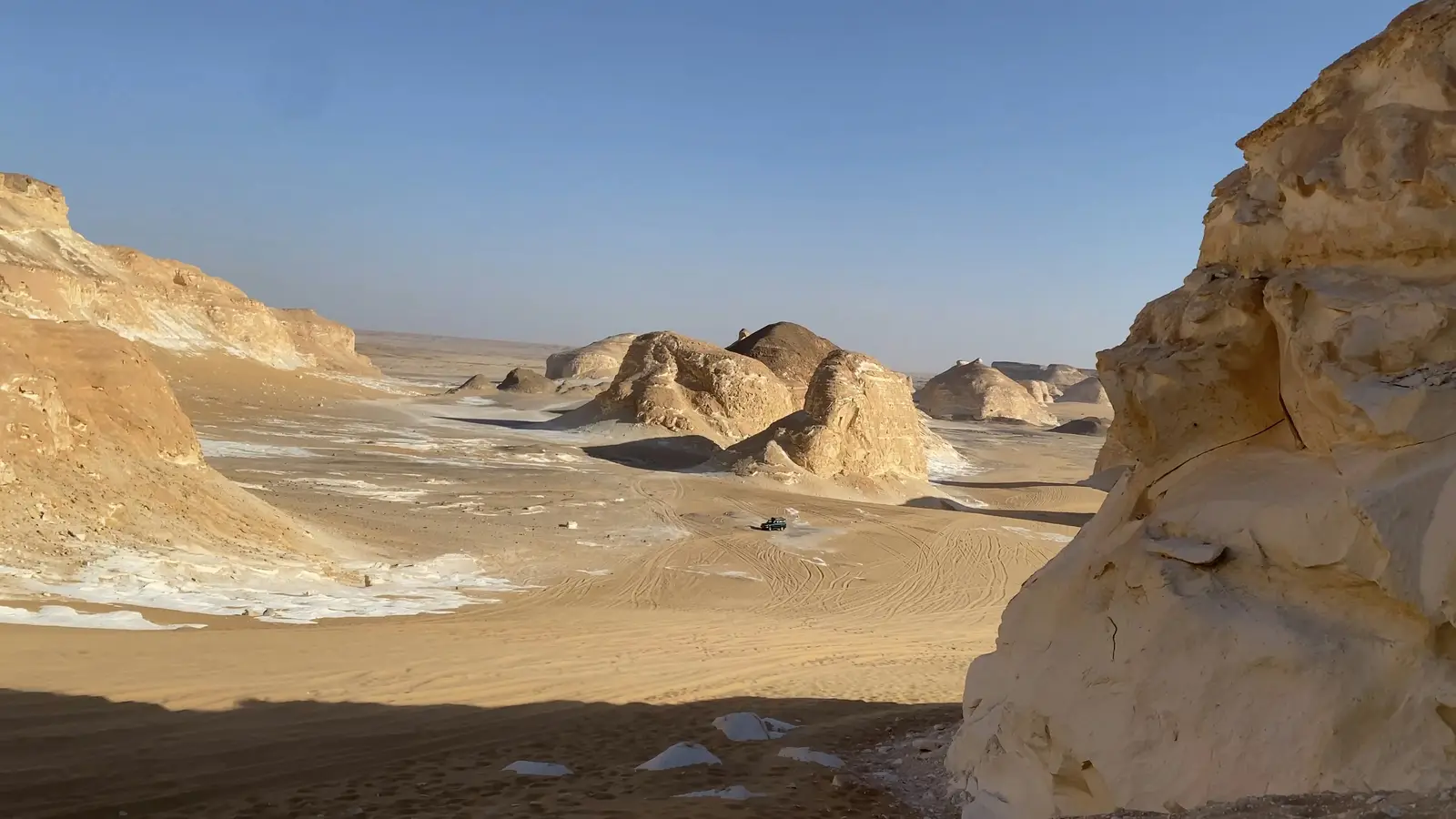
The black and white desert egypt keeps in its Western Desert are two separate landscapes with a road between them, and they are almost always visited as a pair because the pair is what makes the drive make sense. Dark volcanic hills first, then a plateau, then a plain of white chalk towers that looks like nothing else on the continent. About an hour apart.
Both sit south of Bahariya Oasis, which is four to five hours from Cairo on a good tarmac road.
What the Black and White Desert Egypt Route Covers
Start at Bahariya. Everything runs south from there.
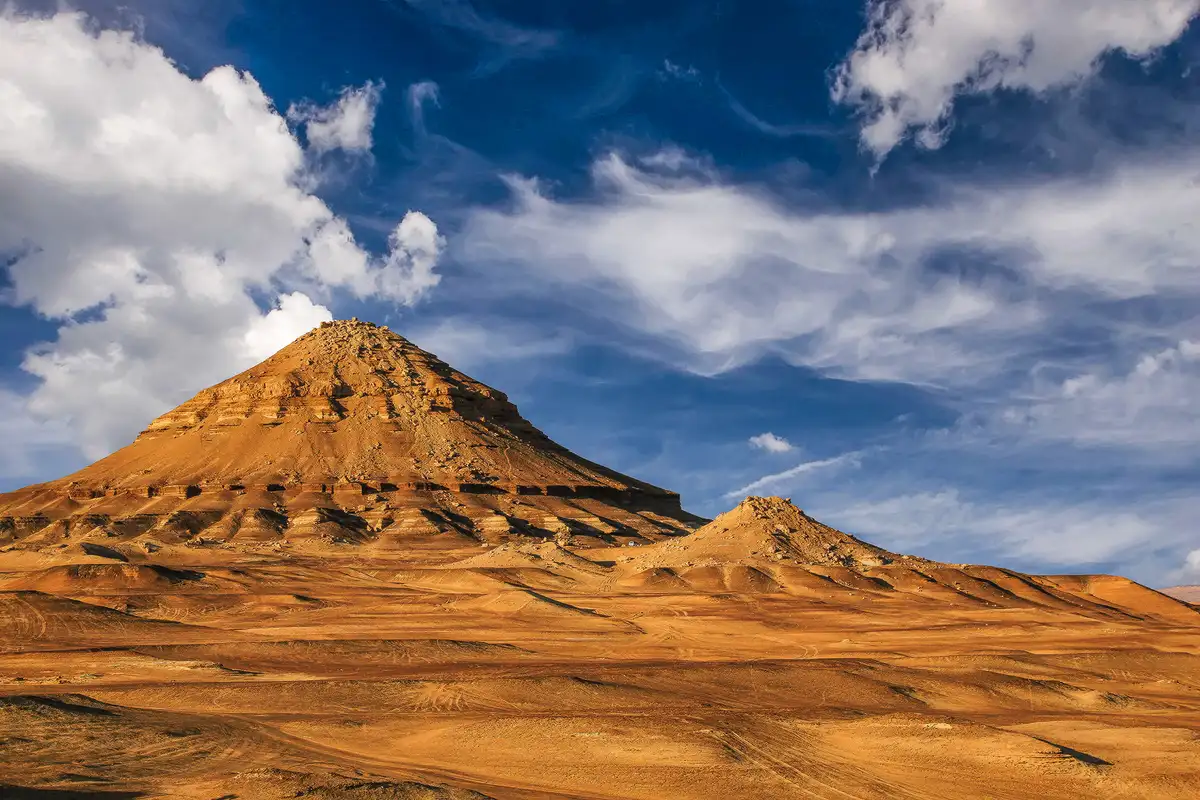
The Black Desert begins about twenty minutes out of the oasis: low conical hills scattered across an open plain, each one capped and strewn with dark dolerite fragments that have weathered out of the rock above. From a distance it reads as burnt. Close up it is loose black gravel over orange sandstone, and you can climb the smaller cones in ten minutes for the view across the rest.
Next comes Crystal Mountain, which is not a mountain. It is a low ridge of calcite and barite crystals beside the road, small enough to walk around in a few minutes and worth stopping for because the light goes through it.
Then the Agabat valley, where white chalk starts appearing against orange sand in a way that feels like a rehearsal for what is coming.
Then the White Desert proper, which has been a national park since 2002.
The sequence matters more than any single stop. Each landscape resets your eye for the next one, and the black hills are what make the chalk land the way it does two hours later. Reversing the order, which happens if you come up from Farafra instead of down from Bahariya, is a noticeably weaker day.
The Chalk, and Why It Looks Like That
The white is Cretaceous seabed. Chalk laid down when this was under water, then lifted, then worked on by wind carrying sand for a very long time.
Wind erosion cuts from the bottom, because that is where the sand is travelling. Soft lower layers go first and harder caps survive, which is how you end up with formations balanced on stems. The mushroom shapes get photographed most. There are also towers, fins, and a few things that look uncomfortably like animals, which is why one of them is called the chicken and another the rabbit.
The scale is smaller than photographs suggest. Most formations are between two and ten metres, not hundreds, and you walk among them rather than looking up at them from a distance.
Colour is the variable that matters. At midday it is flat and glaring. In the last hour of light it goes cream, then apricot, then pink, and after dark under a moon it goes silver and slightly unreal.
Camping White Desert Egypt Nights
The overnight is the point. A day trip that turns round at four in the afternoon misses both ends of the good light and all of the sky.
A white desert camp is a simple affair: mattresses and blankets laid out on rugs inside a windbreak, a cooking fire, and no structures. Operators carry everything in and out. There is no lodge, no permanent site and no plumbing, and anyone expecting a tented camp in the safari sense should reset that expectation now.
Dinner is usually cooked on the fire, often chicken and rice and vegetables in a covered pot buried in embers. Then the fire burns down, the temperature drops, and the sky arrives.
There is a more comfortable version of the same night. The luxury camping trip runs the identical route with proper beds, a cook and a support vehicle, which is the difference between enduring the cold and sitting out in it.
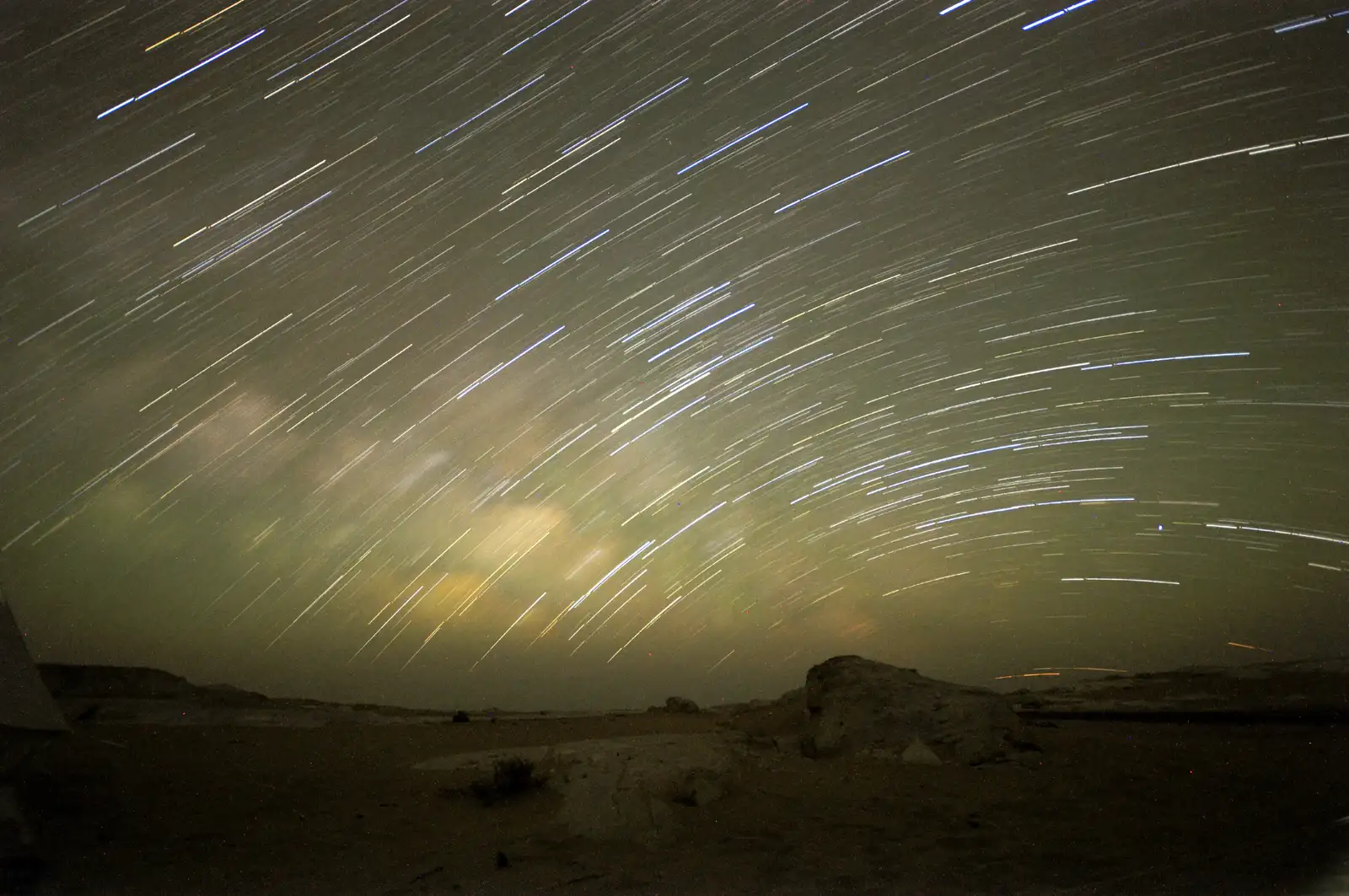
There is effectively no light pollution for a hundred kilometres in any direction. The Milky Way is not a faint smudge here, it is the brightest thing overhead, and satellites cross it every few minutes.
Fennec foxes come into camps at night looking for scraps. They are small, enormous eared, entirely unafraid, and they will take food out of an open bag.
Sleeping arrangements are worth understanding before you agree to them. Most camps lay bedding straight onto rugs in the open with a windbreak of blankets on one side, so you fall asleep looking at the sky. Some operators carry small tents for anyone who would rather have walls.
Ask which you are getting. It is the difference between the best night of the trip and a long one.
The Cold Nobody Warns You About
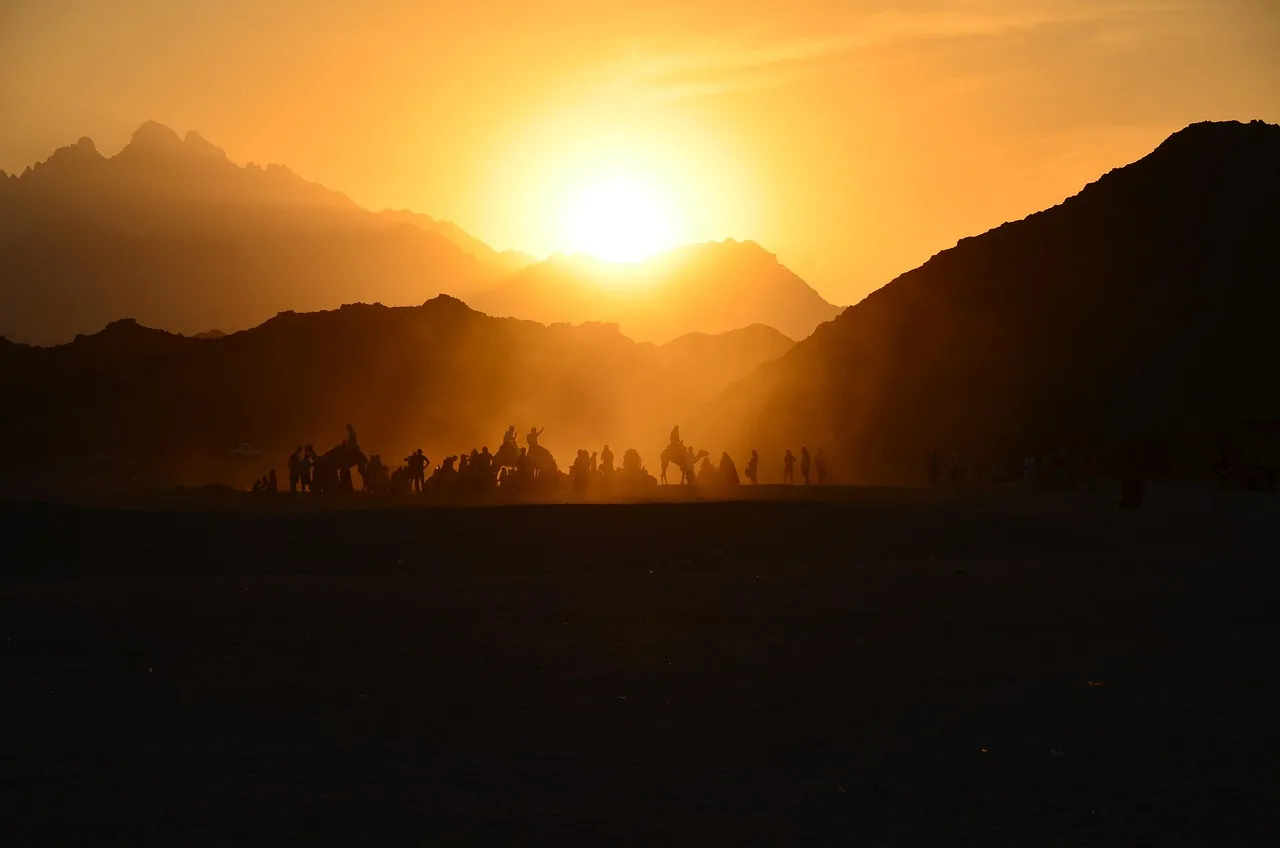
Desert nights in winter here get close to freezing. Not chilly. Actually cold, with a wind, in a place where you are sleeping outdoors under blankets.
December through February is the coldest stretch, and it is also the best time to come because the daytime temperature is pleasant. So the answer is not to avoid winter, it is to pack for it: a proper fleece or down layer, a hat, socks to sleep in, and something windproof over the top.
Summer is the reverse problem and a worse one. Daytime heat in the open desert from June to August is dangerous rather than uncomfortable, and most operators do not run overnights then.
March to May and October to November are the compromise months. Warm days, cold but not bitter nights.
Wind is the other seasonal variable and it gets less attention than it should. The khamsin blows out of the south in spring, usually somewhere between March and May, carrying enough sand to close the horizon for a day or two at a time. It does not happen often and it is not dangerous where you will be, but it flattens the light and makes photography pointless.
Operators watch the forecast and will move a night if one is coming. Ask, rather than assuming the itinerary is fixed.
Getting There and How Long to Allow
Two nights is the honest minimum for the whole thing: Cairo to Bahariya, a night in the oasis or straight out to the sand, the desert day, the camp, and back. One night works if you leave Cairo early and accept a long final drive.
Three days lets you add the oasis itself, which most people skip and then regret skipping. Bahariya has hot and cold springs, palm groves, a small museum holding some of the Greco Roman Golden Mummies found nearby in the late 1990s, and a hill called the Black Mountain with an English officer's lookout on top of it from the First World War.
The oasis is also where your driver and cook come from, and where the vehicles are fixed.
The road is tarmac the whole way to Bahariya and the desert driving beyond it is off road in a four wheel drive with a driver who knows the tracks. This is not somewhere to attempt independently. The national park requires a licensed operator, and the practical reason behind the rule is that there is no phone signal and no water.
Most black and white desert egypt tours are sold as a package from Cairo including the transfer, the vehicle, the permits and the camp, because assembling those separately from abroad is more trouble than it saves.
Where It Fits in an Egypt Trip
After Cairo, before or after the Nile, and not squeezed between two flights.
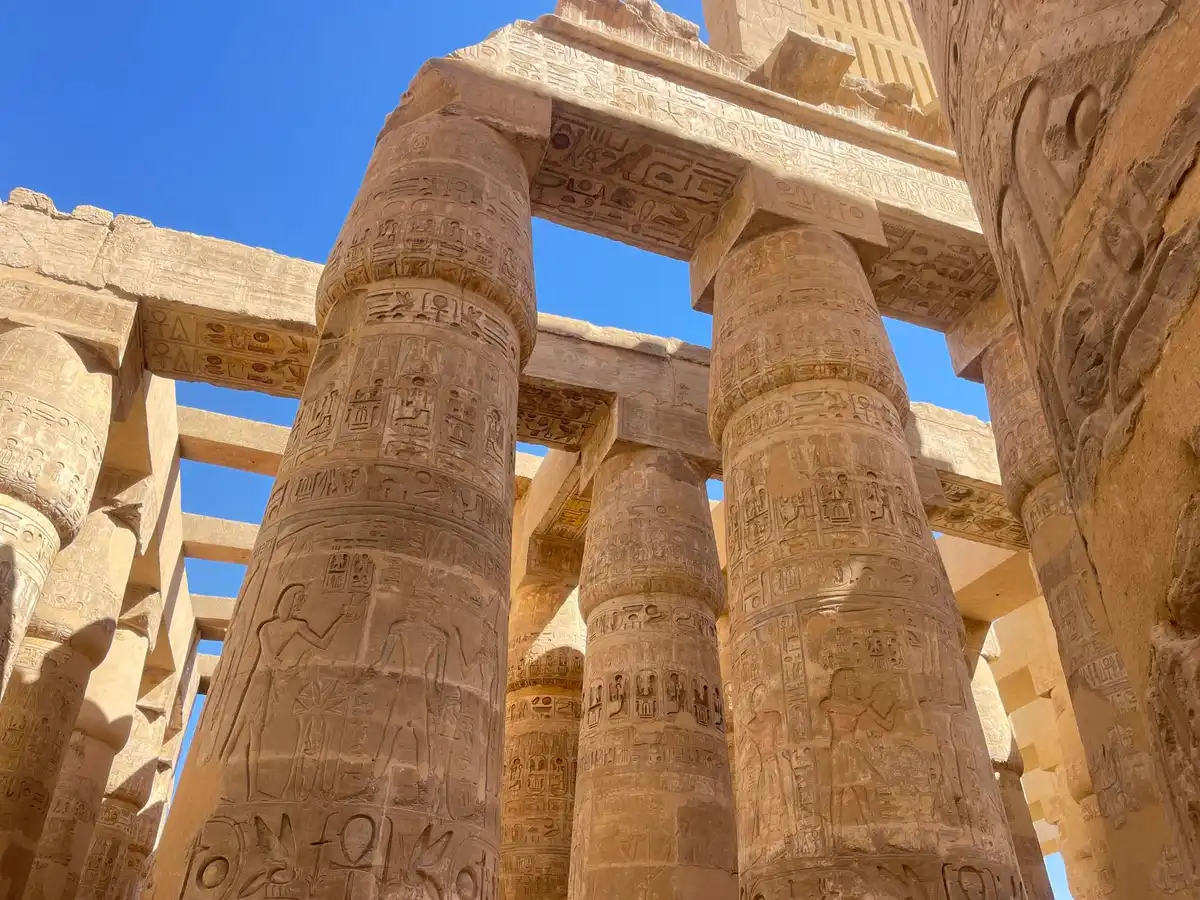
The desert is the strongest contrast available to the temple circuit, which is exactly why it works: three days of tombs and colonnades followed by two days where the only built thing is your own fire. Seasonally it lines up with the same window as Luxor and Aswan, so the month by month guide applies here too.
Further west, Siwa is the other desert option and a completely different one, with springs, a fortress town and a salt lake. The Siwa area guide covers that side. Our longer Egypt itineraries treat the Western Desert as a two or three night block rather than a day trip.
What to Take Into the Sand
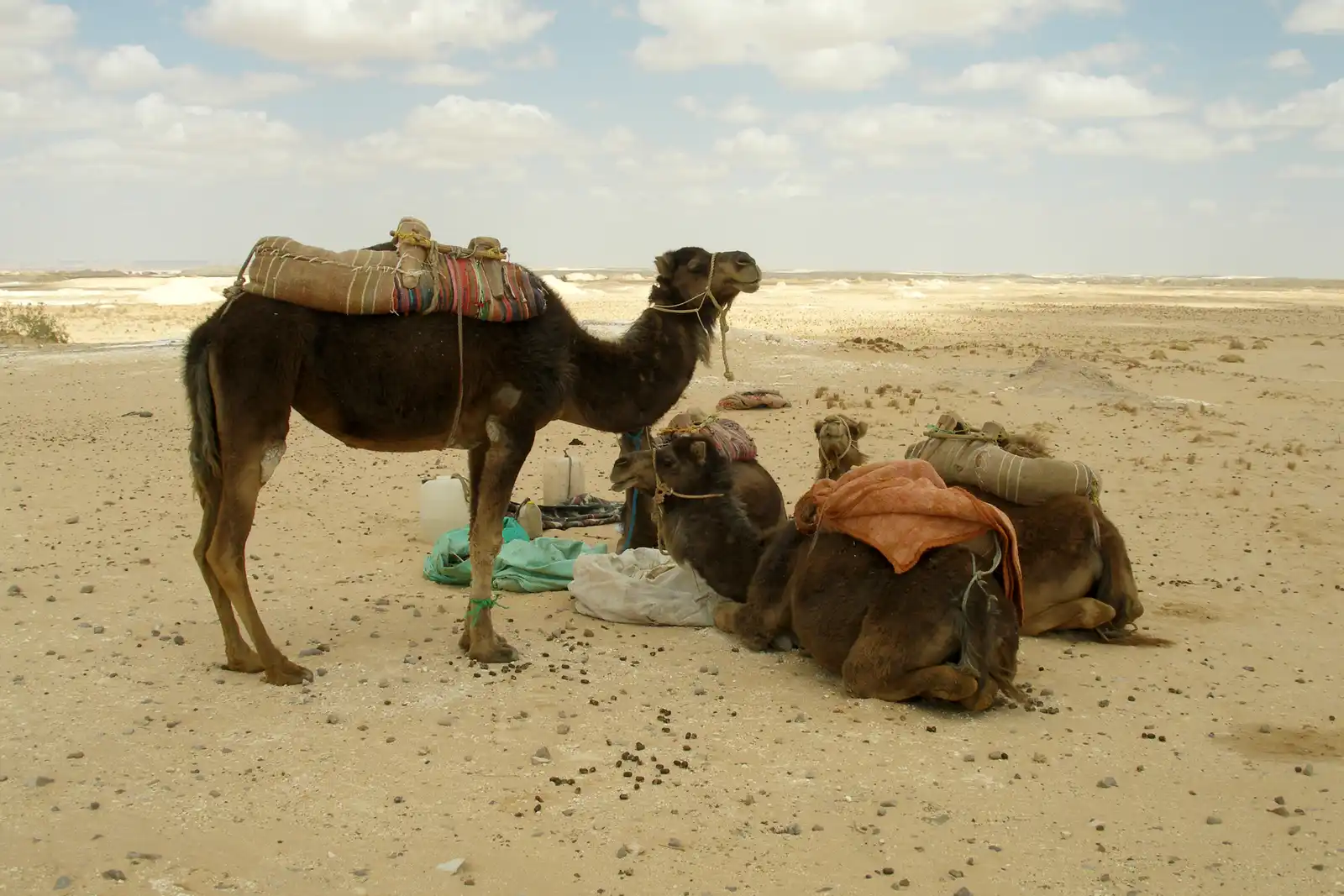
More water than you think, and then more again. Four litres a person a day is not excessive in the cooler months and the camp will carry it for you, but carry your own bottle during the day.
A head torch, because finding anything in a camp with no lighting using a phone screen is miserable. Wet wipes, because there is no washing. A dry bag or a zip bag for a camera, because fine chalk dust gets into everything and sensors do not like it.
Leave the suitcase in Cairo or at the hotel in Bahariya and take an overnight bag. Vehicle space is limited and you will be lifting it in and out of soft sand.
Last thing, and this one people ignore: set an alarm for an hour before sunrise. The chalk at first light, before the wind picks up and before anyone else in camp is awake, is the reason to have come.
We can add the White Desert to a private itinerary. See our Egypt tour packages.