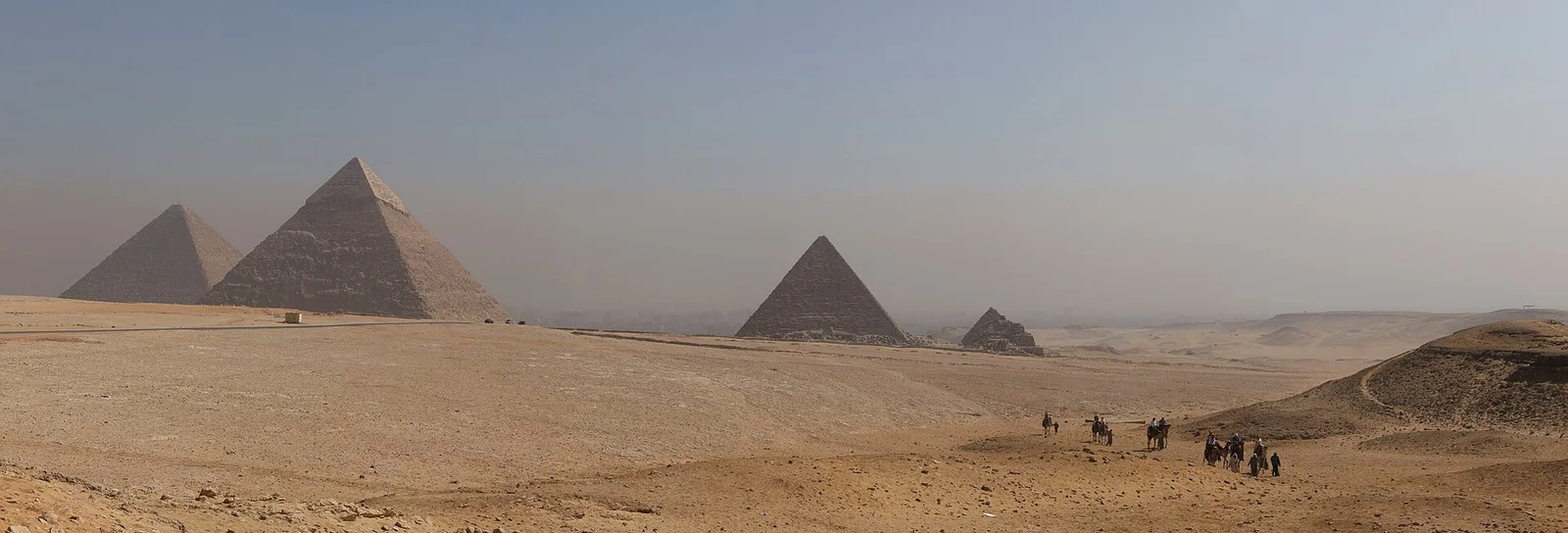
Luxury egypt tours are sold on adjectives and bought on details. Six of them decide the trip: who guides it, how many people share the car, what hour you reach the gate, where you sleep on the river, how the itinerary was written, and whether anyone told you the price before you asked.
Everything else is a photograph of a hotel lobby.
This is what to ask, and what a straight answer sounds like.
What Luxury Egypt Tours Are Competing On
Almost nothing visible. The sites are fixed, the seasons are fixed, and the hotel list is short enough that every serious operator uses most of it.
So the competition happens in places a brochure cannot photograph: the hour of the morning, the person standing next to you, and how much of the plan was written for you rather than adapted. Those are the axes worth comparing, and they are the ones least often put in writing.
The Hotels Are the Easy Part
Every operator in this market books the same handful of properties. There are not many five star hotels with pyramid views, and the good Nile boats can be counted without taking your shoes off.
So a brochure full of hotel photographs is telling you almost nothing about the difference between one company and another. It is telling you they can make a booking.
Ask instead which room category, which side of the building, and whether the pyramid view is from the room or from the roof terrace two floors up. Those answers vary enormously and they are what you are actually paying for.
Who Is Standing Next to You at Karnak
This is the one that changes the week.
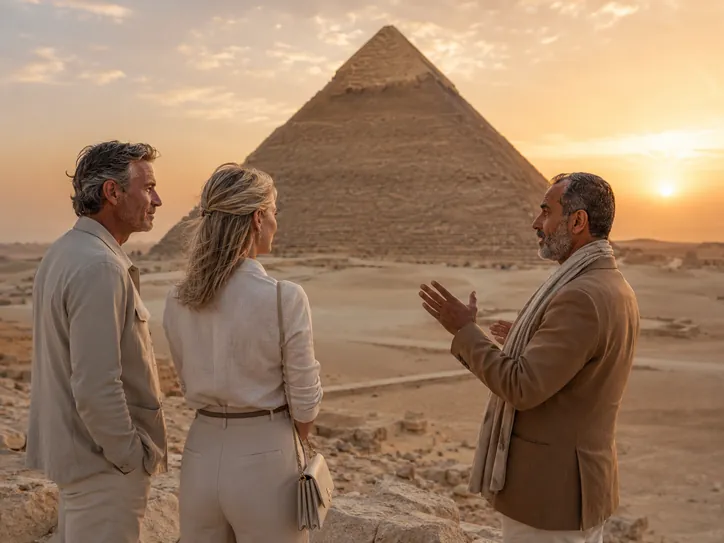
An Egyptologist who has spent twenty years on these sites is a different experience from a licensed guide working from a script, and both are sold with the same word. The difference shows up in the first hour and compounds every day after it.
The question that gets a real answer is not "are your guides qualified". It is: will the same person be with us for the whole trip, or a different one in each city? A single guide across Cairo, Luxor and Aswan builds on what you saw yesterday. Three separate guides each start again at the beginning.
We use one guide per trip for exactly that reason, and the itinerary is planned from the first call by someone who has guided these sites himself rather than by a booking desk working from a template.
How Many People Are in the Car
Private means your party and nobody else's. It does not mean a small group, a maximum of twelve, or a guaranteed departure with eight other people on it.
The words blur deliberately in this market, so ask the closed question: apart from my party, who else is in the vehicle? Then ask the same about the boat.
Car and driver throughout is the baseline, not an upgrade. If a transfer is shared with strangers on any day of the itinerary, that day is not private and the itinerary should say so.
What Time You Reach the Gate
The single largest difference between a good day and an ordinary one in Egypt is the hour.
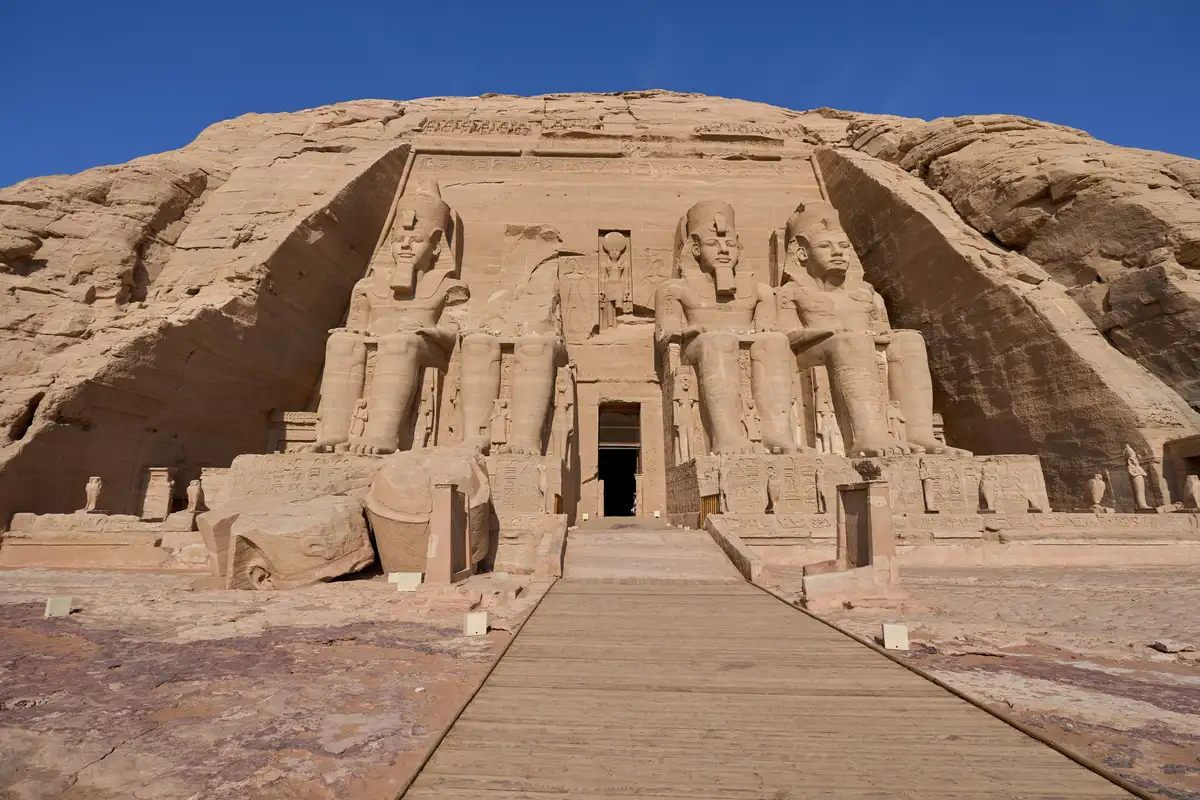
The Valley of the Kings at seven is a different place from the Valley of the Kings at ten. So is Abu Simbel, so is Karnak, so is the plateau at Giza. Every serious operator knows this and not all of them build for it, because early starts are harder to sell than a relaxed breakfast.
Beyond that there is private access: arrangements made in advance to be inside a site before it opens to the public, or after it closes. It is not available everywhere and it is not available every day, and anyone implying otherwise is overselling. Where it does work, it is the thing guests remember for years.
Ask which specific sites, on which days, and what happens if the arrangement falls through.
The Boat Decides the Middle of the Trip
Three categories, and they are not versions of the same thing.
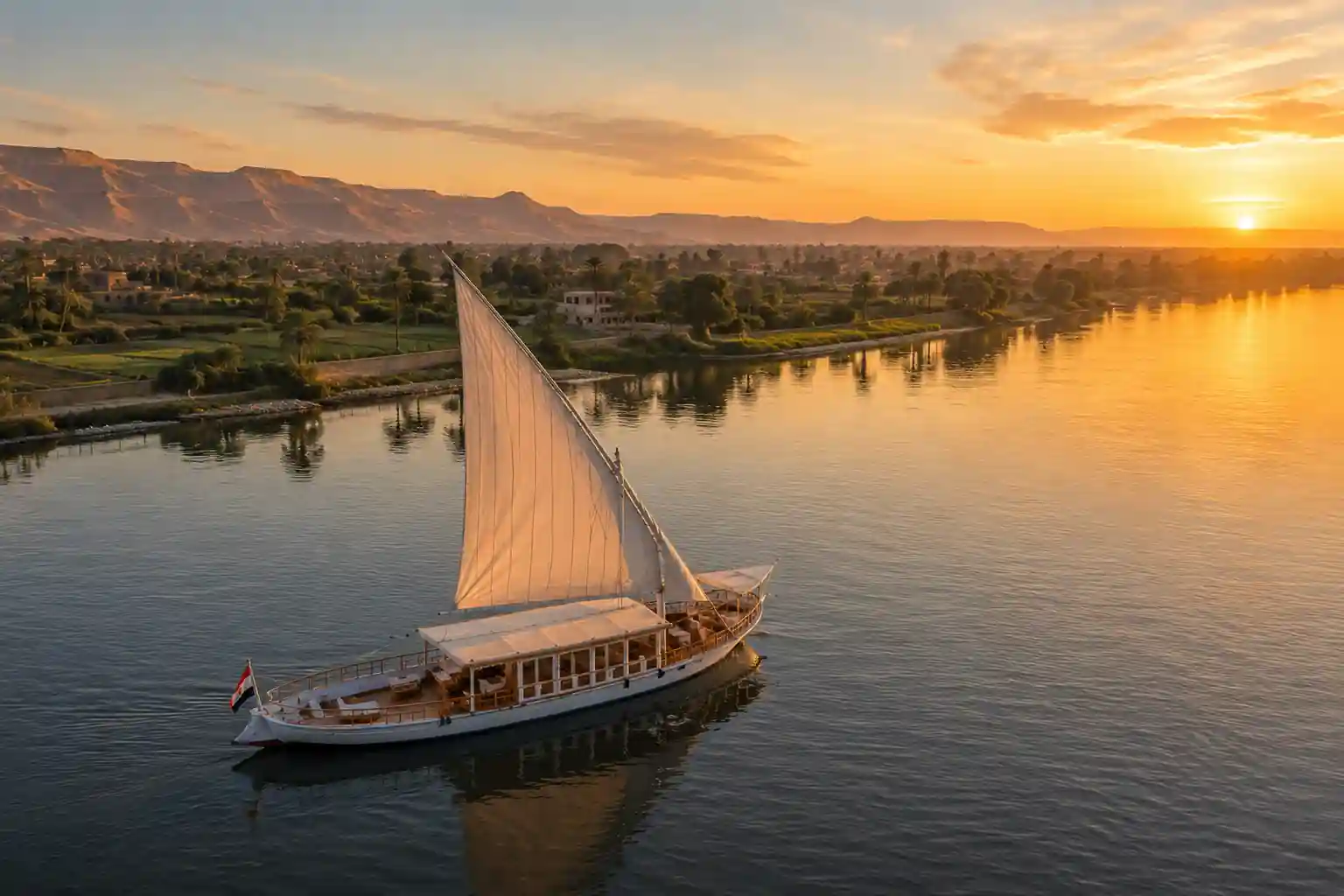
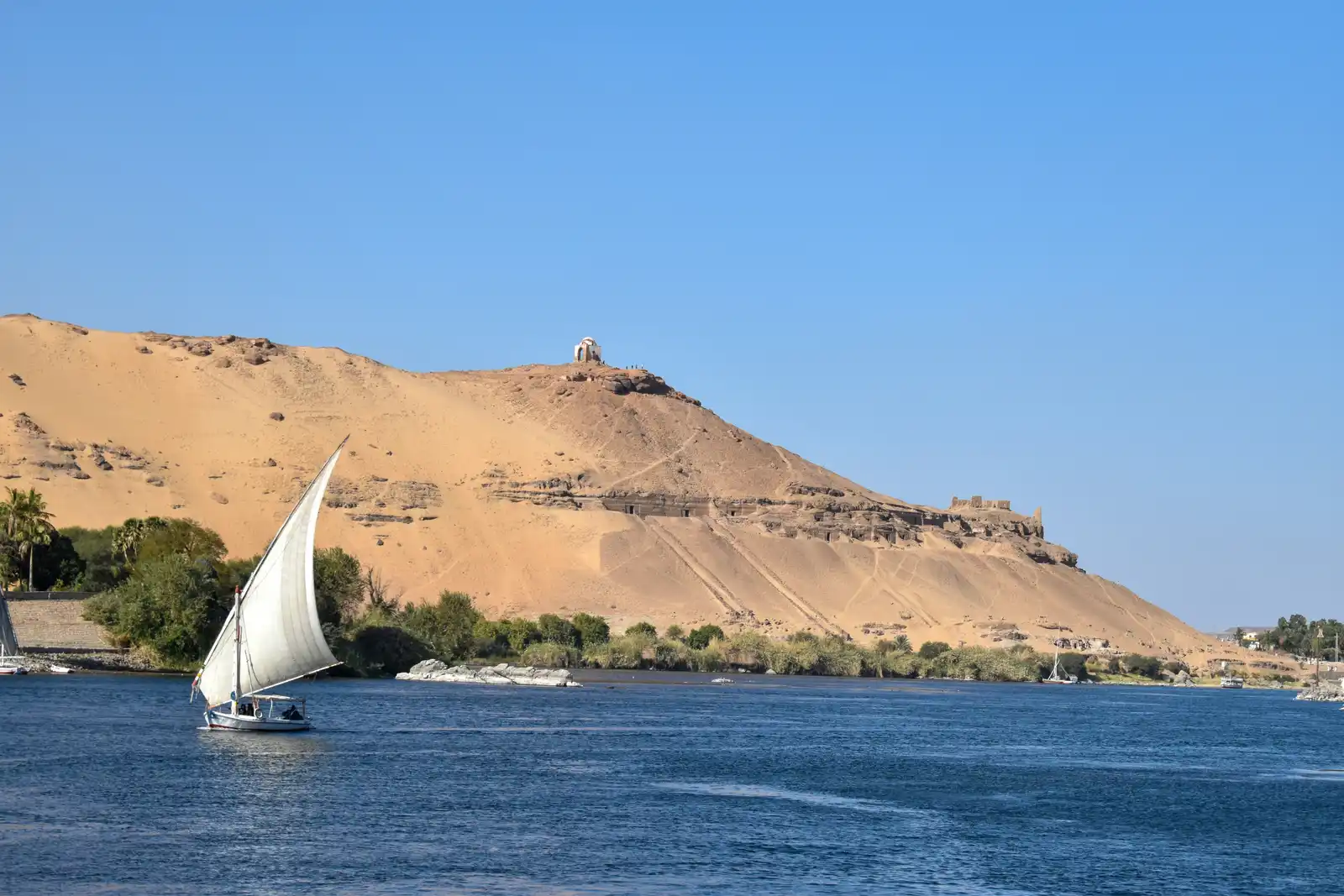
A large cruise ship carries a hundred and fifty or more passengers, moors abreast of four others, and runs a fixed schedule. A boutique ship carries thirty or forty and moves more freely. A dahabiya is a wooden sailing boat with a handful of cabins that takes the whole party and moors where the schedule does not reach.
All three are sold as luxury. Only one of them puts you somewhere the others cannot go.
Which one belongs in the middle of your trip is worth deciding before the hotels, because it constrains the route rather than following it.
Who Wrote the Itinerary
Two models exist. In one, a template is adjusted at the edges and sold with your name on it. In the other, someone asks what you care about and builds from there, and the answer changes the route rather than the wording.
The test is simple. Describe something specific you want, ideally something slightly awkward, and see whether the reply reorganises the trip or explains why the existing plan already covers it.
Two people wanting the same fourteen days will not want the same fourteen days. One wants three mornings on the Theban west bank and no shopping. The other wants a day in the Western Desert and an afternoon free in Cairo. A template cannot hold both.
What the Best Luxury Egypt Tours Cost, and Why Nobody Says
Most operators in this market will not put a number on a page. You are asked to enquire, you have a discovery call, and a price arrives afterwards shaped by what the call suggested you would pay.
Our itineraries run seven to fourteen days and start at 4,000 USD per person. That is published rather than negotiated into existence, and it is a floor rather than an average: length, season, the boat and the amount of private access move it.
The piece on how a tailor made trip is costed sets out which of those moves the number most, which is worth reading before you compare two quotes that look similar.
A quote with no breakdown is not a quote. Ask what is in it and what is not, particularly entrance fees, internal flights, tips and the Abu Simbel leg.
Where Egypt Luxury Tours Usually Go Wrong
Not in the hotels. In the pacing.
The commonest mistake is a ten day itinerary carrying fourteen days of sites, with a four in the morning wake up on three of them and a domestic flight on two. It reads impressively and it is exhausting to live through.
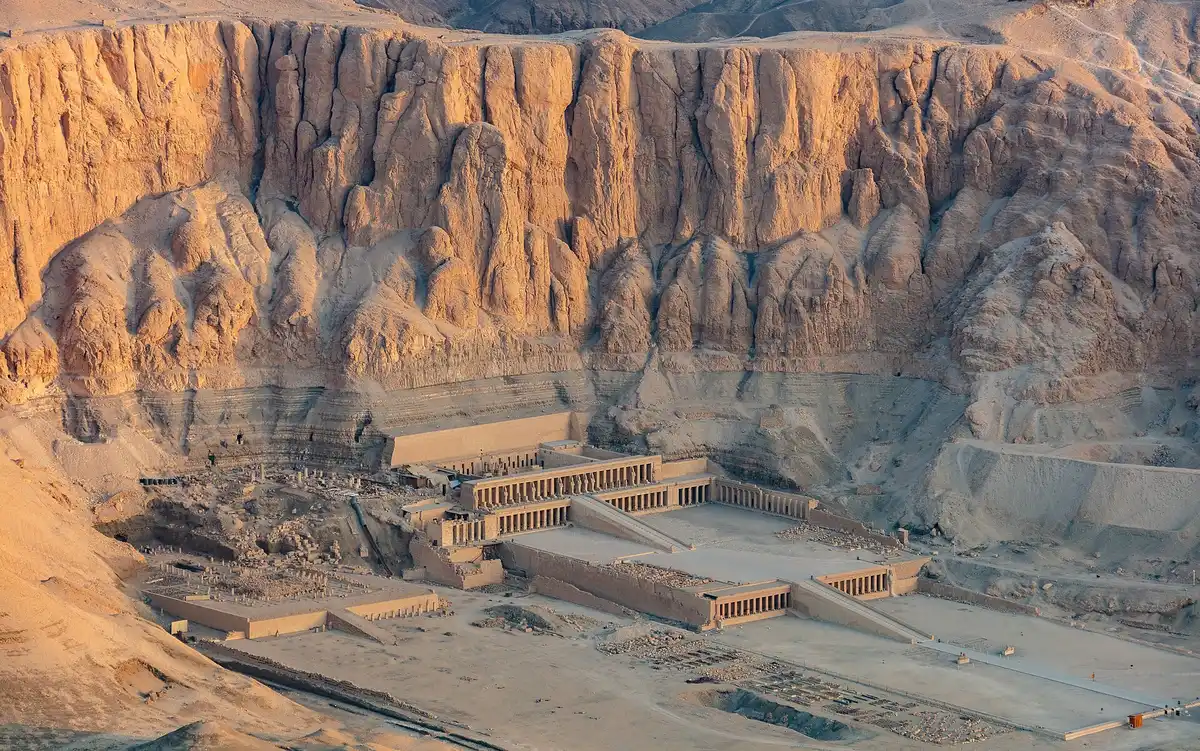
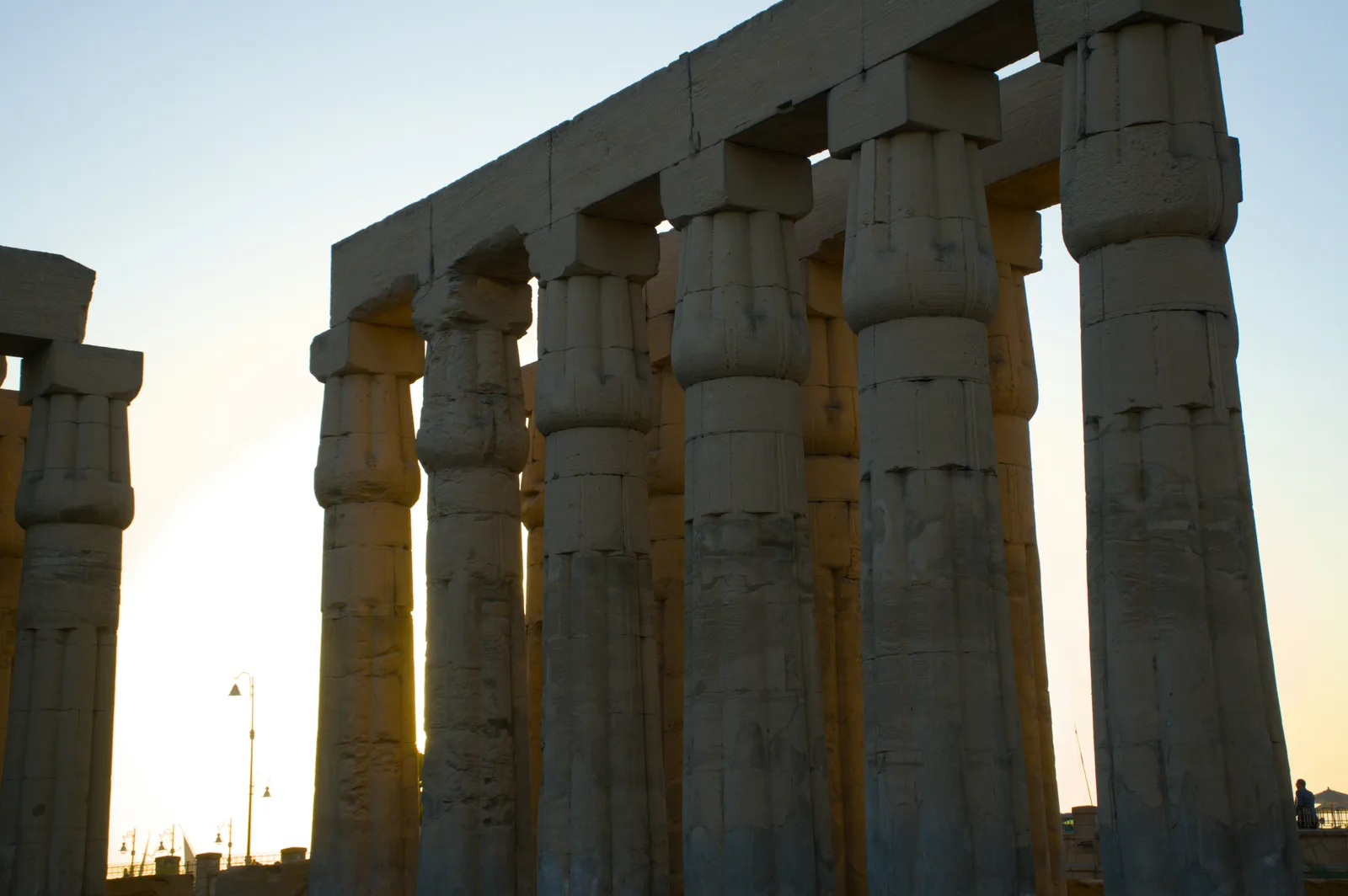
The second commonest is the west bank in one morning. Four royal tombs, Hatshepsut, the Colossi and out by lunch, which is enough to see all of it and remember none of it.
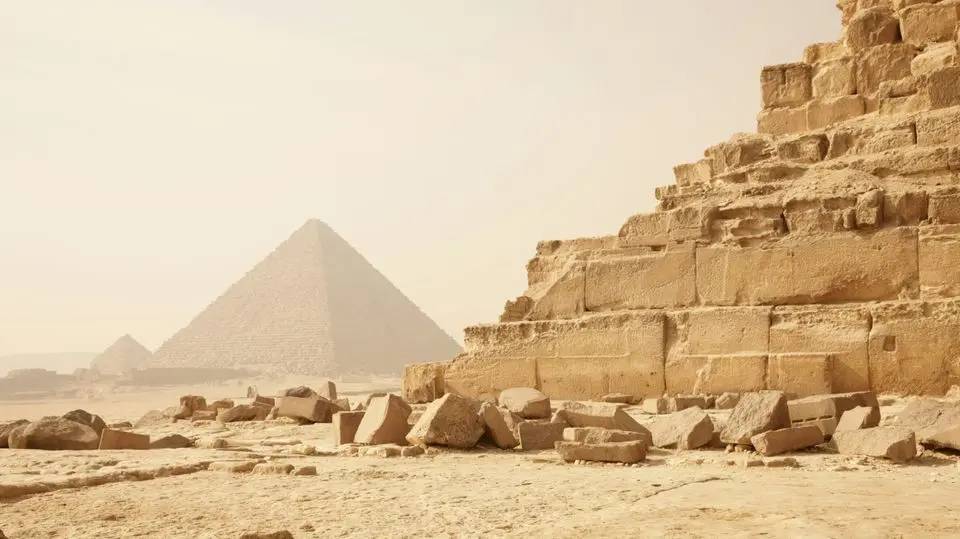
The third is arriving at Giza at eleven in the morning in April. The hour is the problem rather than the month, and it is fixed by leaving two hours earlier rather than by moving the trip.
What Luxury Egypt Vacations Should Include Without Asking
Entrance fees to everything on the itinerary, not a list of optional extras priced on the day. A car and driver held for your party rather than shared. Water in the vehicle. A guide who meets you at the airport rather than a placard held by a stranger.
And a number to call that is answered by someone who knows your itinerary, in Egypt, at the hour you actually need it, which is rarely office hours.
None of that is exotic. It is simply the difference between a trip that has been organised and one that has been booked.
Reading a Quote, and What the Packages Hide
Luxury egypt tour packages are usually quoted as one number per person, and the number is the least informative part of the document.
What matters is the shape underneath it. Two quotes at the same figure can differ by a category of hotel room, by whether the Abu Simbel leg flies or drives, by four entrance fees, and by whether the guide is with you for eleven days or for three. None of that is visible in the total.
Ask for it itemised. A planner who has actually built the trip can produce that in an afternoon, because it is how they costed it in the first place. A reseller adjusting a template usually cannot.
Watch for two specific line items. Internal flights are a real cost and some quotes leave Cairo to Luxor out to look competitive. Tipping in Egypt is customary and widespread, and an operator who tells you roughly what to budget for it is being useful rather than grasping.
Solo, Couples and Families Are Not the Same Trip
The word covers all three and the itineraries should not.
A couple on a fourteen day trip can be moved at short notice and will usually take the early start. A family with a nine year old cannot do four temples in a day and should not try, and the fix is fewer sites with more time in each rather than the same list at a gentler walk.
Travelling alone changes the economics rather than the content. Single supplements on a small boat are real and sometimes large, because a cabin is a cabin whoever is in it, and an honest operator will tell you the number before you ask twice.
Multi generational groups are the hardest to plan and the most rewarding when it works. The trick is building parallel mornings, so the grandparents take the museum and the teenagers take the plateau, and everyone meets for lunch.
The Four Questions Worth Asking Before You Book
Who guides us, and is it the same person all week. Who else is in our vehicle. Which sites do we reach before they open, on which days. And what does the price include, itemised.
An operator who answers all four plainly is worth talking to further. One who answers with adjectives is telling you something too.
If you want to see how we answer them, the itineraries and pricing are on the site rather than behind a form, our longer Egypt journeys show what fourteen days looks like when it is paced properly, and the Luxor guide shows the level of detail the planning runs at.
The pattern in all four is the same. Ask closed questions, because the best luxury egypt tours and the ordinary ones describe themselves in identical language and differ entirely in the answers.
One last thing to do before you send an enquiry anywhere: write down the three things you would be disappointed to miss. Not ten. Three. The reply you get back will tell you almost everything about how the trip would be built, because a good planner will use them and a template cannot.
Where a journey includes the stretch between Luxor and Aswan we more often use a small ship such as MS Le Fayan than one of the larger river vessels, because the temples at Esna, Edfu and Kom Ombo sit close enough to the water that the boat is genuinely the transport.
The Victorian river palaces are a distinct kind of stay in Egypt, and Sofitel Winter Palace Luxor is the one on the east bank facing the Theban necropolis across the water.
Couples travelling for a honeymoon rather than a general tour will find the egypt honeymoon packages page more useful, since all three itineraries there are written for two people and none of them repeats another.