Nobody lives in the Valley of the Kings. People live here.
That single fact is what most visitors work out about twenty minutes too late, and it is the thing worth knowing before you book. A nubian village aswan egypt visit is a call on an inhabited neighbourhood, with school runs and laundry and people who would like to get past you on the path. It is one of the better half days in southern Egypt. It is also the one where how you behave matters more than what you see.
What a Nubian Village Aswan Egypt Visit Actually Involves
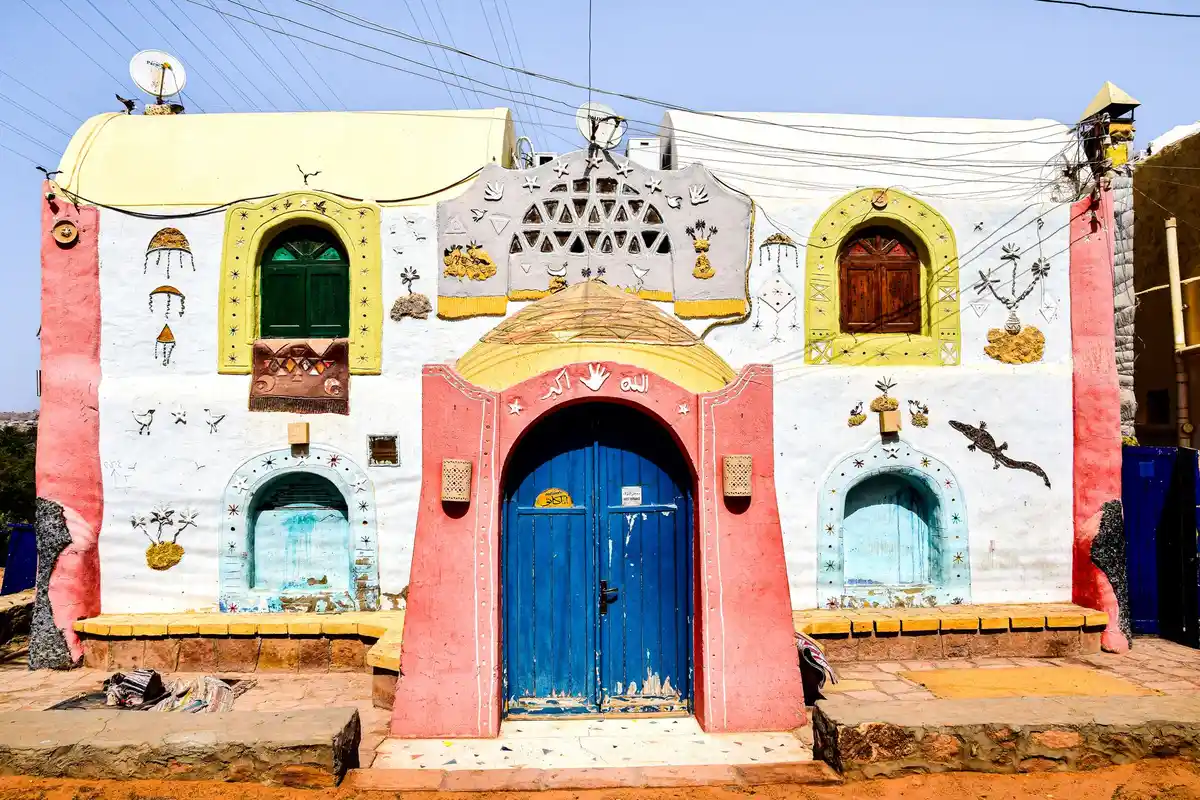
You cross the Nile by boat, land on a sandy bank, and walk up into a settlement of flat roofed houses painted in colours nobody in Cairo would dare. Usually you are taken into a family home for tea or hibiscus. There is often a room of things for sale, sometimes a crocodile in a tank, and a good deal of walking on soft sand.
Allow two to three hours from hotel to hotel. The walking portion is short, perhaps forty minutes at a slow pace, and the boat crossing is most of the rest.
Two villages take nearly all the visitors. Gharb Soheil sits on the west bank below the desert, and it is the one almost every hotel books. Koti, on Elephantine Island, is smaller, quieter and reached in ten minutes rather than forty.
Both are real settlements with permanent populations. Neither is a reconstruction, and neither was built for visitors, though parts of Gharb Soheil have been reshaped by thirty years of them arriving every afternoon.
Getting There: Felucca, Motorboat or the Road
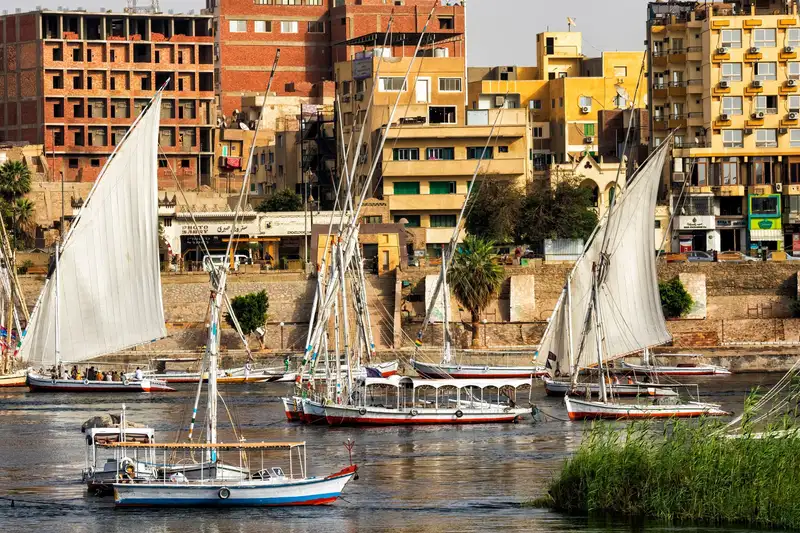
A felucca is the pleasure. It is a sailing boat with no engine, it takes about an hour each way depending on the wind, and the hour is not dead time: you pass Elephantine, the Old Cataract, the desert edge and a stretch of river that looks the same as it did in photographs from 1900.
A motorboat takes twenty to thirty minutes and costs less. Take it if your day is short or the wind has dropped, which it does in the middle of the afternoon more often than anyone admits when they are selling you the felucca.
You can also drive to Gharb Soheil on the west bank road. It is quicker and it removes the best part of the trip. If the river is an option, take the river.
Why the Houses Are Painted
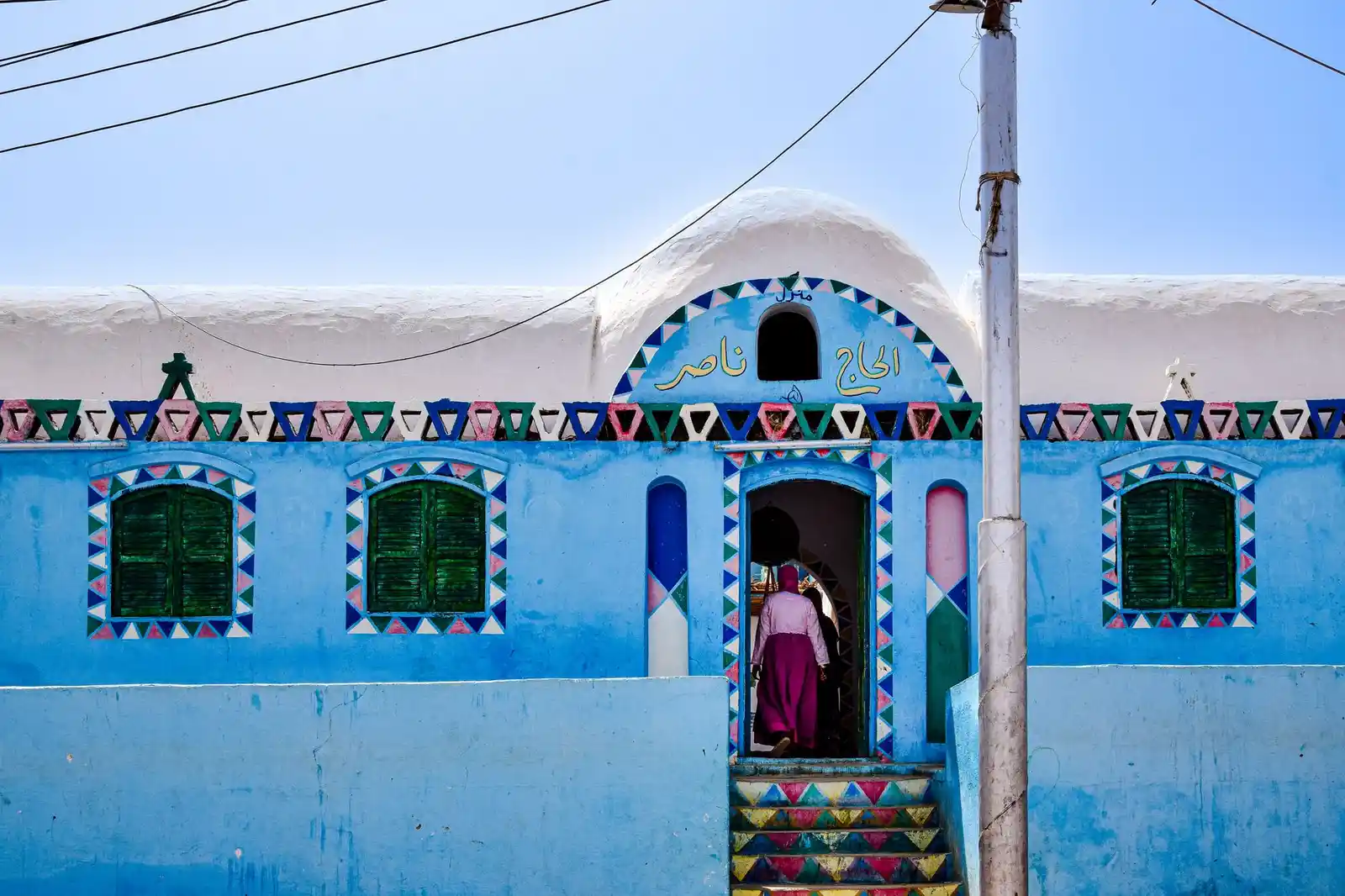
The colour is not decoration for visitors, though it has become that as well. Painting the outside of a house in strong blues, ochres and pinks is an old Nubian practice from the villages further south, and much of what you are looking at was rebuilt after those villages went under water.
When the Aswan High Dam filled Lake Nasser in the 1960s, around 50,000 Egyptian Nubians were moved off land their families had farmed for centuries, and a comparable number were resettled on the Sudanese side. Some went to new settlements at Kom Ombo. Some rebuilt closer to Aswan, on ground that was never their own village. The painted facades, the domed ceilings and the sand floors are a continuation of a place that no longer exists above the waterline.
That is worth carrying with you up the path. The bright walls in your photographs are the visible part of a displacement, not a folk style invented for the tourist trade.
What You Will Actually Do
Drink tea or karkadeh, the cold hibiscus drink the region is known for. Sit on a cushioned bench in a courtyard. Look at painted walls and domed rooms built without timber, because there was never much timber here.
Most visits include a chance to buy something: scarves, spices, beads, small painted pieces. Some include henna. Many include a meal, and the food is usually better than hotel food, cooked in the house you are sitting in.
Every nubian village tour aswan hotels sell follows one of two shapes. The good version is a family hosting you for a couple of hours with time to talk. The poor version is ninety minutes of shopping with a camel photograph at the end. Ask which one you are buying before you pay, because the price is often identical.
The Crocodiles, and Why They Bother Some People
Several houses keep Nile crocodiles in glass tanks, and visitors are invited to hold a small one. The practice has a real history behind it: a crocodile above the door was a protective sign long before anyone here was selling tickets.
The tanks are small and the animals are captive for their whole lives. Plenty of visitors find that uncomfortable, and there is no polite way around it. If it will bother you, say so when you book and ask for a house that does not keep them. Several do not.
Visiting Well: This Is Somebody's Street
Ask before photographing a person, every time, and accept no as an answer. This is the single thing most complained about by people who live along the main path, and it costs you nothing.
Dress as you would to visit a family anywhere in southern Egypt. Shoulders and knees covered is enough, and it matters more for the walk through the village than for the courtyard you are hosted in.
Buy something small if you can. The household hosting you often earns more from a scarf than from the visit fee, which frequently goes to the boat and the agency rather than the house.
Learn two words. Nubian languages are not Arabic, and greeting someone in Nobiin rather than Arabic tends to be met with genuine surprise and a much longer conversation.
Booking It, and the Question to Ask First
Almost everyone books through their hotel or their guide, and that is fine. The Nubian village Aswan Egypt hotels sell is nearly always Gharb Soheil, reached by motorboat, on a fixed two hour slot.
The question that decides the quality of the afternoon is simple: how long do we spend in the house, and whose house is it? A named family and ninety minutes sitting down is a different afternoon from a walk past six shops. Agencies answer that question honestly when asked directly.
If you want the felucca rather than the motorboat, say so at the point of booking. It changes the timing of the whole afternoon and it is rarely the default, because it is slower and the boat earns less per crossing.
What It Costs and How Long to Allow
There is no entry ticket. What you pay is for the boat, the guide and the household hosting you, so the number varies with how you book and moves year to year. Agree the price and what it includes before you get in the boat rather than on the sand afterwards.
A felucca crossing, two to three hours ashore and the return is a comfortable half day. Put it in the afternoon and you get the return crossing at sunset, which is the best light of the day on this stretch of the river. Our private Egypt itineraries tend to place it there for that reason.
Where It Fits in an Aswan Day
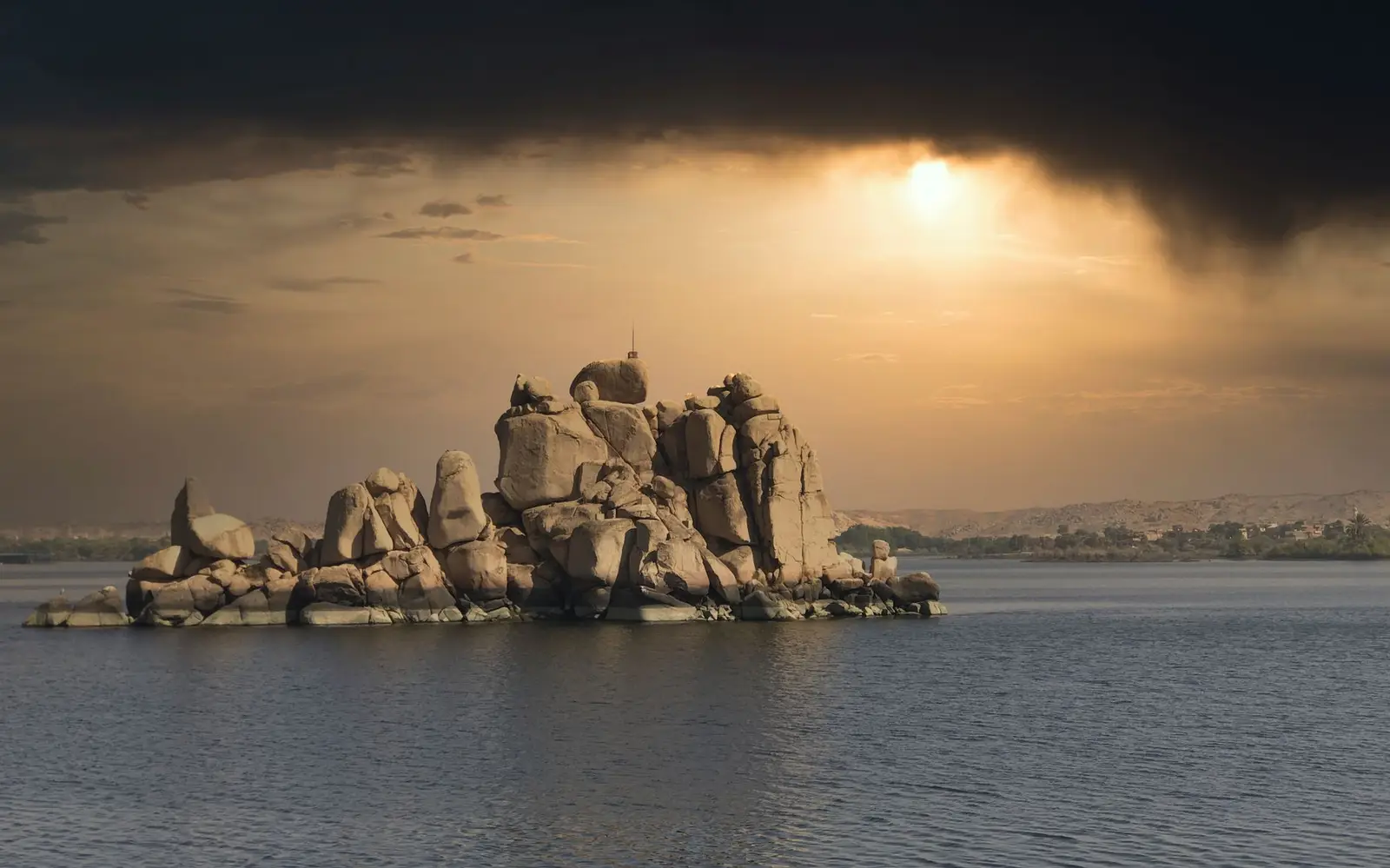
Mornings in Aswan belong to Philae and the boat traffic that goes with it. Afternoons are slower and warmer, and a nubian village in aswan is an afternoon in the shade with a cold drink in your hand, which is exactly the right shape for the hours after two o'clock.
Any nubian village Aswan offers will be hot between May and September, and the shade is indoors rather than on the path. Between November and March the walk is pleasant at any hour.
If you only have one full day here, do Philae first and the village second. If you have two, add the west bank tombs and the unfinished obelisk on the second morning. The Aswan area guide covers how those fit together.
Heading further south afterwards is the other common pairing. The Abu Simbel guide covers the flight and road decision, and a village afternoon sits well on the day before a 4am departure because it asks nothing of you.
One last thing, and it is the most useful sentence here. Bring small notes. Not for tips exactly, but because almost nothing on that side of the river takes a card, and the walk back to an ATM involves a boat.