 Small Group Tours Egypt
16-Day Egypt Grand Discovery | Luxury Archaeology Journey
16 Days / 15 Nights • Limited to 8-12
Itinerary
Cairo • Saqqara • Giza • Minya • Abydos • Luxor • Alexandria • Siwa Oasis
From$9,995 per person.
View Journey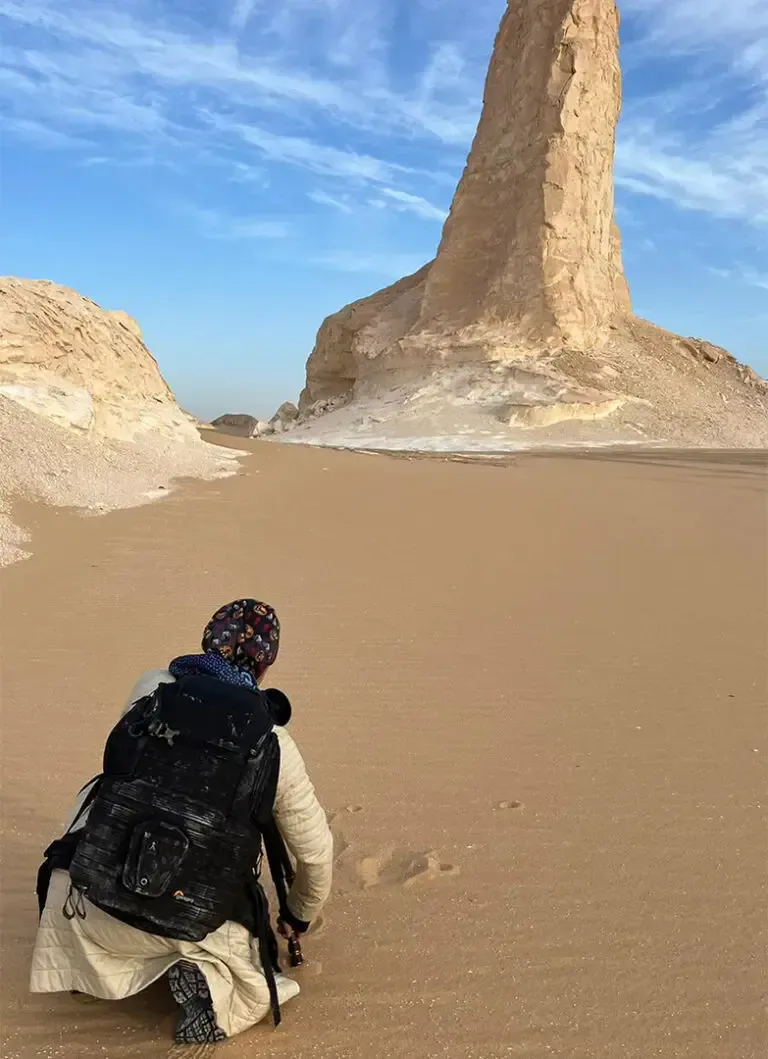
Siwa Oasis, Egypt: a remote Sahara refuge where ancient Berber culture still thrives.
Siwa Oasis lies deep in Egypt's Western Desert, just 50 kilometers from the Libyan border, fed by natural springs and shaded by palm groves within the vast Sahara. Home to the Siwi Berber people, whose language and traditions predate the pharaohs, Siwa remains one of Egypt's least-visited and most distinctive destinations. Its isolation has preserved a way of life found nowhere else in the country.
The Temple of the Oracle at Siwa, built in the 6th century BC, drew Alexander the Great across the Sahara in 331 BC to confirm his divine destiny.
Aghurmi Village, a fortified hilltop settlement predating the Oracle Temple, preserves mudbrick ruins where ancient Siwans lived alongside the sanctuary that once drew Alexander the Great.
The Temple of Umm Ubayda, a smaller Amun sanctuary near Aghurmi, once mirrored the Oracle Temple in scale before an 1897 explosion left only a single carved wall standing.
Shali Fortress rises from the center of Siwa town, built in the 13th century entirely from kershef, a local material of salt rock and mud.
The Mountain of the Dead at Siwa, known locally as Gebel el-Mawta, honeycombs a sandstone hill with 26th Dynasty tombs where residents sheltered during World War II.
Cleopatra's Bath is a perfectly circular spring of warm, mineral-rich water in Siwa, said by legend to have once drawn the queen herself to bathe.
Fatnas Island, a palm-covered promontory jutting into Siwa's salt lake, offers the oasis's most celebrated sunset views across still water framed by distant desert dunes.
The Siwa Salt Lakes, mineral-rich pools scattered across the oasis floor, allow visitors to float effortlessly on dense, buoyant water framed by palm groves and desert silence.
Dakrour Mountain, revered for centuries as a site of therapeutic sand bathing, rises above Siwa's palm groves and draws visitors each August for its ancient healing festival.
The Great Sand Sea stretches from Siwa deep into Libya, its 72,000 square kilometers of rolling golden dunes forming one of Earth's largest, most uninterrupted deserts.
Bir Wahed, a remote hot spring bubbling deep within the Great Sand Sea, pairs steaming mineral waters with a neighboring cold spring beneath towering desert dunes.
The Siwa House Museum preserves traditional Siwan domestic life through handwoven textiles, silver jewelry, and palm-wood furnishings inside a restored historic mudbrick residence.
October to April
4-6 days
Western Desert
Let our specialists create a bespoke itinerary that captures the magic of this extraordinary destination.