Egypt's Nubian Soul — Where the Nile Meets the Desert at the Edge of the Ancient World
October to March
Upper Egypt
3-5 days
Easy
Aswan is Egypt's most serene and spiritually charged destination — where the Nile flows clearest, the desert glows warmest, and the ancient world feels closest. At Egypt's southern frontier, where pharaonic civilization met the kingdoms of Nubia, Aswan has captivated travelers for over five thousand years.Abu Simbel's colossal cliff-face temples remain one of humanity's most staggering achievements. The Temple of Philae rises from a Nile island in a shimmer of golden stone and still water. Edfu and Kom Ombo line the river like chapters in a story that never ends.But Aswan is more than monuments — it is the Nubian people, their vivid painted villages, and a profound human warmth that makes this the most genuinely moving destination in Egypt.
Explore the treasures that make Aswan one of Egypt's most captivating destinations.

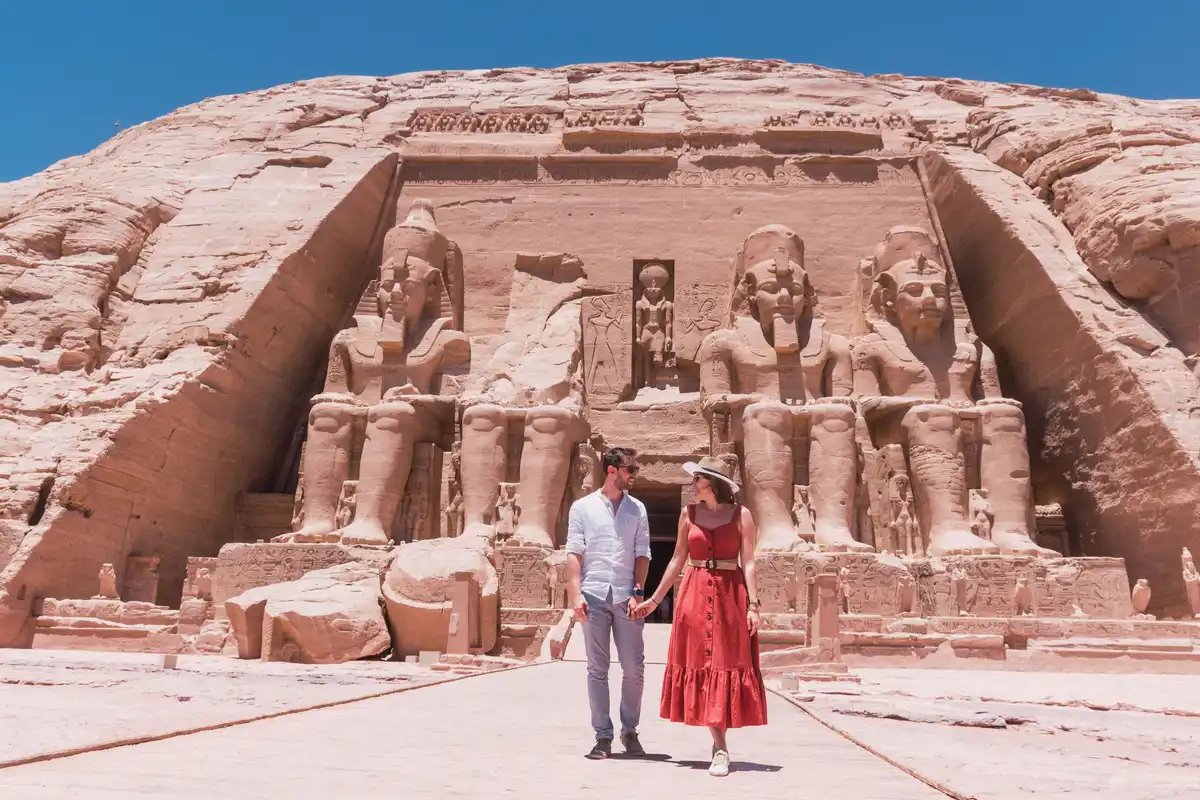
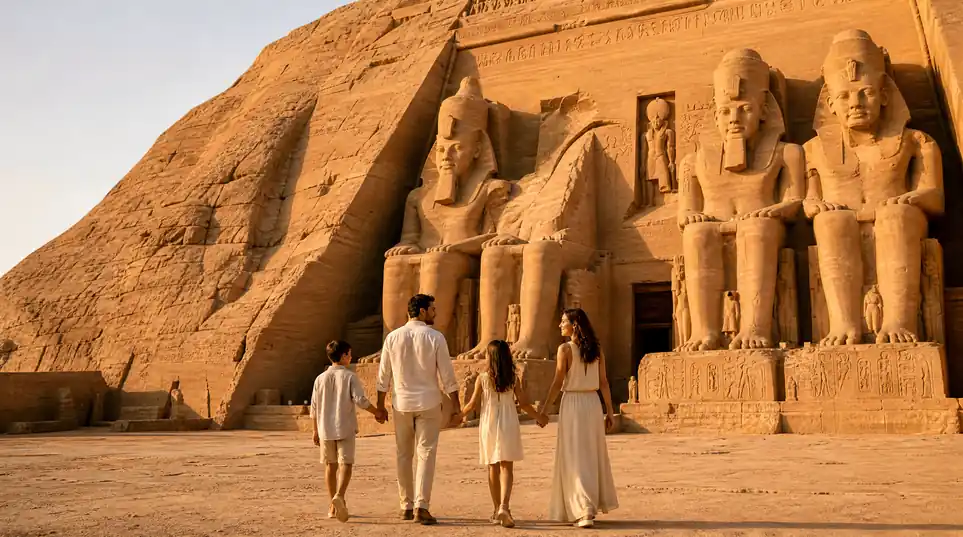
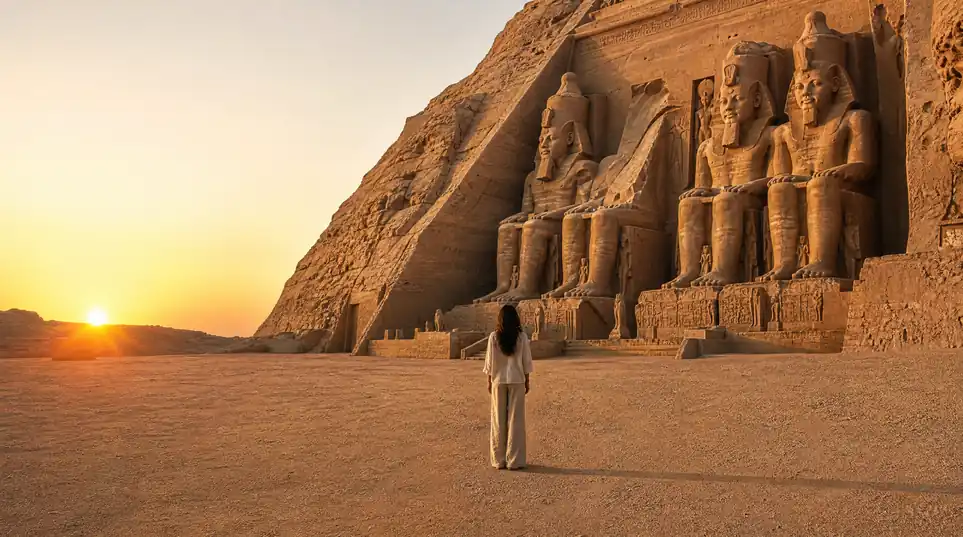
Abu Simbel Abu Simbel is Ramesses II's supreme masterpiece — two colossal temples carved directly into a living cliff face on the shores of Lake Nasser, their four enormous seated figures of the pharaoh rising 20 meters above the water in an act of monumental self-glorification unmatched in the ancient world. Twice a year, sunlight penetrates the innermost sanctuary to illuminate the statues of the gods within. Relocated piece by piece in the 1960s to save it from rising Nasser waters, Abu Simbel remains one of the most overwhelming human achievements ever conceived.

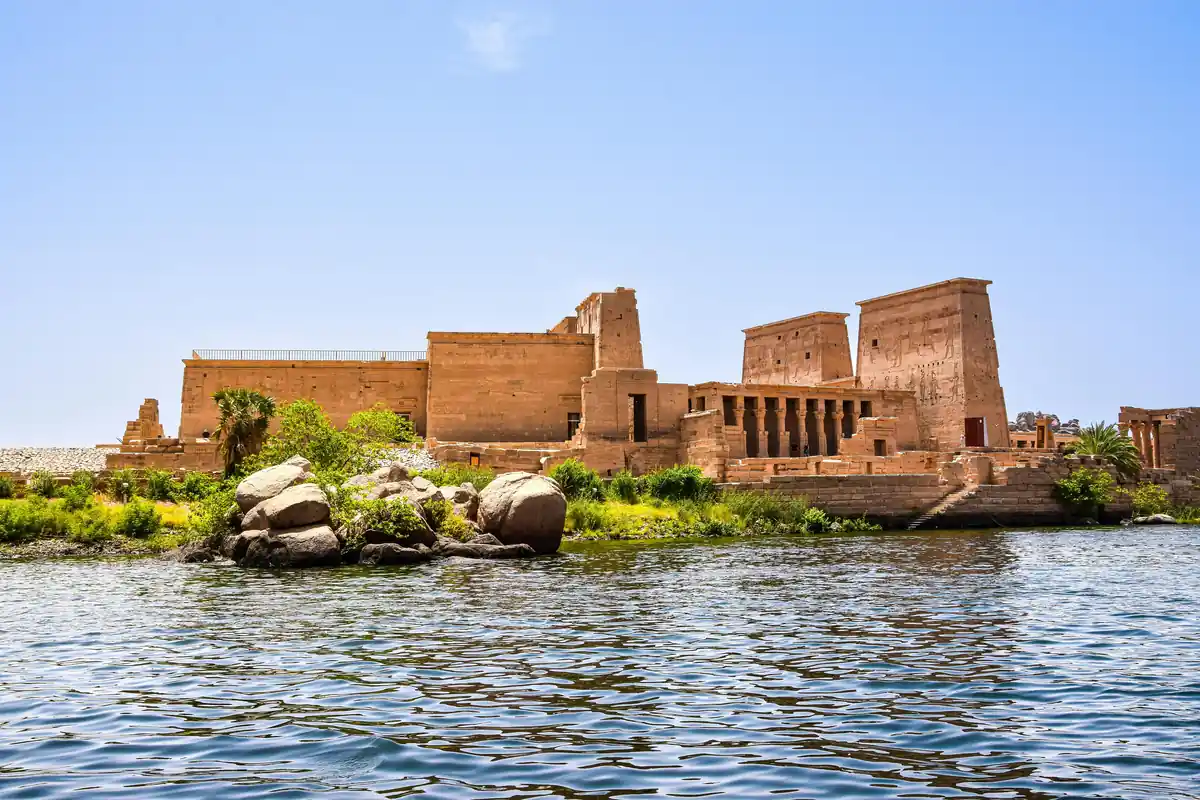
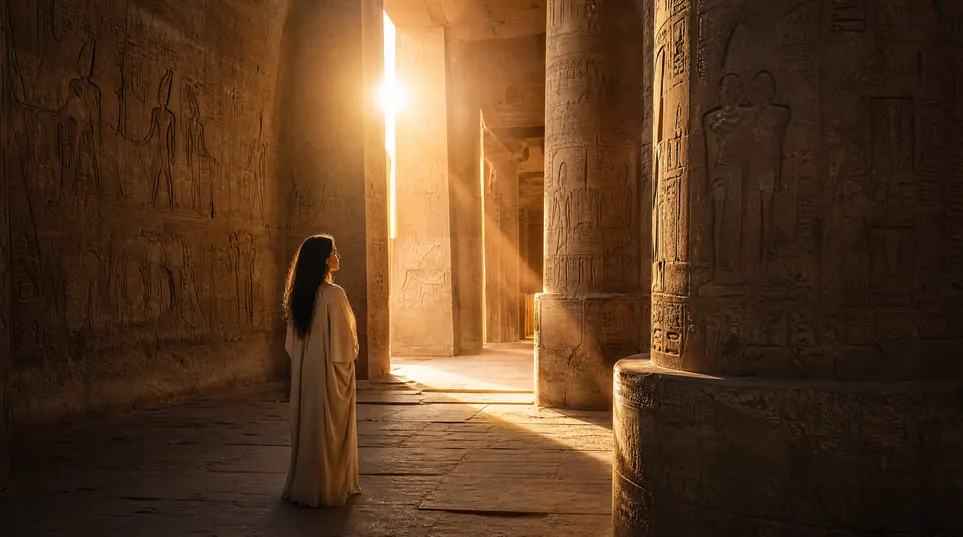
The Temple of Philae — dedicated to the goddess Isis and rising from a Nile island in a shimmer of golden stone and still water — is among the most romantically situated ancient monuments on Earth. Like Abu Simbel, it was dismantled and relocated to save it from the rising waters of Lake Nasser, reassembled on Agilkia Island with extraordinary precision. Reached by motorboat across the glittering Nile, Philae's graceful colonnades, towering pylons, and exquisite painted reliefs create an experience of ancient beauty that feels almost dreamlike in its perfection.

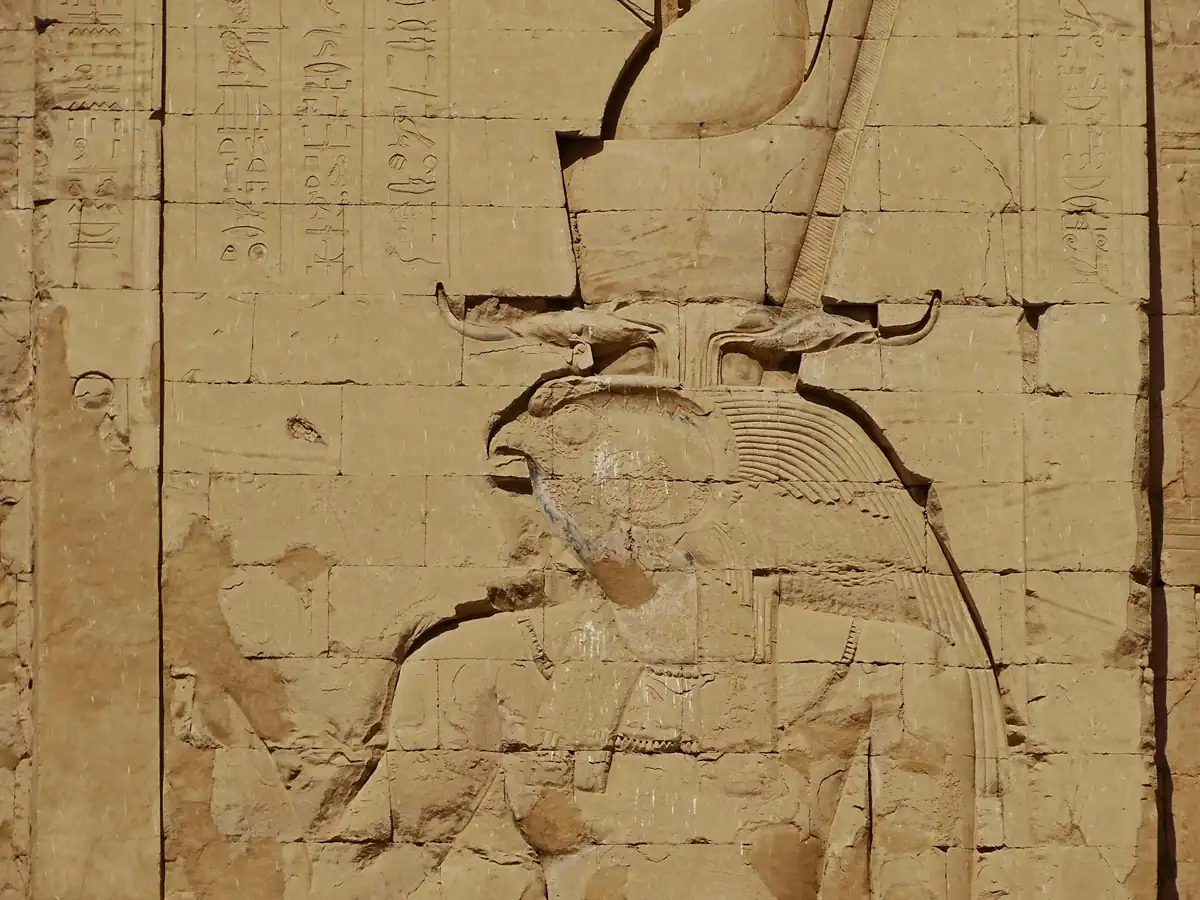
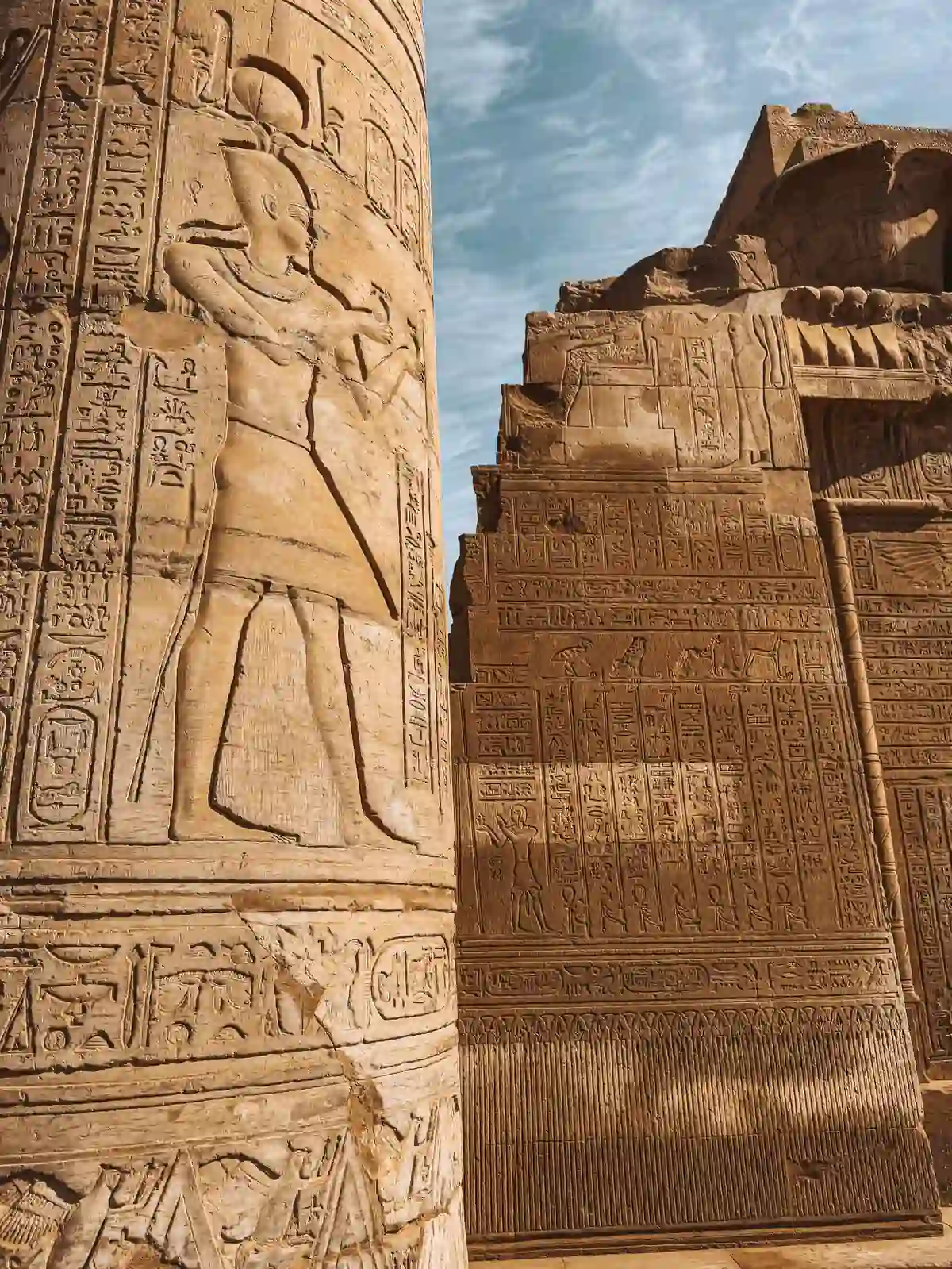
The Temple of Kom Ombo occupies one of the most dramatically beautiful positions of any ancient monument in Egypt — perched directly on the bank of the Nile, its golden sandstone columns glowing against the river and the desert beyond. Uniquely, the temple is dedicated to two gods simultaneously — the falcon-headed Horus and the crocodile god Sobek — its entire plan duplicated in perfect symmetry along a central axis. The temple's extraordinary collection of ancient medical instruments carved into one wall reveals an unexpected dimension of pharaonic scientific knowledge.

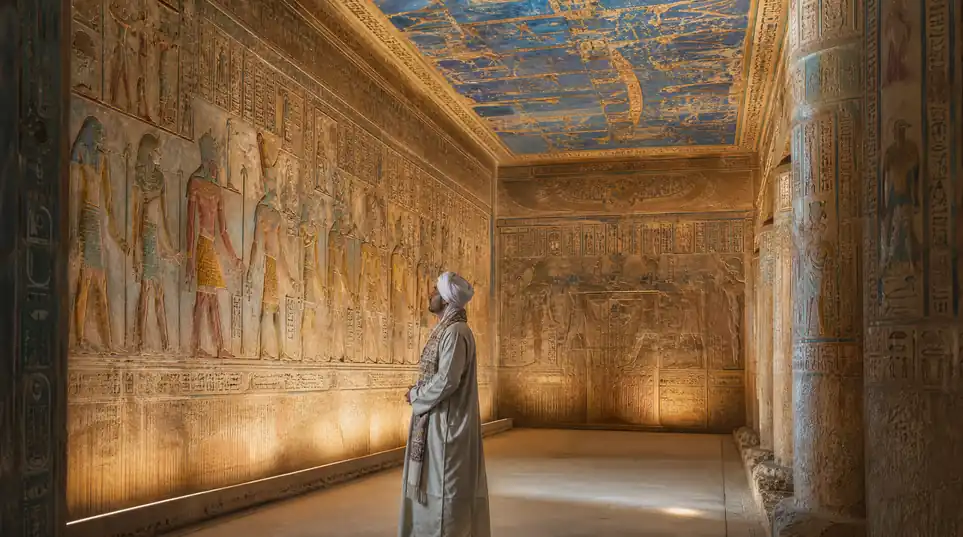
The Temple of Horus at Edfu is the best-preserved ancient Egyptian temple in existence — a vast, complete, and overwhelmingly beautiful monument built between 237 and 57 BC whose towering entrance pylon, soaring hypostyle hall, and perfectly intact sanctuary give visitors the closest possible encounter with what a great Egyptian temple actually looked and felt like in antiquity. The enormous granite statue of Horus as a falcon guarding the entrance is one of ancient Egypt's most iconic images. Reached by a traditional horse-drawn calèche from the Nile landing, Edfu is a complete ancient world unto itself.

The Temple of Kalabsha is one of the largest freestanding ancient temples in Egyptian Nubia — a magnificent late-period monument dedicated to the Nubian solar god Mandulis, relocated from its original site to the western shore of Lake Nasser near the Aswan High Dam as part of the UNESCO rescue operation of the 1960s. Its well-preserved pylons, colonnaded courtyard, and reliefs depicting Roman emperors in full pharaonic costume reflect the remarkable cultural fusion of the Nubian frontier, where Egyptian, Roman, and African traditions merged over centuries into something entirely distinctive.

The Aswan High Dam is one of the great engineering achievements of the 20th century — a massive structure completed in 1971 that transformed Egypt's relationship with the Nile, controlling the annual flood that had governed Egyptian agriculture for millennia and generating the hydroelectric power that drove Egypt's industrial modernization. Standing on the dam's crest, with the vast blue expanse of Lake Nasser stretching southward toward Sudan and the original Nile rushing northward below, gives a vivid sense of the extraordinary human ambition and sacrifice — including the displacement of entire Nubian communities — that its construction required.

The Unfinished Obelisk in Aswan's ancient granite quarries is one of the most fascinating and most instructive ancient monuments in Egypt — a colossal obelisk that, if completed, would have been the largest single stone object ever carved in the ancient world, stretching nearly 42 meters in length. Abandoned in place when a crack appeared in the granite during carving, it lies exactly as the ancient workers left it, still attached to the bedrock, its surface marked with the tool marks, red paint lines, and evidence of ancient working methods that bring the process of pharaonic monument-building to vivid, immediate life.

The Nubian Museum in Aswan is one of Egypt's finest and most beautifully designed museums — a world-class institution dedicated to the history, culture, and artistic heritage of the Nubian people, whose ancient civilization along the Nile predates the pharaohs and produced art, architecture, and kingdoms of extraordinary sophistication. The museum's collection spans over 50,000 years of Nubian history, with particular strength in the objects rescued from Nubian sites flooded by Lake Nasser. Its garden, with reconstructed Nubian houses and ancient rock art panels, extends the museum experience into an outdoor landscape of great beauty.

Elephantine Island — the largest island in the Nile at Aswan and one of the oldest continuously inhabited sites in Egypt — was for thousands of years the southernmost frontier post of the pharaonic state, a trading gateway between Egypt and sub-Saharan Africa and a cult center of the ram-headed god Khnum, believed to control the Nile's annual flood from caverns beneath the island. Today the island combines active archaeological excavations, a small but excellent museum, two surviving Nubian villages of extraordinary charm and color, and sweeping views of the Nile and desert that rank among the most beautiful in all of Egypt.

Kitchener's Island — a small, lush botanical garden island in the middle of the Nile at Aswan, given to Lord Kitchener in the 1890s in recognition of his Sudanese military campaigns and transformed by him into an extraordinary garden of tropical and subtropical plants from across Africa, Asia, and the Far East — is one of Aswan's most delightful and most unexpected pleasures. Reached by felucca from the Corniche, the island's dense, shaded pathways, riot of exotic flowering plants, and complete Nile-surrounded tranquility offer a rare moment of cool, fragrant, unhurried beauty in the middle of the desert city.

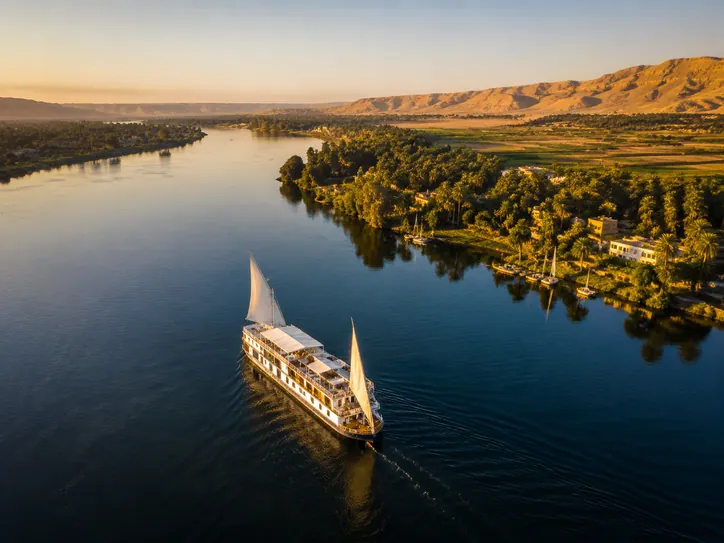
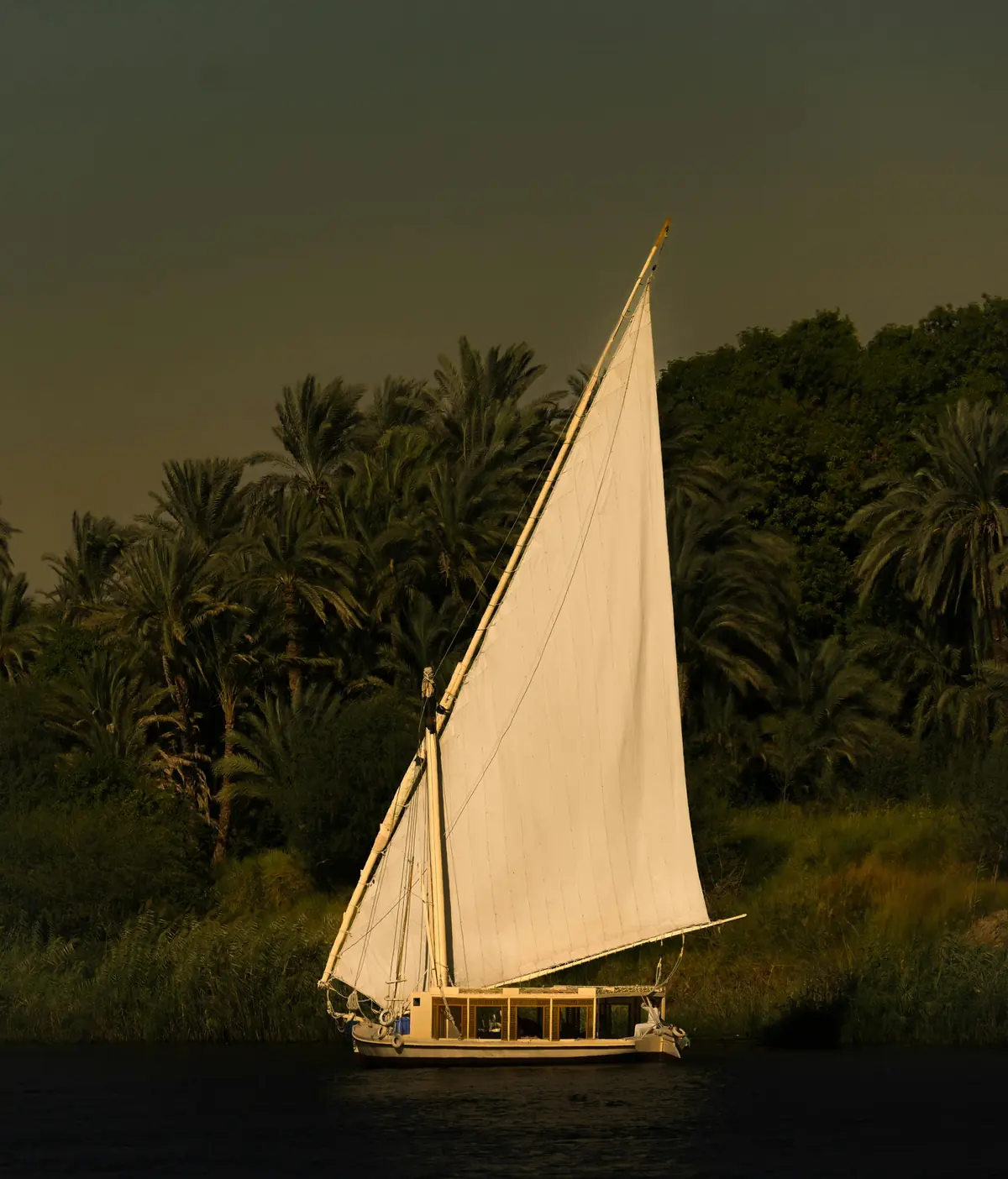
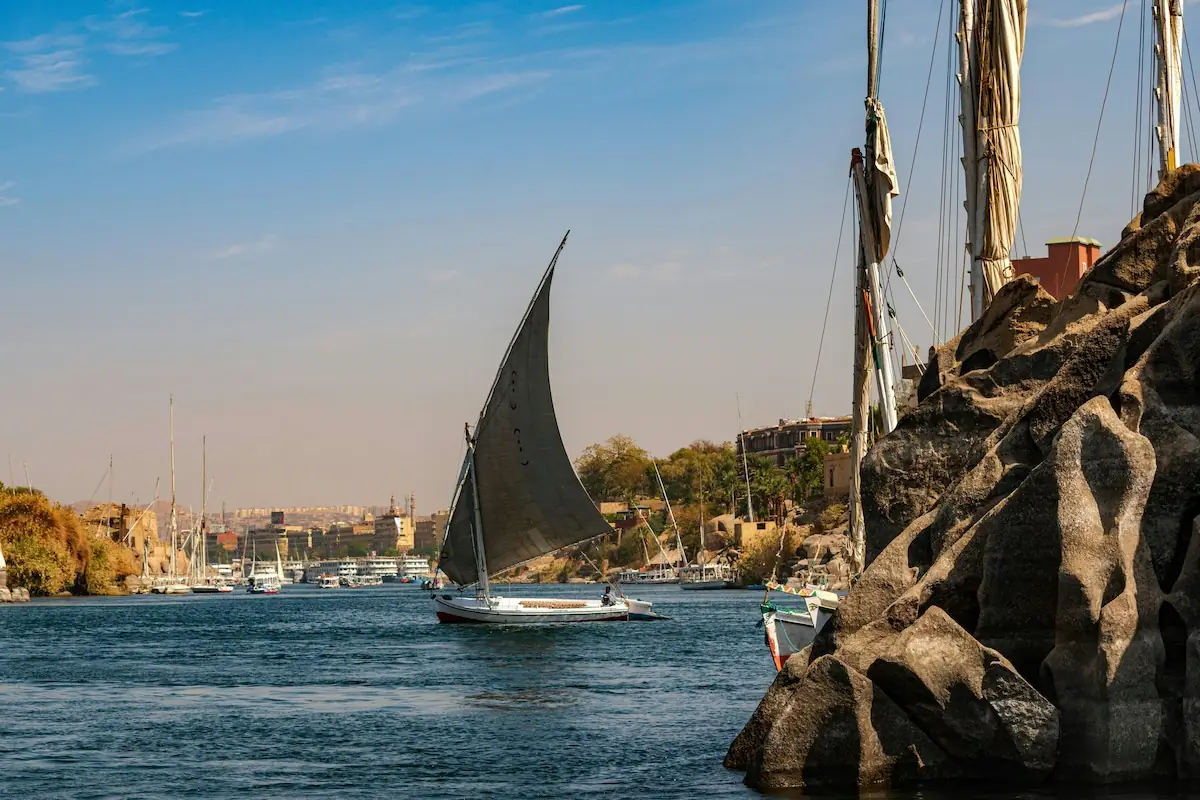
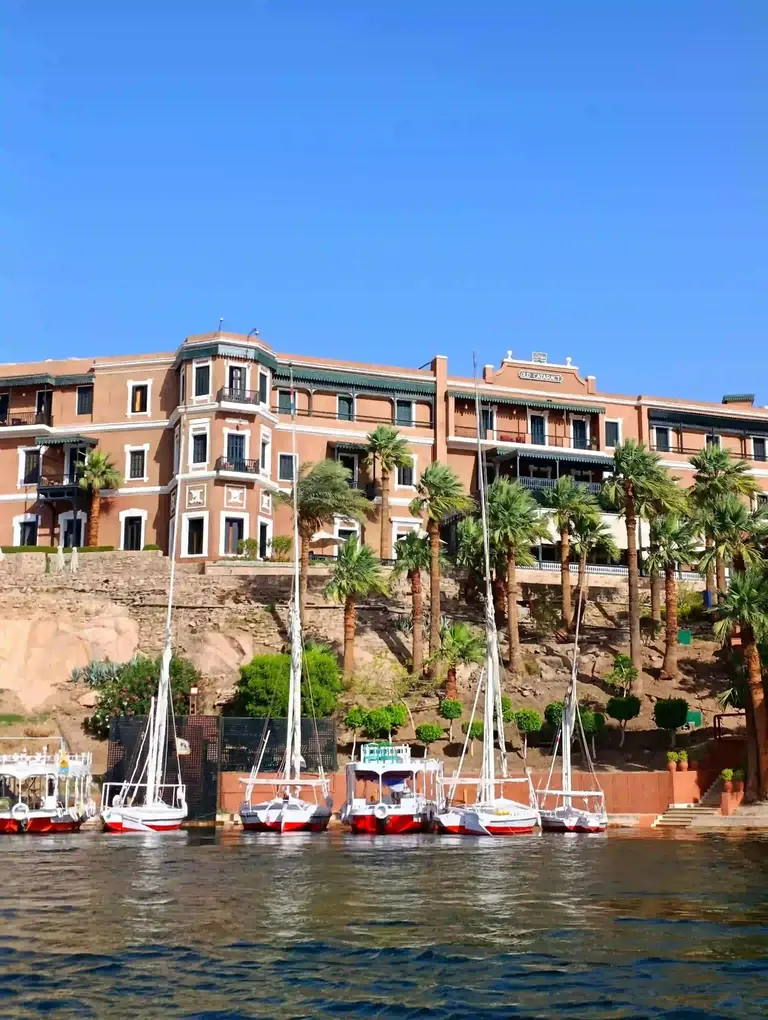
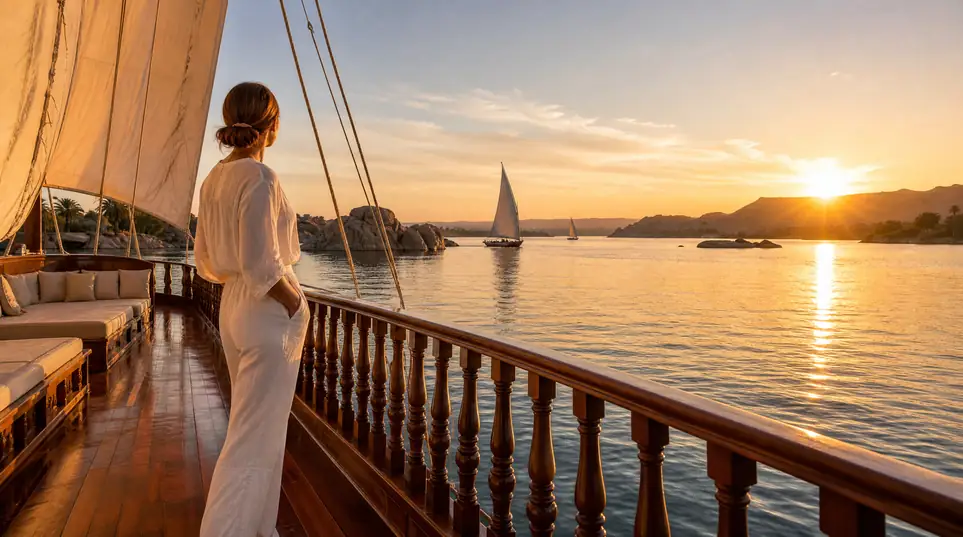
A felucca ride on the Nile at Aswan — drifting silently between Elephantine Island, Kitchener's Island, and the desert cliffs of the west bank as the golden afternoon light fades into evening — is one of the most perfectly pleasurable experiences Egypt offers. The Nile at Aswan is at its most beautiful here, narrower and clearer than further north, framed by golden granite boulders, palm groves, and the distant dunes of the Sahara. A private felucca at sunset, with the warmth of a Nubian evening gathering around the boat, is an experience of absolute, uncomplicated happiness.

The First Cataract of the Nile at Aswan — where the river rushes over ancient granite boulders in a landscape of extraordinary dramatic beauty — marked the southern boundary of ancient Egypt for thousands of years, the point beyond which the pharaonic world gave way to the mysterious kingdoms of Nubia and sub-Saharan Africa. Today the cataract's rushing water, granite outcroppings, and sweeping desert views form one of Aswan's most atmospheric natural landscapes — best experienced by felucca, navigating between the boulders as ancient Nile traders have done for five millennia.

The west bank of the Nile at Aswan — accessible by motor ferry or felucca — is one of Egypt's most hauntingly beautiful and least-visited ancient landscapes, a desert shore lined with rock-cut tombs, ancient quarries, and Coptic monasteries that give the landscape a quality of layered, accumulated history unlike anywhere else in Egypt. The Tombs of the Nobles, carved into the golden hillside above the river, contain some of the oldest painted tomb interiors in Egypt. The Monastery of St. Simeon, rising from the desert floor in a state of magnificent ruin, is one of the finest examples of early Coptic Christian architecture in existence.

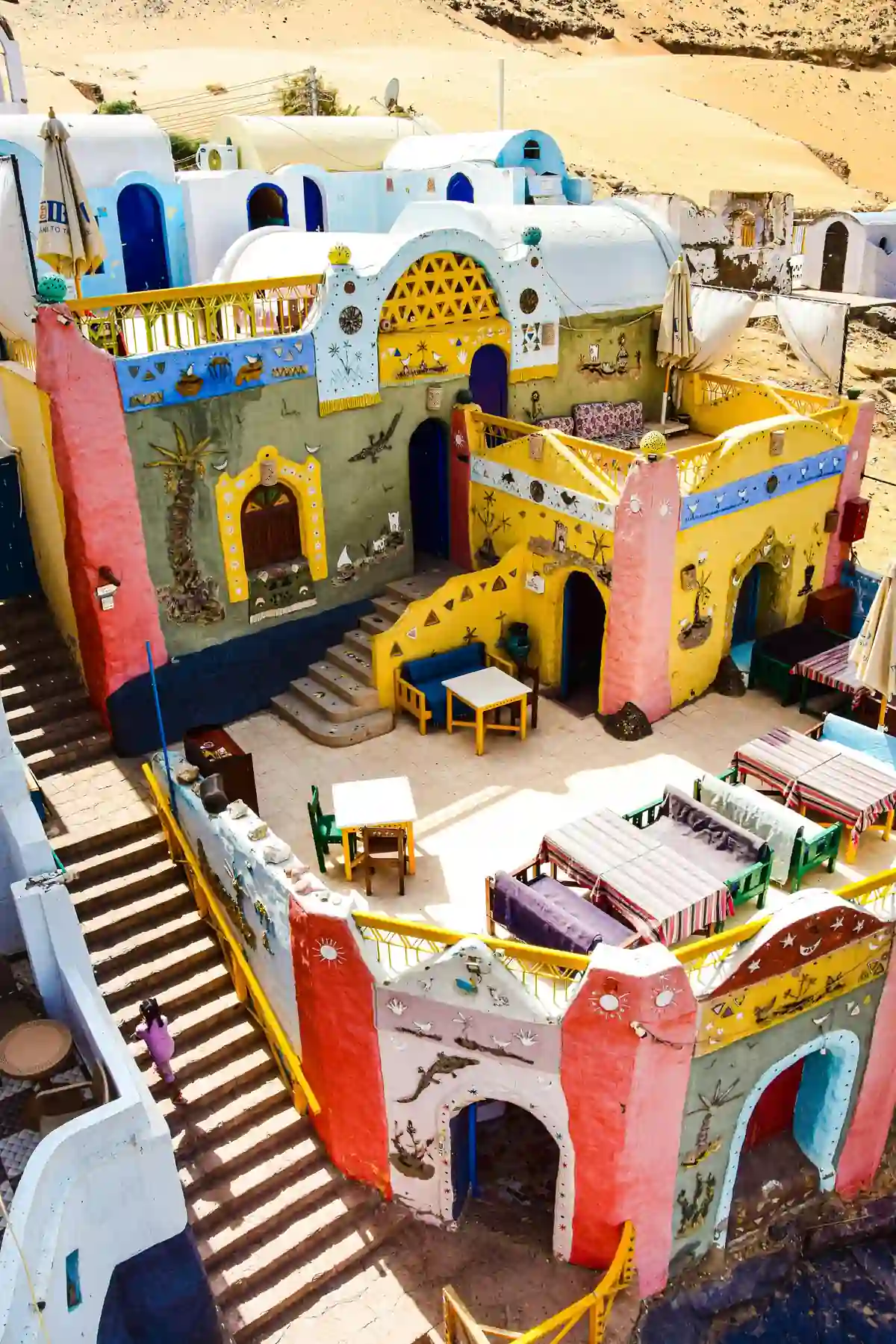
The Nubian villages along the banks of the Nile near Aswan — with their brightly painted mudbrick houses in vivid blues, yellows, and greens, their crocodile-decorated doorways, their exuberant hospitality, and their profound connection to one of Africa's oldest surviving cultures — offer one of the most genuinely moving cultural encounters available anywhere in Egypt. The Nubian people, displaced from their ancestral homeland by the waters of Lake Nasser, have rebuilt their communities with a warmth, pride, and cultural vitality that makes a visit to a Nubian village an experience of human richness that no ancient monument can replicate.

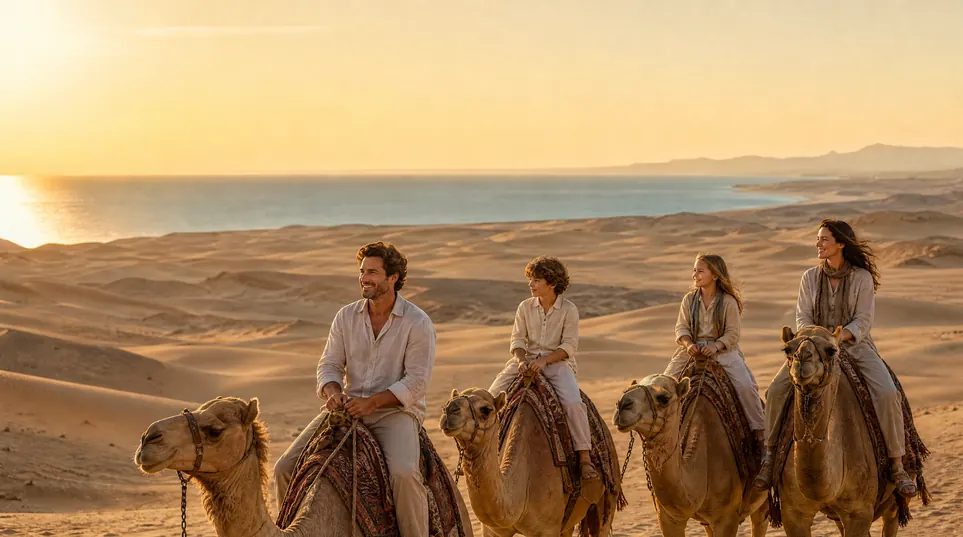
Lake Nasser is one of the largest artificial lakes on Earth — a vast, mirror-still expanse of deep blue water stretching over 500 kilometers south from the Aswan High Dam into the heart of the Sudanese desert, created by the dam's construction in the 1960s and now one of the world's great wilderness water bodies. Cruising Lake Nasser — past the relocated temples of Abu Simbel, Kalabsha, and Wadi el-Seboua, in conditions of absolute desert solitude with no roads, no settlements, and no other boats visible for hours — is one of the most extraordinary and most exclusive travel experiences available anywhere in Africa.

Wadi el-Seboua — the Valley of the Lions — is one of the most dramatically situated ancient temple complexes on the shores of Lake Nasser, its approach guarded by an avenue of sphinx statues that gives the site its name. Built by Ramesses II and later converted into a Coptic church, the temple's extraordinary desert lake setting, its avenue of sphinxes, and its layered history of pharaonic and Christian use make it one of the most atmospheric and evocative sites on any Lake Nasser cruise. The complete solitude of the setting — no crowds, no roads, only desert and water — is unlike anything else in Egypt.
Let our specialists create a bespoke itinerary that captures the magic of this extraordinary destination.