Egypt's Mediterranean Soul — Where Ancient Legends Meet the Open Sea
October to April
Lower Egypt
3-5 days
Easy
Alexandria is unlike anywhere else in Egypt — a city where the ancient world and the Mediterranean meet in one breathtaking, endlessly layered destination. Founded by Alexander the Great in 331 BC, Alexandria was once the wealthiest, most cosmopolitan, and most intellectually brilliant city on Earth — home to the Great Library, the Lighthouse of the ancient world, and a dazzling civilization where Greek, Egyptian, Roman, Jewish, and Arab cultures fused into something entirely unique. Today, that extraordinary layered history is everywhere. Stand inside the iconic Bibliotheca Alexandrina — the bold modern reimagining of the ancient Great Library — and feel the weight of human knowledge across millennia. Descend into the Catacombs of Kom el-Shoqafa, where Greek, Roman, and Egyptian artistic traditions merge in the most extraordinary underground funerary complex ever discovered in Egypt. Walk the ancient walls of Qaitbay Citadel, rising directly from the Mediterranean on the very site where the Lighthouse of Alexandria once stood as one of the Seven Wonders of the Ancient World. Beyond its ancient treasures, Alexandria seduces with its Mediterranean spirit — its long, salt-aired Corniche, its legendary seafood at the Anfushi waterfront, its elegant Belle Époque architecture, and the quiet glamour of its beach neighborhoods from Stanley to Agami. This is a city with a soul unlike any other in Egypt — romantic, melancholic, cosmopolitan, and deeply, unforgettably beautiful.
Explore the treasures that make Alexandria one of Egypt's most captivating destinations.

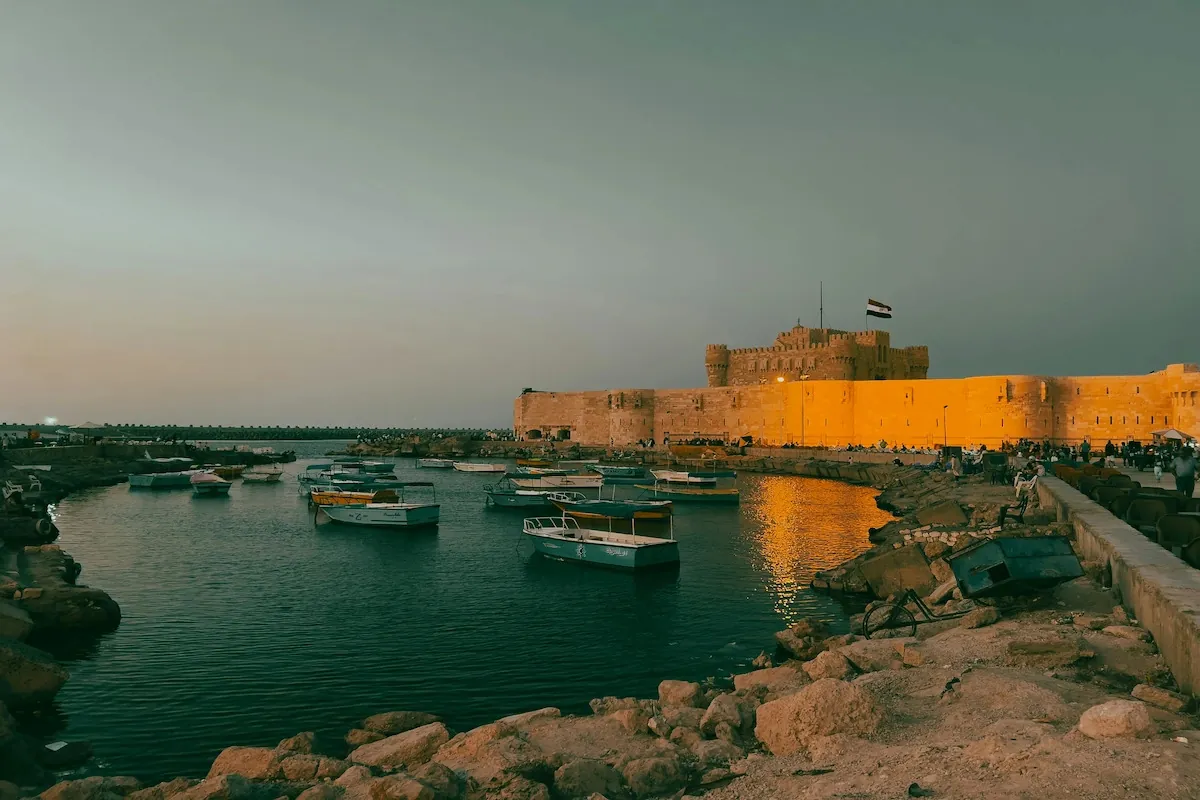
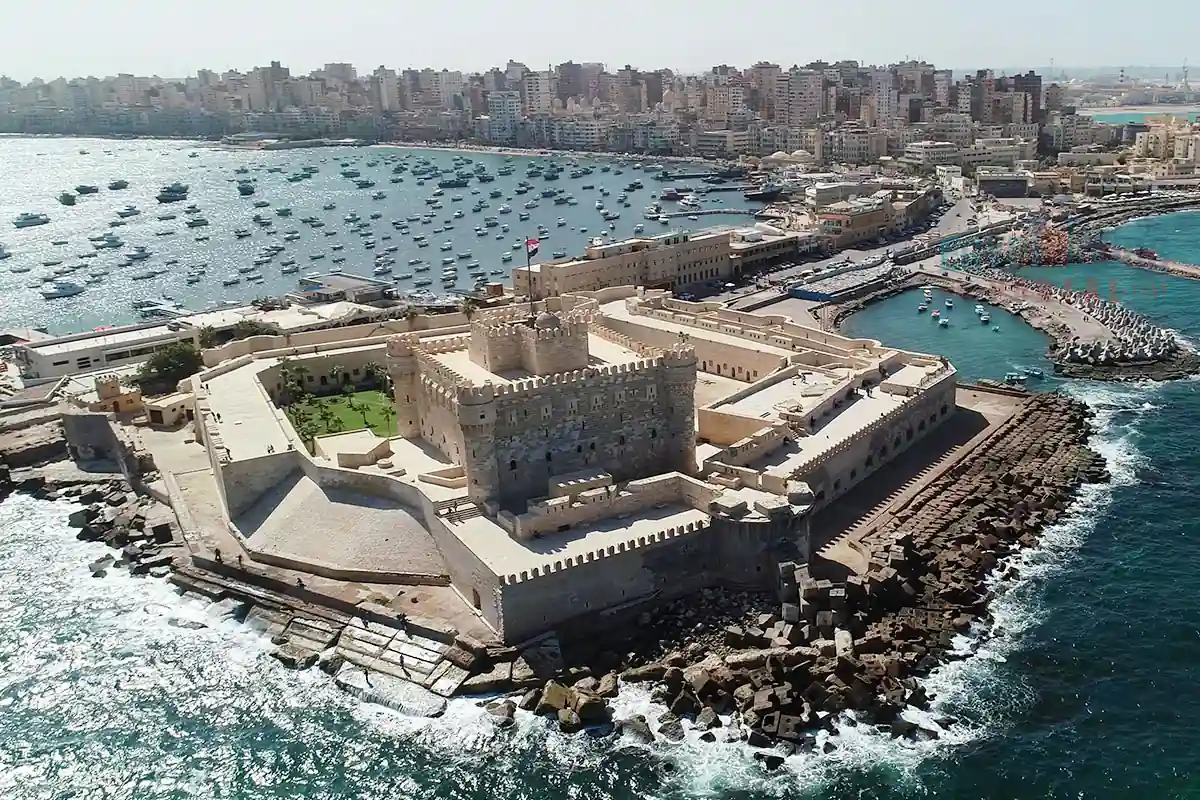
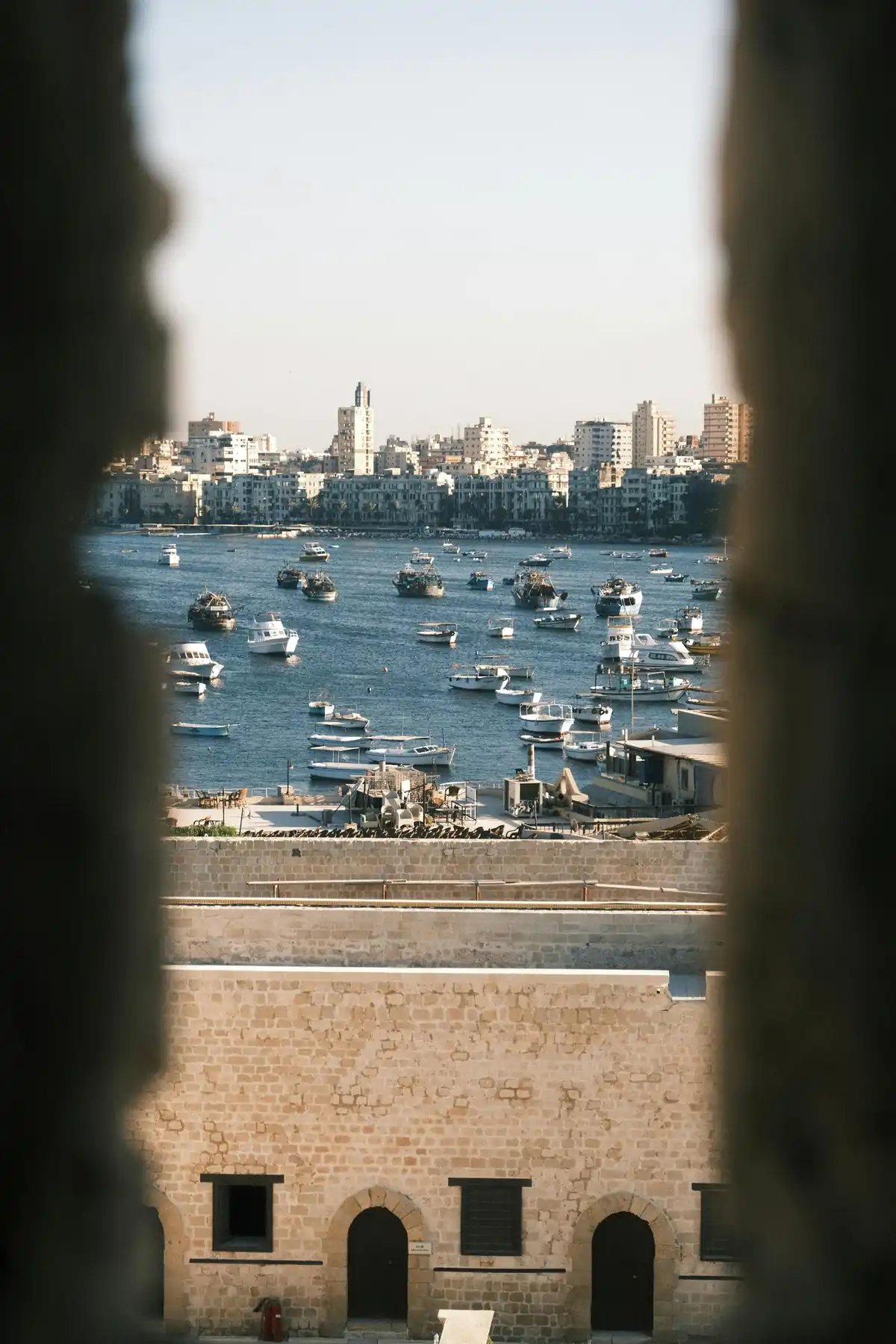
Standing defiant at the edge of the Mediterranean Sea, the Citadel of Qaitbay is Alexandria's most iconic landmark — a magnificent 15th-century fortress built by Sultan Qaitbay in 1477 on the exact site where the ancient Lighthouse of Alexandria once stood, one of the Seven Wonders of the Ancient World. The citadel's commanding walls rise directly from the sea, offering sweeping panoramic views of the Mediterranean that have captivated travelers, conquerors, and kings for over five centuries. Inside, visitors explore towers, battlements, and a small naval museum, while the surrounding harbor — still active with fishing boats — gives the entire experience an authentically living quality that few ancient sites can match. For travelers visiting Alexandria, Qaitbay Citadel is not just a monument — it is the defining image of the city itself.

The Bibliotheca Alexandrina is one of the most architecturally stunning and culturally significant buildings in the modern world — a bold reimagining of the ancient Great Library of Alexandria, which was once the intellectual heart of the ancient world and the greatest repository of human knowledge ever assembled. Opened in 2002 on the shores of the Mediterranean, the library's iconic tilted disc roof, engraved with characters from 120 of the world's scripts, has made it one of the most photographed buildings in Africa and the Middle East. Inside, the main reading hall — a breathtaking cascade of terraced levels descending beneath a vast skylight — houses millions of books, manuscripts, and digital archives. Beyond its collections, the Bibliotheca hosts world-class museums, galleries, a planetarium, and a rare manuscripts library that draws scholars from across the globe. For luxury travelers, a visit here is an encounter with human civilization at its most ambitious and most beautiful.

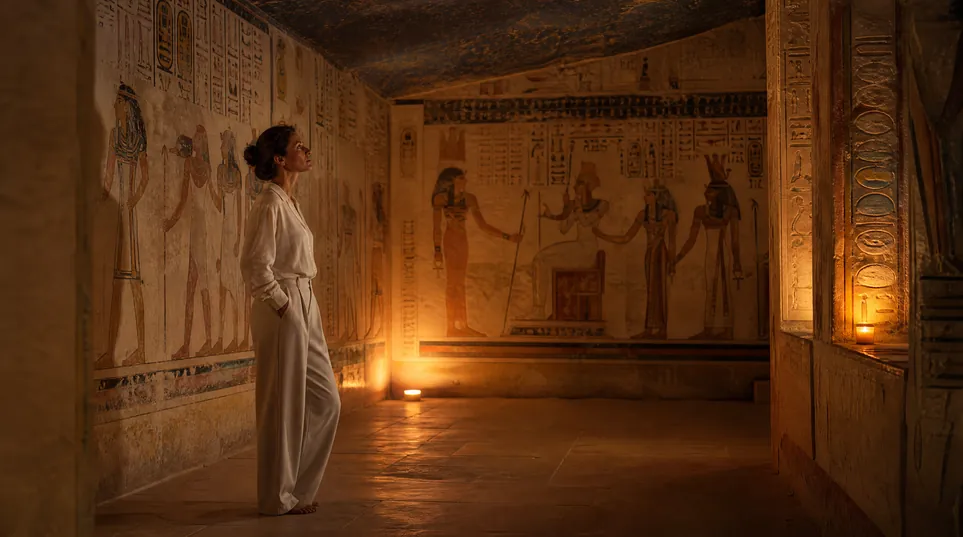
Descending into the Catacombs of Kom el-Shoqafa is one of the most extraordinary underground experiences available anywhere in Egypt — and one of the most underrated. Carved deep into the bedrock of Alexandria in the 2nd century AD, these rock-cut tombs represent the largest Roman funerary complex ever discovered in Egypt, and were designated one of the Seven Wonders of the Middle Ages. What makes the catacombs truly unique is their breathtaking fusion of ancient Egyptian, Greek, and Roman artistic traditions — a visual testament to Alexandria's extraordinary role as the meeting point of three great civilizations. The main tomb chamber, reached by a dramatic spiral staircase descending three levels underground, is adorned with carved reliefs that blend pharaonic iconography with classical Roman styling in a way found nowhere else on Earth. For travelers seeking the deeper, stranger, more mysterious face of ancient Egypt, Kom el-Shoqafa is an unmissable encounter.

Rising 27 meters above the Alexandria skyline, Pompey's Pillar is the largest ancient monolith ever erected outside of Egypt's temple complexes — a single, perfectly preserved column of red Aswan granite that has dominated this hilltop for over 1,700 years. Despite its popular name, the pillar has nothing to do with the Roman general Pompey — it was actually erected in 297 AD in honor of the Emperor Diocletian, and once stood within the great Serapeum temple complex, one of the most magnificent religious sites of the ancient world. The surrounding archaeological site is scattered with sphinx statues, underground galleries, and the foundations of what was once Alexandria's most sacred precinct. Standing beside this extraordinary column, with the city spreading out below and the Mediterranean glinting on the horizon, travelers gain an immediate, visceral sense of Alexandria's ancient greatness.

Housed in a beautifully restored early 20th-century Italian-style palace in the heart of Alexandria, the Alexandria National Museum tells the complete story of Egypt's most cosmopolitan city — from its ancient pharaonic roots through Greek, Roman, Coptic, and Islamic eras, all the way to the modern age. Across three floors of elegant, thoughtfully curated galleries, visitors encounter over 1,800 artifacts including mummies, Greco-Roman statuary, Coptic icons, Islamic manuscripts, and underwater archaeological finds recovered from Alexandria's submerged ancient harbor. Unlike Cairo's vast Egyptian Museum, the Alexandria National Museum offers an intimate, unhurried experience — the kind of place where a single afternoon can genuinely change how you understand Egypt's layered, complex, profoundly multicultural history. For luxury travelers who want depth alongside beauty, this museum is essential.

The Greco-Roman Museum is one of Egypt's most important archaeological collections — a treasure house of artifacts spanning Alexandria's extraordinary Hellenistic and Roman periods, when the city was the wealthiest, most cosmopolitan, and most intellectually vibrant metropolis on Earth. Founded in 1892, the museum houses over 40,000 objects including stunning marble sculptures, intricate mosaics, ancient coins, jewelry, and mummies that reveal the remarkable cultural fusion of Greek, Roman, and Egyptian traditions that defined Alexandrian civilization. Currently undergoing restoration and reopening in phases, the museum represents a genuinely rare opportunity to encounter the ancient Mediterranean world at the precise point where East met West — a cultural crossroads that shaped the entire course of Western civilization.

Hidden within one of Alexandria's most beautiful Belle Époque palaces, the Royal Jewelry Museum is one of Egypt's most dazzling and least-visited treasures — a collection so extraordinary that it reads less like a museum and more like a fairy tale. Originally the palace of Princess Fatima al-Zahra, daughter of Khedive Ismail, the building itself is a masterpiece of late 19th-century European palatial design, with stunning stained glass windows, ornate ceilings, and marble floors that form a perfect backdrop for the breathtaking collection within. The museum houses the personal jewelry collections of Egypt's royal family — from the era of Mohamed Ali Pasha through King Farouk — including tiaras, necklaces, bracelets, and ceremonial objects encrusted with diamonds, emeralds, rubies, and pearls of extraordinary quality. For luxury travelers with an eye for beauty and history, the Royal Jewelry Museum is one of Alexandria's most rewarding surprises.

Discovered entirely by accident during construction work in the 1960s, Kom el-Dikka is one of Alexandria's most remarkable archaeological sites — the only well-preserved Roman odeon (theater) ever found in Egypt, dating back to the 2nd century AD. The amphitheater's thirteen semicircular rows of white marble seating are remarkably intact, and the surrounding excavation site has revealed a rich urban landscape of Roman villas, baths, lecture halls, and mosaics that paint a vivid picture of daily life in ancient Alexandria. What makes Kom el-Dikka particularly special is its location — right in the heart of modern Alexandria, surrounded by the living city, giving visitors the extraordinary sensation of stepping directly from the present into the deep ancient past.

The Abu Abbas al-Mursi Mosque is Alexandria's most beloved and architecturally magnificent Islamic monument — a soaring, Andalusian-influenced masterpiece rising from the city's historic Anfushi waterfront district with four minarets that have guided sailors and fishermen home for generations. Built in 1943 over the tomb of the 13th-century Moroccan Sufi saint Abu Abbas al-Mursi, who became Alexandria's patron saint and one of the most venerated figures in Egyptian Islam, the mosque draws hundreds of thousands of pilgrims and visitors every year. The interior is a breathtaking space of domes, arches, and intricate marble inlay work, while the surrounding square — bustling with life at all hours — offers one of the most atmospheric and authentically Alexandrian experiences a traveler can have.

St. Mark's Coptic Orthodox Cathedral in Alexandria is one of the oldest and most historically significant Christian sites in the world — the mother church of the Coptic Orthodox Church, founded according to tradition by Saint Mark the Evangelist himself in 48 AD, making it one of the earliest Christian communities ever established. The current cathedral, rebuilt and expanded over the centuries, is a place of profound spiritual and historical significance for Egypt's Coptic Christian community and for Christians worldwide. Its beautifully decorated interior, rich with icons, frescoes, and the atmosphere of nearly two thousand years of continuous worship, offers travelers a deeply moving encounter with one of Christianity's oldest living traditions.

The Eliyahu Hanavi Synagogue is one of the most magnificent and historically poignant Jewish monuments in the Arab world — a grand, Italianate synagogue built in 1354 and magnificently restored in the 19th century, standing as a testament to Alexandria's once-thriving Jewish community that numbered over 80,000 souls before the mid-20th century. The synagogue's interior — a breathtaking space of marble columns, crystal chandeliers, stained glass, and intricate woodwork — is one of the most beautiful religious interiors in all of Egypt, and its story reflects the extraordinary multicultural tapestry that made Alexandria one of history's greatest cosmopolitan cities. Recently restored and now open to visitors, the Eliyahu Hanavi Synagogue is one of Alexandria's most emotionally resonant and historically important sites.

Set on a magnificent headland jutting into the Mediterranean Sea on Alexandria's eastern edge, Montazah Palace and its surrounding royal gardens represent one of Egypt's most beautiful and romantic destinations. Built by Khedive Abbas II in 1892 as a summer retreat, the palace complex — with its distinctive Florentine tower, Ottoman-inspired architecture, and sweeping sea views — became the beloved summer residence of Egypt's royal family for generations. Today the palace itself remains closed to the public, but the surrounding 150-acre gardens — a lush paradise of pine forests, flower beds, private beaches, and sea-facing promenades — are open to visitors and offer some of the most beautiful waterfront walking in all of Egypt. For luxury travelers, the adjacent Helnan Palestine Hotel, set within the palace grounds, offers a genuinely royal experience.

Stanley Bridge is Alexandria's most iconic modern landmark — a graceful, arching suspension bridge spanning a picturesque bay in the upscale Stanley neighborhood, framed by the deep blue of the Mediterranean and the elegant early 20th-century villas that line the shore. The bridge and its surrounding waterfront have become the defining image of contemporary Alexandria — appearing on countless postcards, magazine covers, and social media feeds — and the adjacent Stanley Beach is one of the most popular and beautiful stretches of coastline in the city. The surrounding neighborhood, with its seafront cafes, restaurants, and promenades, captures perfectly the sophisticated, Mediterranean spirit that has always made Alexandria feel like Egypt's most European and most effortlessly elegant city.

Stretching over 20 kilometers along the Mediterranean waterfront from the Eastern Harbor to Montazah, Alexandria's Corniche is one of the great seaside promenades of the Arab world — a sweeping, salt-aired boulevard where the ancient city meets the living sea in one continuous, endlessly beautiful panorama. At dawn, fishermen cast their lines from the sea wall as the Mediterranean glows gold. By evening, the Corniche transforms into Alexandria's great social stage — families, lovers, and friends filling the waterfront cafes and open-air restaurants that line the boulevard from end to end. Walking the Corniche at sunset, with the sea breeze coming in off the Mediterranean and the city lights beginning to shimmer, is one of those simple, perfect travel experiences that stays with a visitor long after they have returned home.

Mamoura Beach is one of Alexandria's most beautiful and serene stretches of Mediterranean coastline — a long, clean, pine-backed beach in the eastern reaches of the city that has long been favored by Alexandrians seeking escape from the bustle of the city center. The beach's calm, clear waters, sheltered position, and surrounding greenery give it a distinctly relaxed, almost resort-like quality that sets it apart from Alexandria's more central beaches. For luxury travelers spending multiple days in Alexandria, Mamoura offers the perfect counterpoint to a day of historical sightseeing — a place to slow down, breathe the sea air, and experience the easy, Mediterranean rhythm that defines Alexandrian life at its most unhurried and most pleasurable.

Agami is Alexandria's most exclusive and historically fashionable beach destination — a stretch of fine white sand and clear blue Mediterranean water west of the city that has been the summer playground of Egypt's elite since the 1950s and 60s, when it attracted artists, intellectuals, diplomats, and celebrities from across the Arab world. Still beloved by Alexandria's most discerning residents, Agami retains a certain timeless, understated glamour that distinguishes it from the more crowded beaches closer to the city center. Its calm waters, cleaner sands, and quieter atmosphere make it the ideal choice for luxury travelers who want to experience the Mediterranean side of Alexandria in its most refined and most authentic form.

Hannoville Beach is one of Alexandria's most beloved local secrets — a long, relaxed stretch of Mediterranean coastline west of the city, favored by Alexandrians for its unpretentious charm, cleaner waters, and the easy, unhurried atmosphere that defines the western beaches at their best. Less developed and less crowded than the central city beaches, Hannoville offers travelers a genuinely authentic glimpse of Alexandrian beach culture — simple seafood restaurants, local families, fishing boats, and the vast, shimmering blue of the Mediterranean stretching to the horizon. For travelers who want to experience Alexandria the way Alexandrians actually live it, an afternoon at Hannoville is an experience of rare, unscripted authenticity.

Alexandria's Museum of Fine Arts is one of Egypt's most underappreciated cultural treasures — a beautiful early 20th-century neoclassical building housing an impressive permanent collection of Egyptian and international fine art spanning the 19th and 20th centuries. The museum's collection includes works by Egypt's most important modern painters and sculptors, alongside pieces by European artists who lived and worked in Alexandria during its extraordinary cosmopolitan golden age — the era when the city was home to thriving Greek, Italian, Jewish, Armenian, and Egyptian artistic communities that produced a uniquely Alexandrian visual culture found nowhere else in the world. For travelers with an interest in art history and cultural identity, the Fine Arts Museum offers a genuinely rewarding and rarely crowded encounter with this fascinating chapter of Egyptian cultural life.

For literary travelers, no site in Alexandria is more moving or more meaningful than the modest apartment on Lepsius Street where Constantine Cavafy — widely regarded as the greatest Greek poet of the 20th century and one of the defining voices of modern literature — lived and wrote for the last 25 years of his life. Now preserved as a small, intimate museum, the apartment has been restored to reflect the atmosphere of Cavafy's era, with period furniture, personal photographs, manuscripts, and first editions creating a portrait of the poet and the extraordinary Alexandrian world that shaped his singular, haunting vision. For travelers who know and love Cavafy's poetry — his meditations on memory, desire, history, and the passage of time — standing in the rooms where those poems were written is an experience of almost unbearable poignancy.

The Serapeum of Alexandria was once one of the greatest religious complexes of the ancient world — a vast temple precinct dedicated to the syncretic god Serapis, combining attributes of the Egyptian Osiris and the Greek Zeus into a deity designed to unite Alexandria's Greek and Egyptian populations under a single divine banner. At its height, the Serapeum housed a subsidiary library of the great Library of Alexandria, a massive cult statue of Serapis described by ancient writers as one of the most magnificent works of art in existence, and an extensive network of underground tunnels and galleries. Today, while much of the ancient complex has been lost to time and early Christian demolition, the archaeological site — dominated by Pompey's Pillar and scattered with ancient sphinxes and architectural fragments — retains a profound, atmospheric grandeur that rewards thoughtful, historically minded visitors.

San Stefano is Alexandria's most glamorous modern destination — a sophisticated waterfront development in the upscale Gleem Bay area combining a world-class five-star hotel, a high-end shopping mall, and one of the city's most beautiful private beaches into a single, seamlessly elegant complex. The original San Stefano Grand Hotel, which stood on this site from 1886 until its demolition in 2001, was legendary throughout the Mediterranean world — a place where Egyptian royalty, European aristocracy, and international celebrities gathered each summer season in an atmosphere of effortless, golden-age glamour. Today's development honors that legacy with a contemporary luxury experience that remains one of Alexandria's premier destinations for dining, shopping, and Mediterranean waterfront living at its most refined.

The Anfushi Fish Market is one of the most exhilarating and authentically Alexandrian experiences a traveler can have — a daily explosion of color, sound, and sea-fresh abundance on the city's historic Eastern Harbor waterfront, where the fishing boats come in each morning and the day's catch is laid out in a glittering, ice-packed display of Mediterranean bounty. Surrounding the market, a cluster of legendary seafood restaurants has been feeding Alexandrians for generations — simple, no-frills places where the fish goes from boat to plate in hours, grilled over charcoal and served with nothing more than lemon, tahini, and fresh bread. For luxury travelers, a lunch at Anfushi — choosing your fish directly from the market and watching it cooked to order — is one of those perfect, unrepeatable travel experiences that no five-star hotel dinner can replicate.
Let our specialists create a bespoke itinerary that captures the magic of this extraordinary destination.