Navigating tipping culture represents one of the most common concerns for sophisticated travelers planning their Egyptian journey. Understanding tipping in Egypt goes beyond simple percentages it requires cultural sensitivity, practical knowledge of local customs, and awareness of appropriate amounts for various service providers. While you're accustomed to straightforward tipping standards in the United States, Egypt's baksheesh tradition operates differently, blending genuine gratuities with cultural expectations that may initially seem confusing. This comprehensive guide ensures you approach tipping with confidence, generosity, and cultural appropriateness, allowing you to focus on experiencing Egypt's wonders while maintaining gracious relationships with the exceptional people who facilitate your luxury journey.
Understanding Tipping in Egypt: Cultural Context and Expectations
The Role of Baksheesh in Egyptian Culture
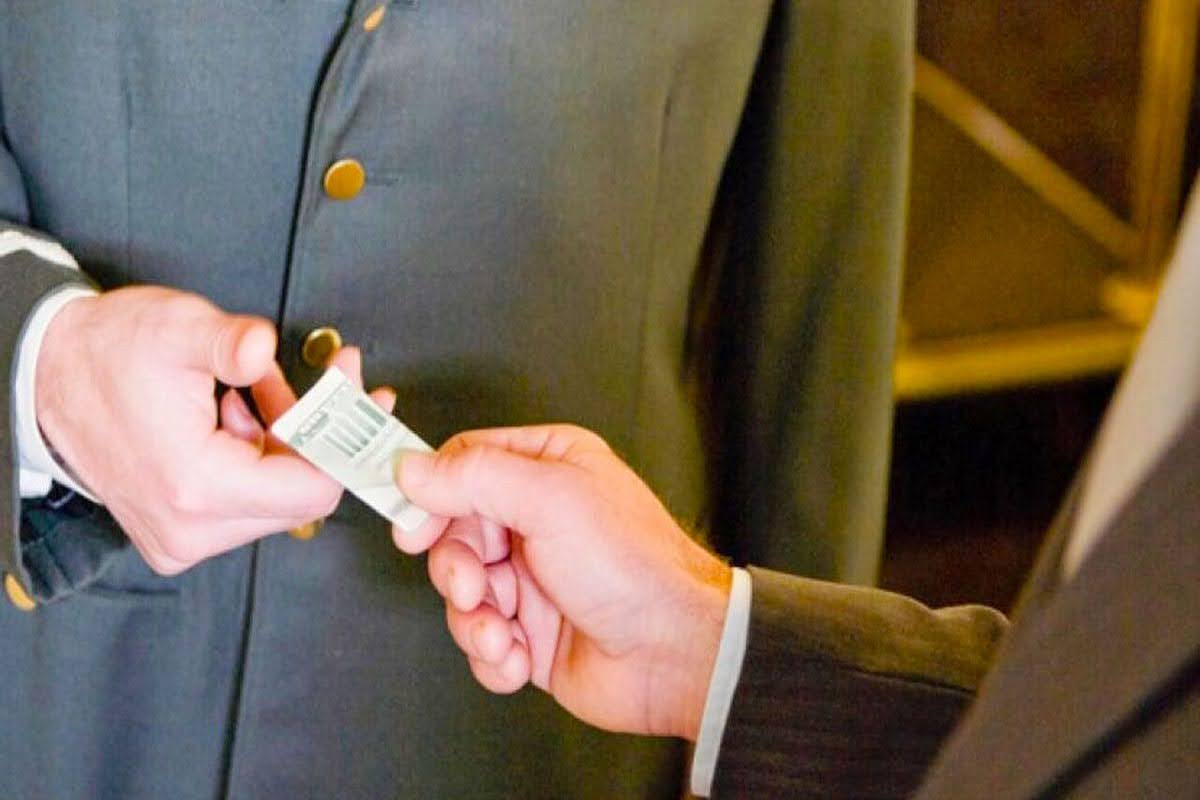
Thoughtful tipping builds meaningful connections with Egypt's exceptional service professionals
Baksheesh represents a deeply rooted Egyptian tradition that extends beyond Western tipping concepts to encompass charitable giving, small favors, and service gratuities in a single cultural practice. The term derives from Persian origins meaning "gift" and has evolved over centuries to become an integral part of Egyptian social and economic interactions. Unlike Western tipping, which primarily rewards exceptional service, baksheesh often functions as expected compensation for services rendered, particularly for workers whose base wages remain modest by international standards.
Understanding this cultural context helps you navigate situations where you might receive requests for baksheesh that seem unusual by American standards such as when someone opens a door, points out a temple feature, or provides minor assistance you didn't explicitly request. These interactions aren't scams or inappropriate behavior but rather reflections of how Egyptian service culture operates. Approaching baksheesh with patience and cultural appreciation, rather than frustration, significantly enhances your experience and interactions with Egyptian people throughout your journey. For more cultural insights, visit Egypt's official tourism information portal.
How Tipping in Egypt Differs from Western Standards
Tipping in Egypt follows different patterns than the percentage-based systems familiar to American travelers. Rather than calculating 15-20% of a bill, Egyptian tipping often involves flat amounts based on service type and duration, with expectations varying significantly depending on whether you're tipping a tour guide, hotel staff member, or restaurant server. Additionally, tipping occurs more frequently in Egypt than in the United States, with gratuities expected for services Americans might not typically tip for, such as restroom attendants, archaeological site guardians, and individuals who provide minor assistance.
The frequency and variety of tipping situations can initially feel overwhelming, particularly when multiple service providers assist you during a single day of touring. However, luxury travelers should recognize that these gratuities genuinely supplement modest base wages and represent meaningful financial support for Egyptian workers and their families. Your luxury tour operator should provide guidance on appropriate amounts, and many high-end tours include certain gratuities in your overall package, simplifying the process while ensuring service providers receive fair compensation.
Why Gratuities Matter for Egyptian Service Workers
Tourism sector wages in Egypt often depend significantly on gratuities to provide workers with sustainable income. Many skilled professionals, including licensed Egyptologists, experienced drivers, and hotel staff at luxury properties, earn base salaries that reflect Egypt's economic realities rather than international luxury service standards. Your generous but appropriate tipping directly impacts these individuals' ability to support their families, pursue education, and maintain the high service standards you expect during your journey.
Furthermore, word of generous, culturally appropriate tipping spreads quickly among Egypt's tourism community, often resulting in enhanced service throughout your trip. Tour guides, drivers, and hotel staff communicate with colleagues and peers, and travelers known for fair, respectful tipping frequently receive exceptional attention to detail and genuine enthusiasm from service providers. This creates a positive cycle where your generosity generates authentic goodwill, memorable interactions, and service that exceeds even luxury travel expectations.
Essential Tipping Guidelines for Luxury Egypt Tours
Tipping Your Private Tour Guides and Egyptologists
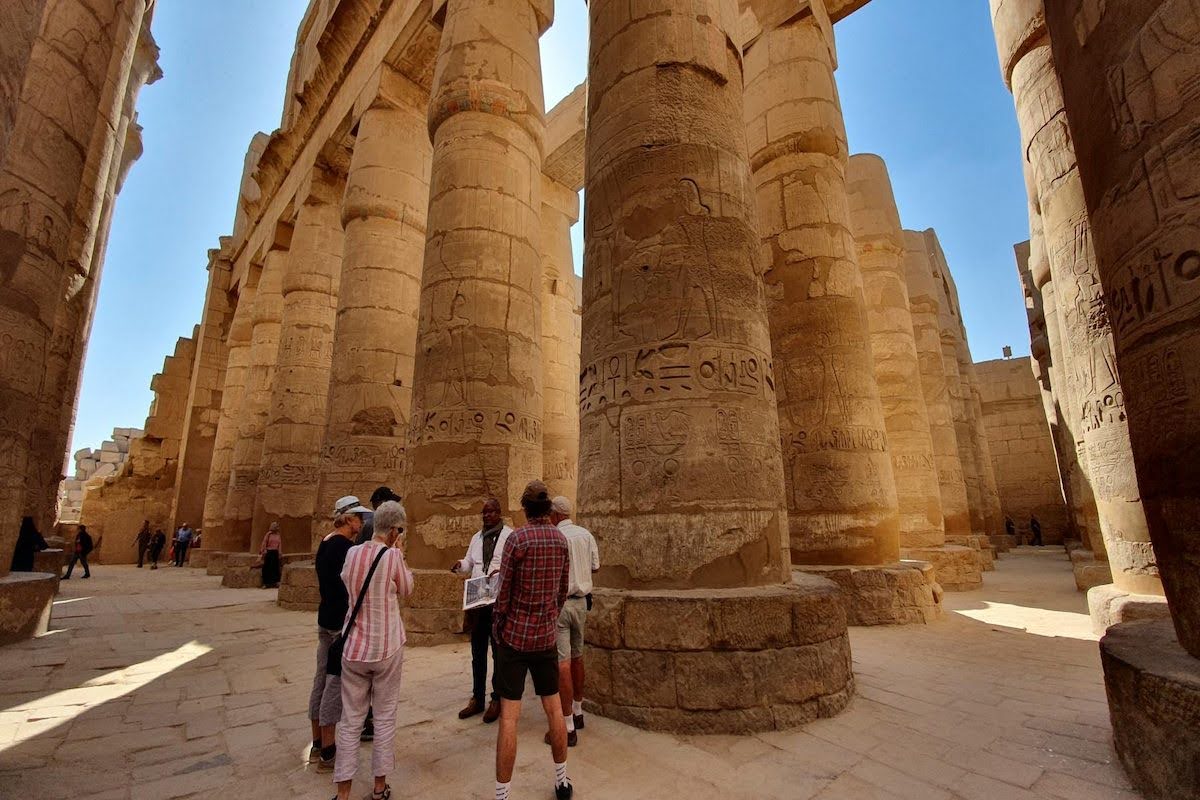
Expert Egyptologists transform your Egypt experience appropriate tipping recognizes their invaluable knowledge and dedication Licensed
Egyptologists and private tour guides represent your most important service relationship during an Egypt tour, and tipping in Egypt for these professionals deserves careful attention. For full-day private guiding services, appropriate gratuities range from $25-50 per day depending on group size and service quality. Exceptional guides who provide extraordinary insights, accommodate special requests, or exceed expectations might receive $50-75 daily, while half-day tours typically warrant $15-25 gratuities.
If you're traveling with a dedicated guide throughout a multi-day tour, consider providing a cumulative tip at journey's end rather than daily gratuities, allowing you to reward overall excellence appropriately. For a week-long tour with outstanding guiding, $300-400 represents generous but appropriate recognition of exceptional service. Many luxury travelers also provide small gifts from their home country university-branded items, quality writing instruments, or specialized books as personal gestures that complement monetary gratuities and create lasting positive memories.
Appropriate Gratuities for Drivers and Transportation Staff
Private drivers who transport you between sites, airports, and hotels typically receive $10-20 per day depending on service quality and responsibilities. Drivers who handle luggage, provide cold water and snacks, maintain impeccably clean vehicles, and demonstrate exceptional professionalism deserve compensation at the higher end of this range. For airport meet-and-greet services or short transfers, $5-10 gratuities prove appropriate.
During multi-day tours where the same driver accompanies your journey, cumulative tipping at tour completion often works well, with $100-150 for a week of excellent service representing appropriate recognition. If your driver goes beyond standard responsibilities such as assisting with shopping, providing local recommendations, or accommodating schedule changes gracefully consider additional compensation reflecting these extra efforts. Quality drivers remain essential to comfortable, efficient touring, and appropriate tipping ensures they approach their responsibilities with genuine care.
Nile Cruise Tipping Etiquette and Protocols
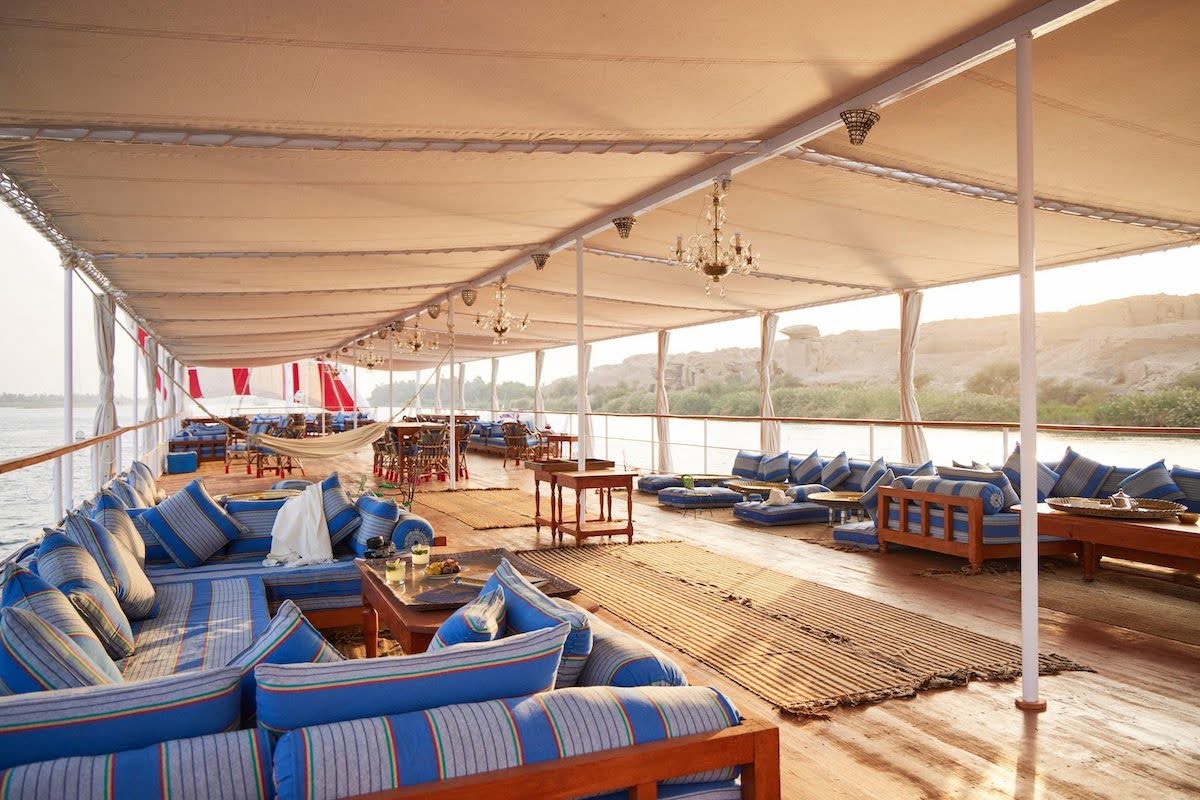
Nile cruise crews work tirelessly pooled gratuities of $7-10 daily ensure fair compensation
Nile cruise tipping follows specific protocols that differ from ocean cruise standards familiar to American luxury travelers. Most luxury Nile cruise lines recommend pooled gratuities distributed among the entire crew, typically $8-12 per person per day for luxury vessels, placed in a designated envelope provided at cruise conclusion. This pooled approach ensures all staff members from cabin stewards to restaurant servers to deck crew receive fair compensation regardless of their guest-facing visibility.
Additionally, tipping in Egypt on Nile cruises should include separate gratuities for your dedicated cruise guide, typically $10-15 per person per day depending on their expertise and service quality. If specific crew members provide exceptional personal service such as a cabin steward who remembers your preferences or a bartender who creates custom beverages individual tips of $20-50 at cruise end appropriately recognize their efforts. Many luxury travelers find preparing these gratuities before the final evening allows for gracious, unhurried presentation rather than last-minute cash scrambling.
Tipping in Egypt Hotels and Restaurants
Luxury Hotel Staff: Bellhops, Housekeeping, and Concierge
Luxury hotel tipping in Egypt generally follows international standards with some local adjustments. Bellhops handling your luggage should receive $2-3 per bag, while housekeeping staff deserve $3-5 daily, left in your room each morning since staff assignments may rotate. Concierge services warrant gratuities based on assistance provided $5-10 for restaurant reservations or basic information, $20-30 for securing difficult reservations or arranging special experiences, and up to $50-100 for extraordinary efforts like last-minute tour arrangements or solving complex problems.
Doormen who consistently hail taxis, provide directions, or assist with packages appreciate $2-5 for each service or $10-20 weekly if you're staying at the same property for extended periods. Room service delivery typically deserves $3-5 even when service charges appear on bills, as these charges rarely reach service staff directly. At ultra-luxury properties like the Four Seasons or Sofitel, staff expectations may trend slightly higher, though service charges often appear automatically on various bills, reducing separate tipping requirements for certain services.
Restaurant and Dining Tipping Standards
Restaurant tipping in Egypt varies considerably depending on establishment type and whether you're dining independently or as part of organized tour activities. At upscale restaurants frequented by international travelers, 10-15% gratuities prove appropriate, though you should verify whether service charges already appear on your bill before adding additional tips. Many luxury restaurants include 12% service charges, in which case an additional 5% cash tip left on the table ensures servers receive direct compensation.
For casual dining, street food vendors, or quick café stops, rounding up the bill or leaving small Egyptian pound notes (20-50 EGP depending on bill size) provides adequate gratuities. When dining at hotel restaurants where you sign charges to your room, add written gratuity amounts to prevent ambiguity and ensure proper staff compensation. If sommeliers provide exceptional wine service or chefs accommodate dietary restrictions with customized preparations, additional $10-20 gratuities personally presented express appropriate appreciation for these extra efforts.
Spa and Wellness Service Gratuities
Spa services at luxury Egyptian hotels typically warrant 15-20% gratuities, similar to American standards. For a $100 massage or facial treatment, $15-20 cash tips presented directly to your therapist ensure they receive appropriate compensation. Many spas add automatic service charges to bills, but these often benefit the facility rather than individual therapists, making cash gratuities essential for rewarding personal service quality.
If you experience multi-hour spa journeys or couples' treatments at properties like the Oberoi or Kempinski, consider $30-50 per person for the team of therapists and attendants who facilitate your experience. Spa attendants who provide robes, slippers, beverages, and facility orientation appreciate $5-10 gratuities, particularly if they offer personalized attention throughout your visit. Always inquire whether gratuities are included in spa package pricing, as some ultra-luxury properties bundle all charges to eliminate guest tipping confusion.
Navigating Tipping in Egypt at Tourist Sites and Activities
Archaeological Site Attendants and Guardians
Site guardians who unlock tombs, illuminate hieroglyphics with mirrors, or provide brief explanations deserve modest gratuities of $1-3 (or 20-50 EGP) for their assistance. These workers earn minimal wages and depend on visitor tips for meaningful income. However, be aware that some may offer unsolicited "help" specifically hoping for baksheesh this remains a normal part of Egyptian tourism culture rather than aggressive behavior, though you're not obligated to tip for assistance you didn't request or desire.
If a guardian provides genuinely valuable service such as opening a restricted tomb, sharing rare insights, or allowing extended viewing time $5-10 gratuities appropriately recognize these extra efforts. Many guardians work at the same sites for decades and possess extraordinary knowledge they're happy to share with respectful, generous visitors. Your private guide can often facilitate these interactions and advise on appropriate compensation, helping you distinguish between valuable service and opportunistic baksheesh requests.
Photography Permissions and Associated Tips
Photography inside certain tombs and restricted areas often requires both official permits and unofficial gratuities to guardians who allow photos in technically restricted locations. While official rules prohibit photography in many tombs, guardians may offer to "look away" for $5-10 tips. Luxury travelers should approach these situations carefully, respecting that you're essentially asking guards to ignore regulations, which puts their employment at risk if supervisors discover violations.
For legitimate photography permissions in sites where cameras are allowed, no additional tipping beyond standard guardian gratuities is expected. However, if guardians provide special access for perfect lighting or fewer crowds in your photos, small additional tips of $3-5 express appreciation. Always defer to your private guide's advice on photography tipping situations, as they understand current enforcement patterns and appropriate compensation for various scenarios.
Restroom Attendants and Small Service Providers
Restroom attendants at tourist sites, restaurants, and hotels provide towels, soap, and facility maintenance, expecting small gratuities of 5-10 EGP (approximately $0.30-0.65) for their services. While these amounts seem minimal by American standards, they represent meaningful income for attendants working long hours at high-traffic locations. Keeping a supply of small Egyptian pound notes specifically for these situations prevents awkward moments and ensures you can tip appropriately throughout your day.
Other small service providers you'll encounter include parking attendants ($1-2), shopping bag carriers at bazaars ($2-3), and individuals who offer directions or minor assistance (20-50 EGP if you accept their help). The key to gracious tipping in Egypt for these micro-services involves accepting that more frequent, smaller tips represent normal cultural practice rather than excessive demands. Preparing mentally and financially for these interactions prevents frustration and allows you to engage with Egyptian hospitality culture positively.
Practical Tipping Tips for American Travelers
Currency Considerations: Egyptian Pounds vs. US Dollars
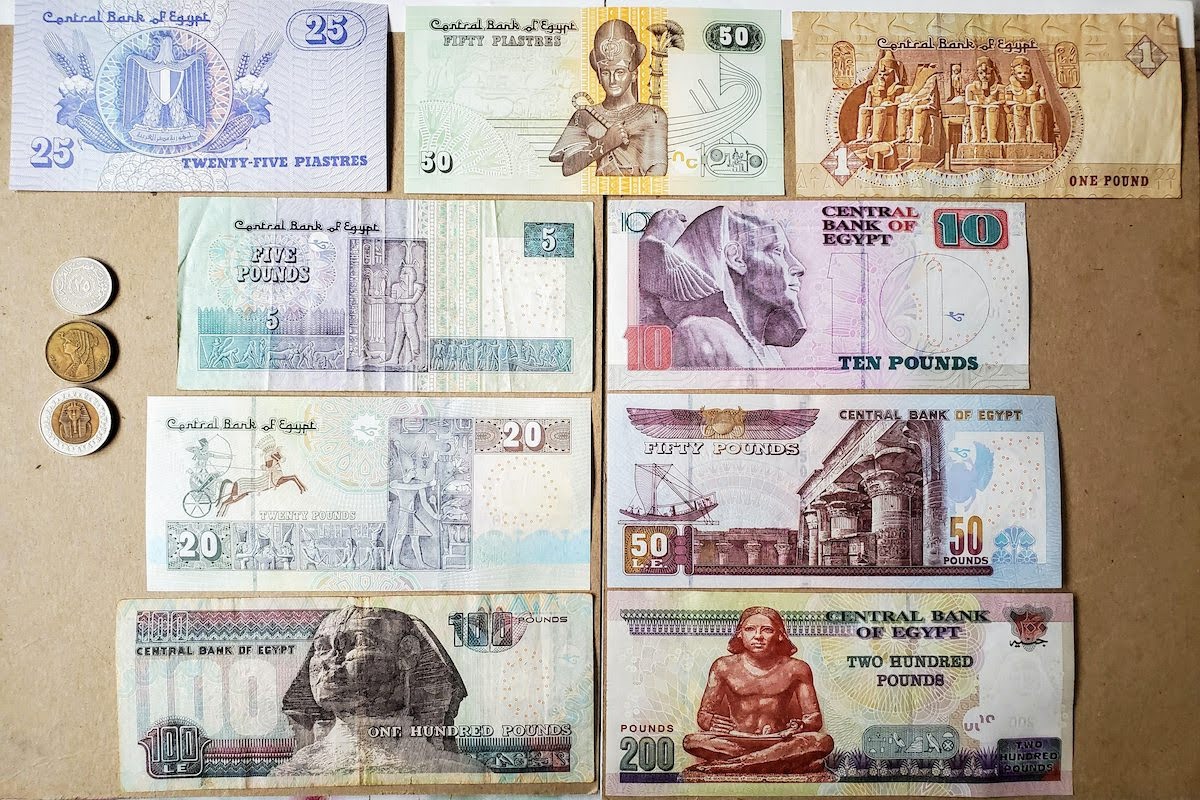
Keep plenty of small Egyptian pound notes essential for smooth tipping throughout your journey
Both US dollars and Egyptian pounds work acceptably for tipping in Egypt, though carrying both currencies provides maximum flexibility for various situations. Dollars prove ideal for larger gratuities like tour guides ($25-50), drivers ($10-20 daily), and Nile cruise tips ($50-100 totals), while Egyptian pounds work better for small daily tips like restroom attendants, bellhops, and minor services where $1-5 equivalents are appropriate.
Many service providers actually prefer US dollars for substantial tips since dollars hold value better than Egyptian pounds during currency fluctuations and can be saved for significant purchases or exchanged at favorable rates. However, having 20, 50, and 100 EGP notes proves essential for small daily gratuities where handing someone a $1 bill might be awkward or insufficient. Exchange some currency specifically for tipping purposes upon arrival, keeping it separate from your general spending money to simplify tracking and ensure adequate small denominations throughout your trip. Check current exchange rates before your journey to understand the value.
How to Prepare and Carry Small Bills
Successful tipping in Egypt requires strategic cash management that may feel unusual for travelers accustomed to credit card convenience. Before your trip, obtain crisp, new $1, $5, $10, and $20 bills from your bank, as worn or torn dollars may be refused by some service providers. Carry these in a dedicated wallet or envelope separate from larger bills to avoid fumbling through cash publicly or inadvertently displaying significant amounts of money. Before your journey, consult official U.S. travel guidance for Egypt for the latest travel updates and preparation tips.
Create a personal tipping "system" by preparing daily envelopes with anticipated amounts for various services, allowing you to access appropriate gratuities discreetly and efficiently. Many luxury travelers prepare individual envelopes for their guide, driver, and daily small tips, replenishing them each morning based on planned activities. This organization prevents the awkward moments of searching for cash while service providers wait, maintains security by limiting cash handling in public, and ensures you never forget to tip someone who deserves recognition.
When Tipping in Egypt Becomes Excessive or Inappropriate
While generous tipping enhances your experience, certain situations warrant polite refusal rather than automatic gratuities. Unsolicited photography where someone insists on taking your photo then demands payment, aggressive "guides" who attach themselves to you despite your private guide's presence, or individuals who provide "help" you explicitly declined don't deserve tips for unwanted services. Firm but polite refusals in these situations remain culturally acceptable and necessary to discourage genuinely problematic behavior.
Additionally, over-tipping can create problems by establishing unrealistic expectations for future travelers and inflating local tipping standards beyond reasonable levels. While you may feel wealthy by Egyptian standards and want to share generously, tipping 2-3 times recommended amounts or providing excessive gratuities for routine services can negatively impact the tourism ecosystem. Trust your luxury tour operator's guidance on appropriate amounts, understanding they've calibrated recommendations to balance generosity with sustainability for long-term positive traveler-local relationships.
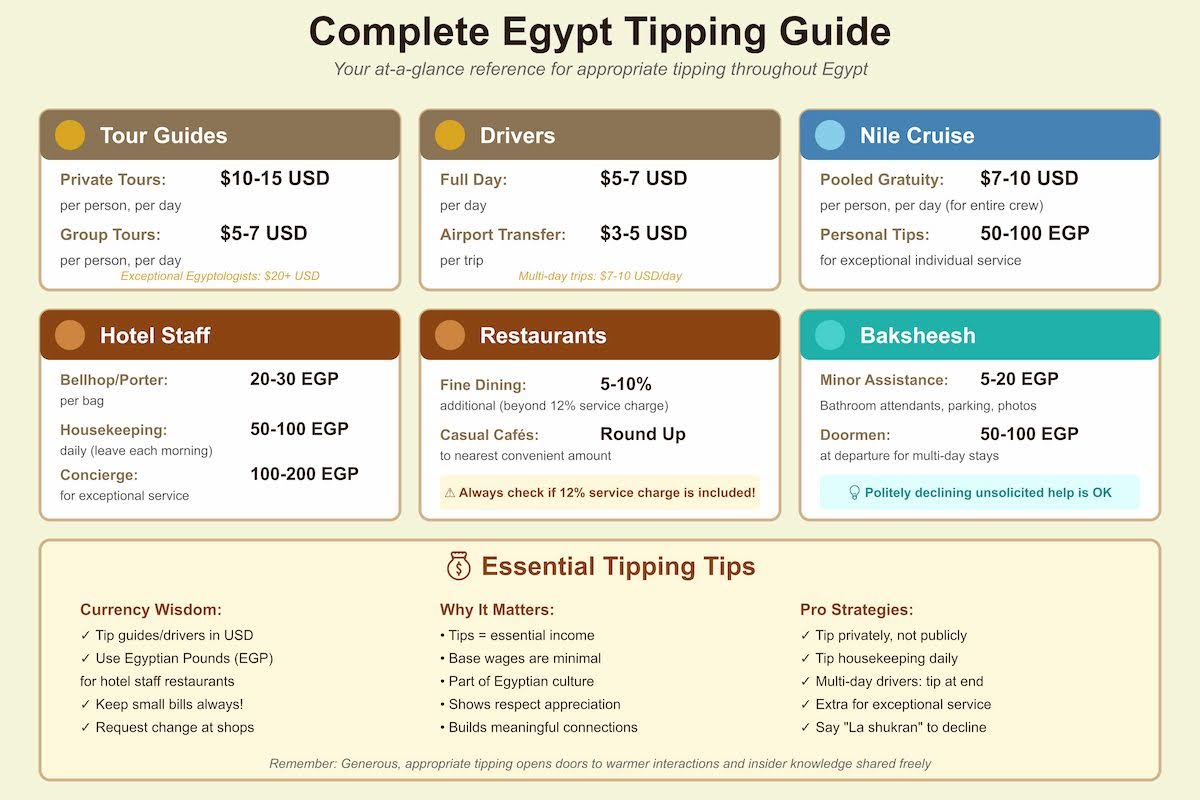
Your at-a-glance reference for appropriate tipping throughout Egypt
Frequently Asked Questions
How much should I tip my Egypt tour guide per day?
Tip private tour guides $25-50 per person daily for full-day services, with exceptional guides deserving $50-75. Half-day tours warrant $15-25 gratuities. For multi-day tours with the same guide, cumulative tips of $300-400 for week-long excellent service prove appropriate and generous.
Is tipping in Egypt mandatory or optional?
While not legally mandatory, tipping is culturally expected and economically essential for Egyptian service workers whose base wages depend on gratuity supplements. Consider gratuities a necessary part of your travel budget rather than optional extras, except when service is genuinely poor or unsolicited.
Should I tip in Egyptian pounds or US dollars?
Both currencies work, though US dollars prove ideal for larger gratuities ($25+) while Egyptian pounds suit small daily tips. Many service providers prefer dollars for substantial amounts. Carry both currencies to ensure flexibility for various tipping situations throughout your journey.
How much do you tip on a Nile cruise?
Budget $8-12 per person daily for pooled crew gratuities on luxury Nile cruises, plus $10-15 per person daily for your dedicated cruise guide. Additional individual tips of $20-50 for exceptional cabin stewards or bartenders appropriately recognize outstanding personal service.
What if service is poor should I still tip?
You're not obligated to tip for genuinely poor service, though consider whether cultural differences or circumstances beyond the individual's control caused issues. Reduced gratuities (50% of normal amounts) signal dissatisfaction while acknowledging effort. Discuss significant service problems with your tour operator for proper resolution.
Conclusion
Mastering tipping in Egypt allows you to navigate Egyptian hospitality culture with confidence, generosity, and appropriate cultural sensitivity. By understanding baksheesh traditions, preparing adequate small bills in both dollars and pounds, and following established guidelines for guides, drivers, hotel staff, and site attendants, you'll create positive interactions that enhance every aspect of your luxury Egyptian journey. Ready to experience Egypt's extraordinary hospitality with cultural grace and insider knowledge? Contact our luxury travel specialists to plan your perfectly orchestrated Egyptian adventure where every detail, including gratuity guidance, receives expert attention for seamless, memorable experiences.